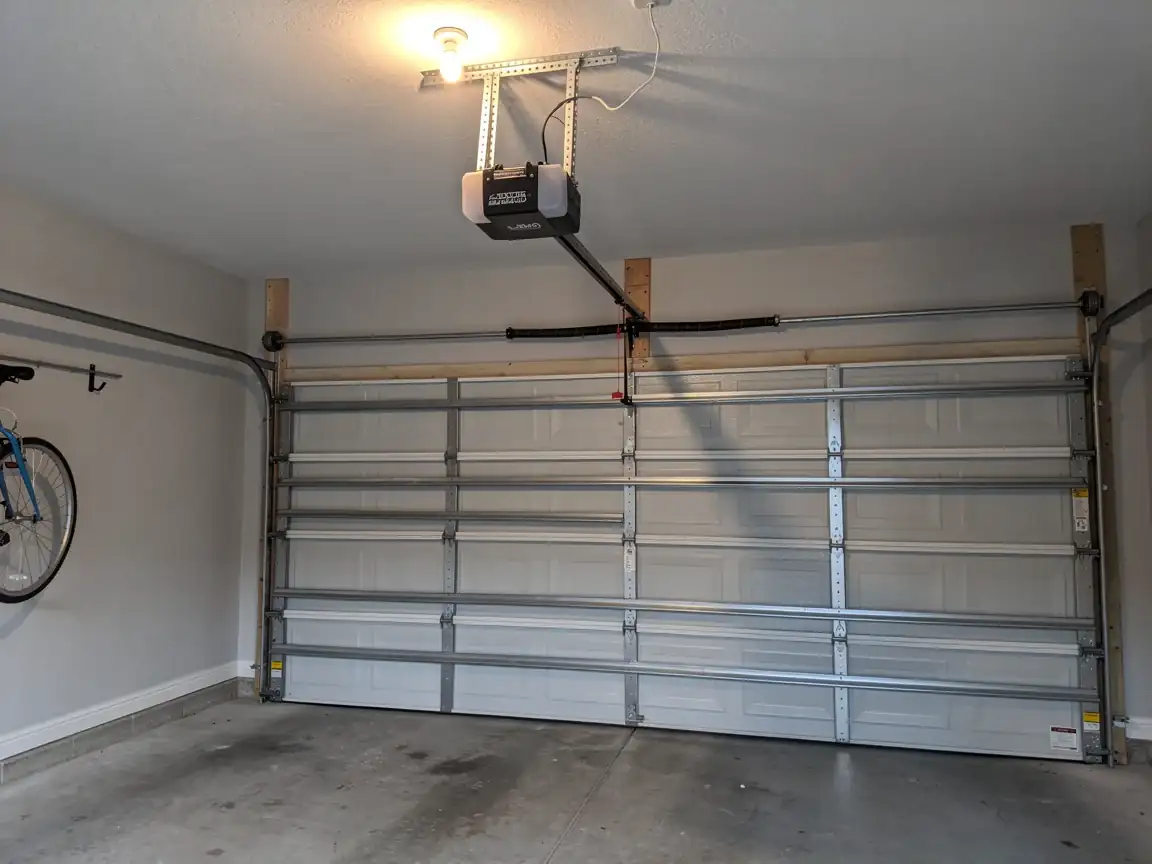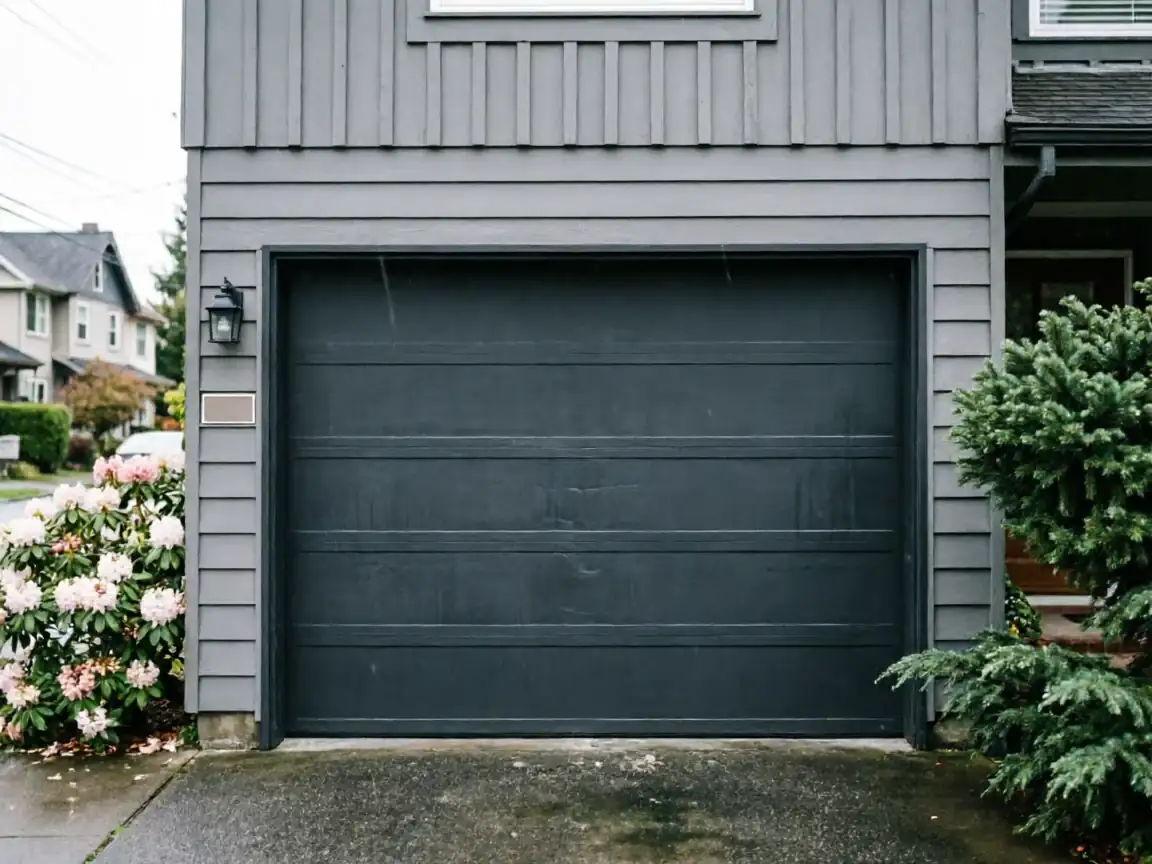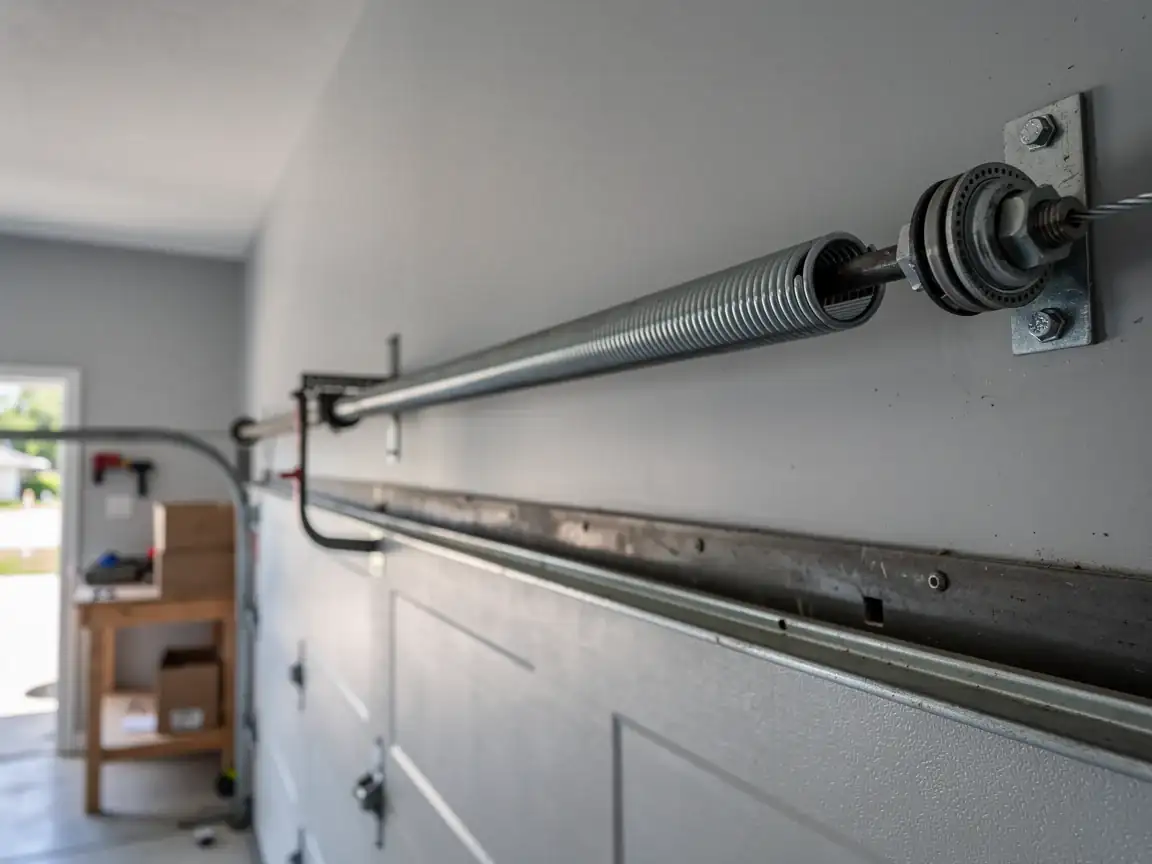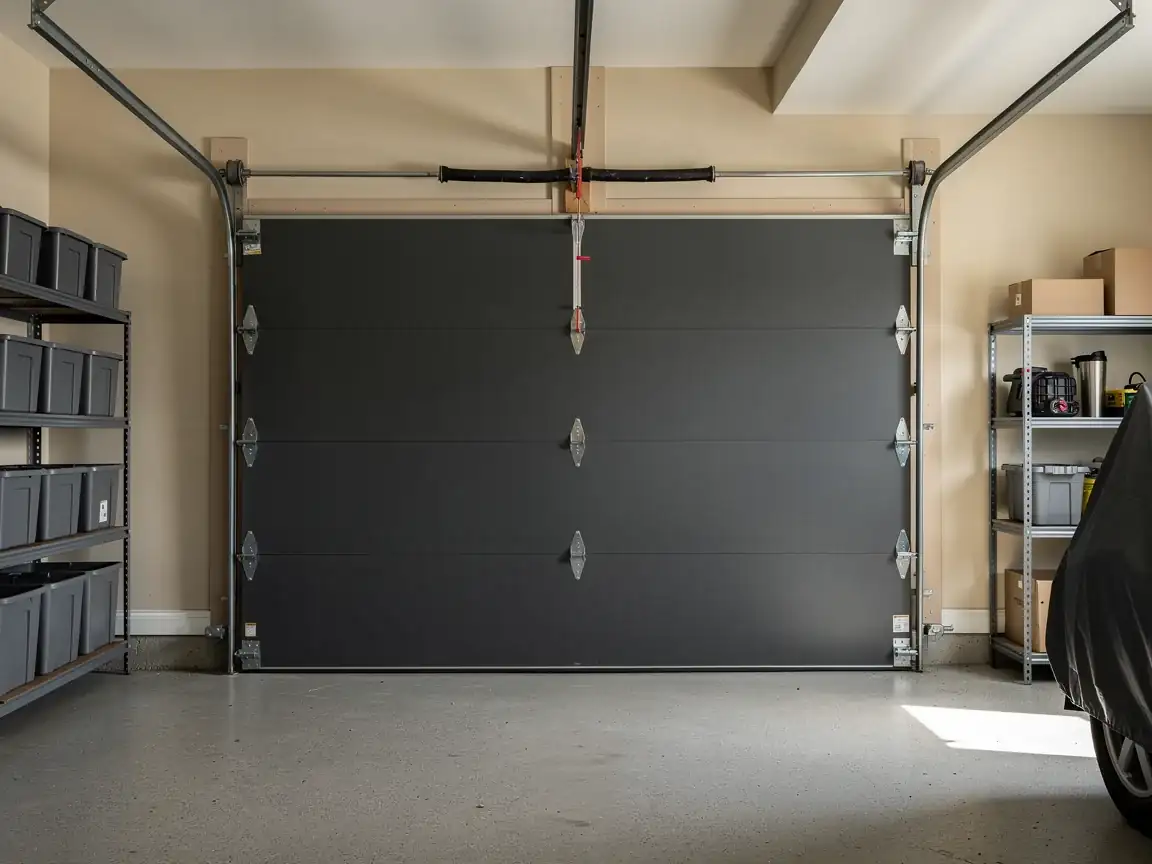
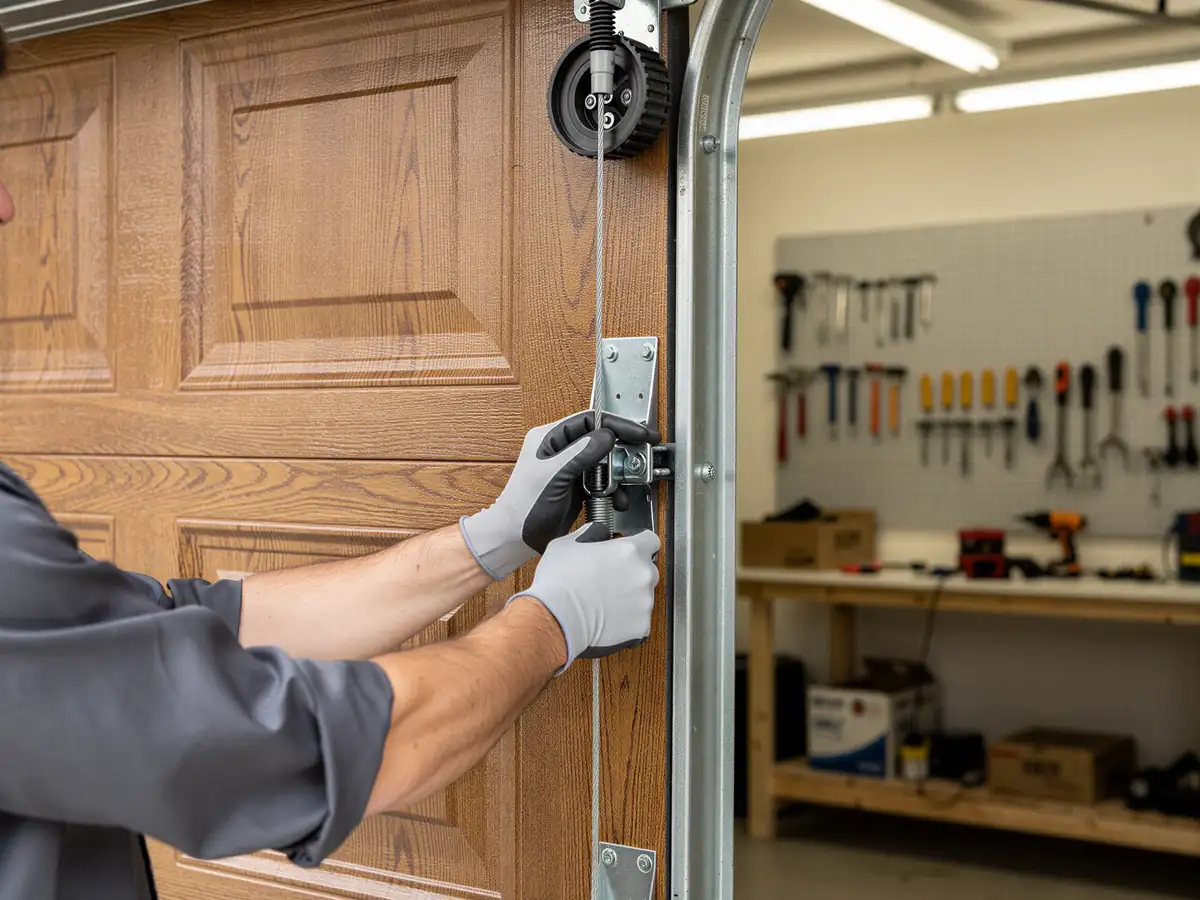
What You Are Seeing
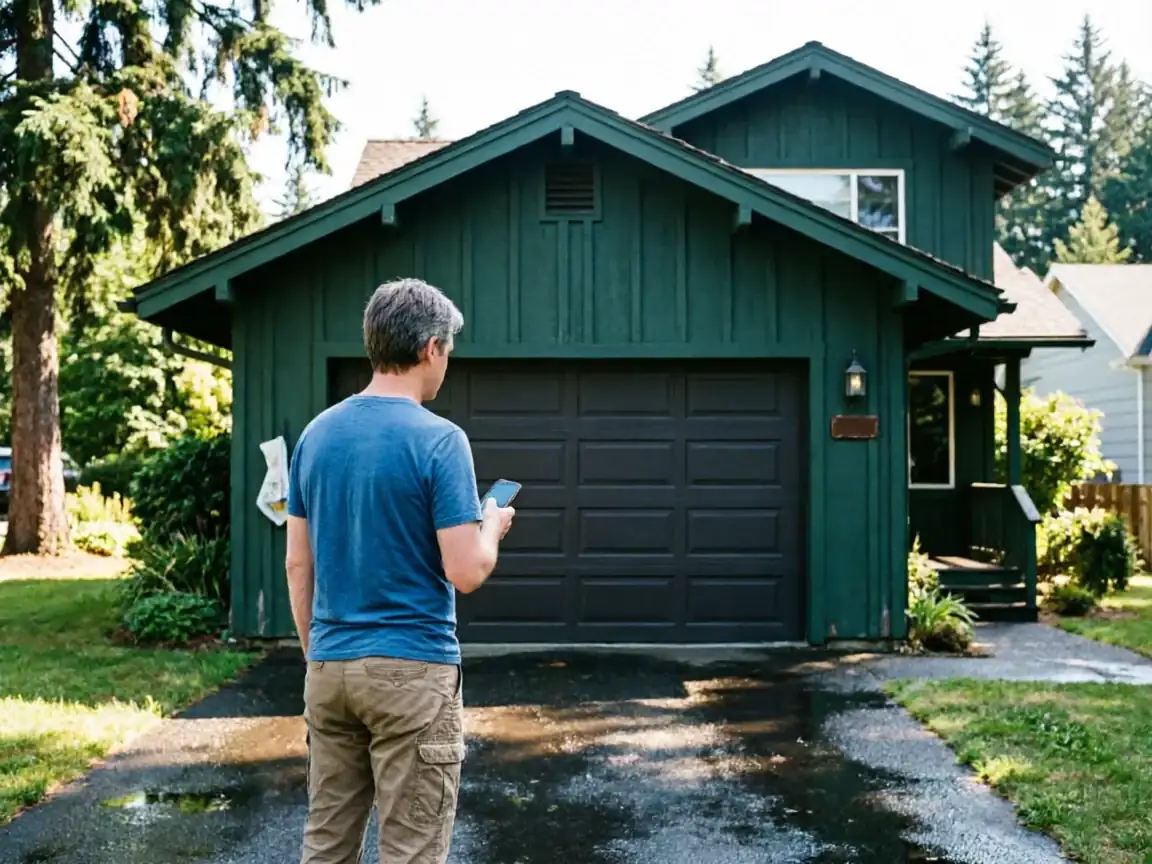
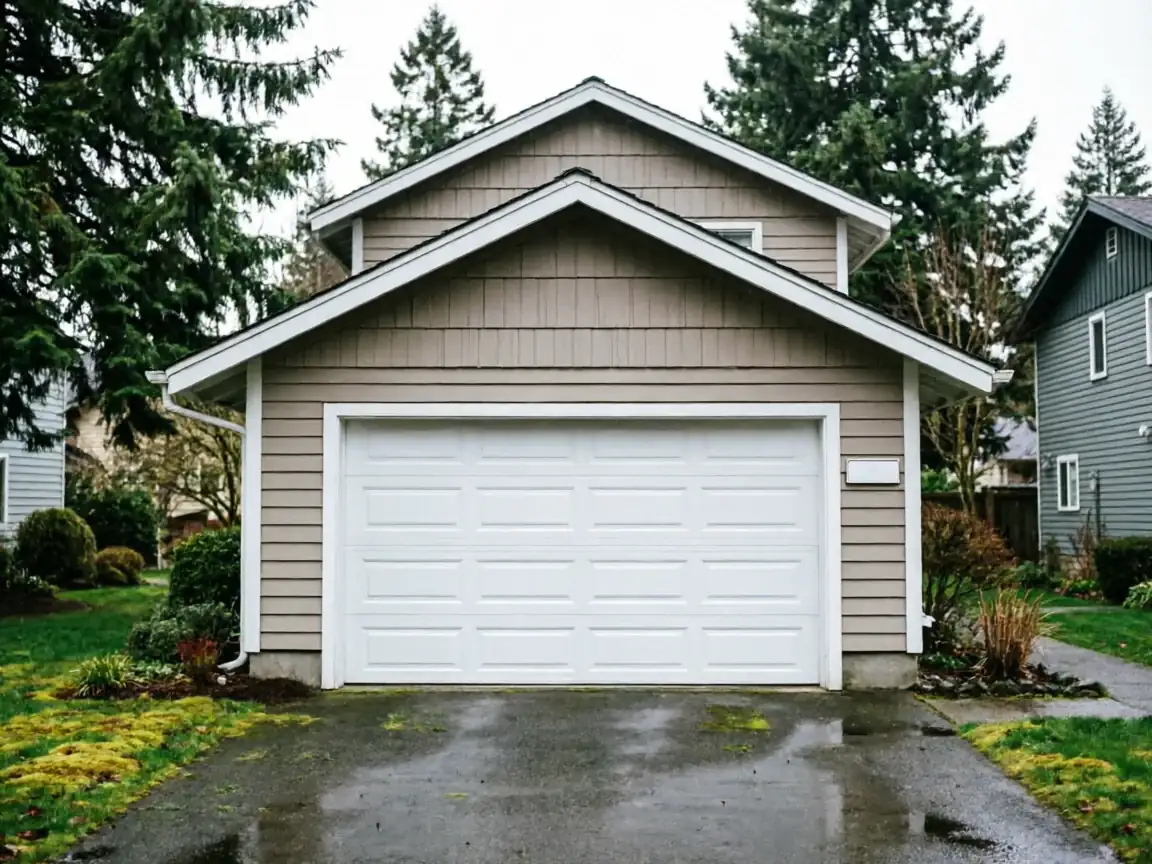
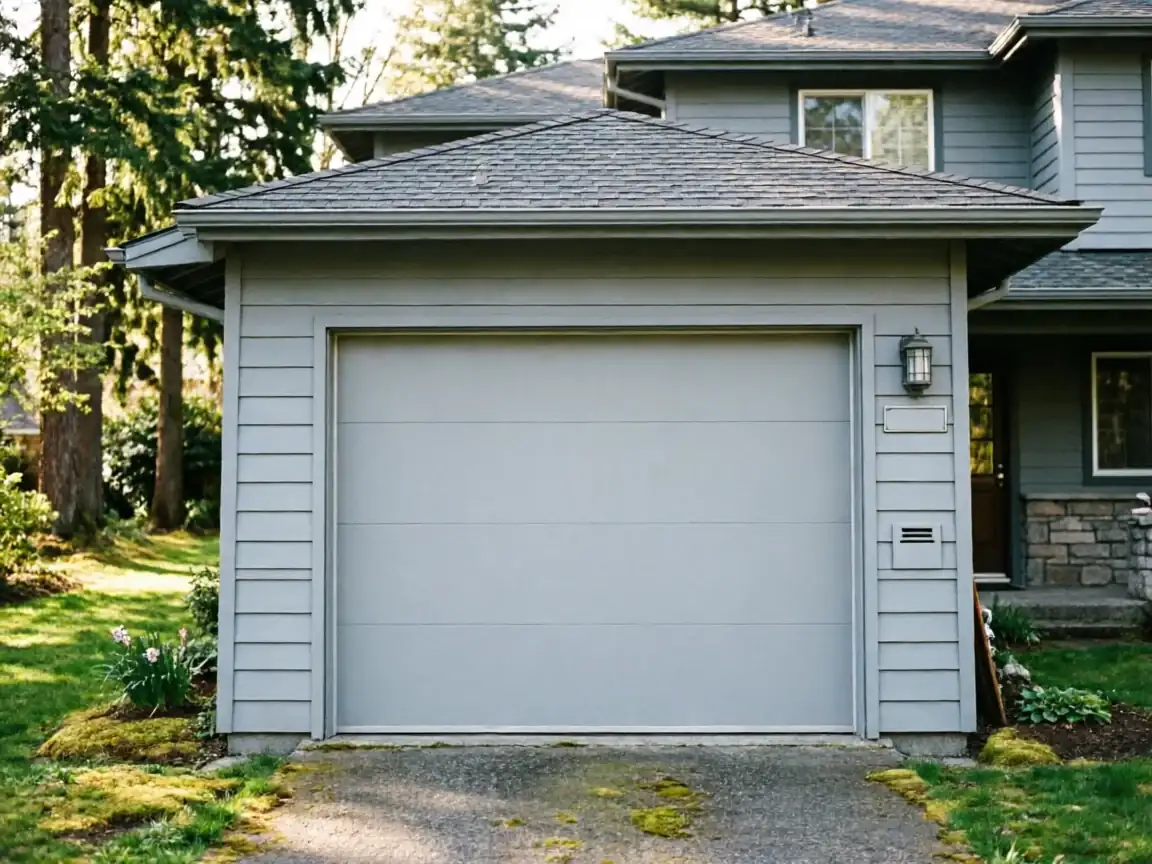
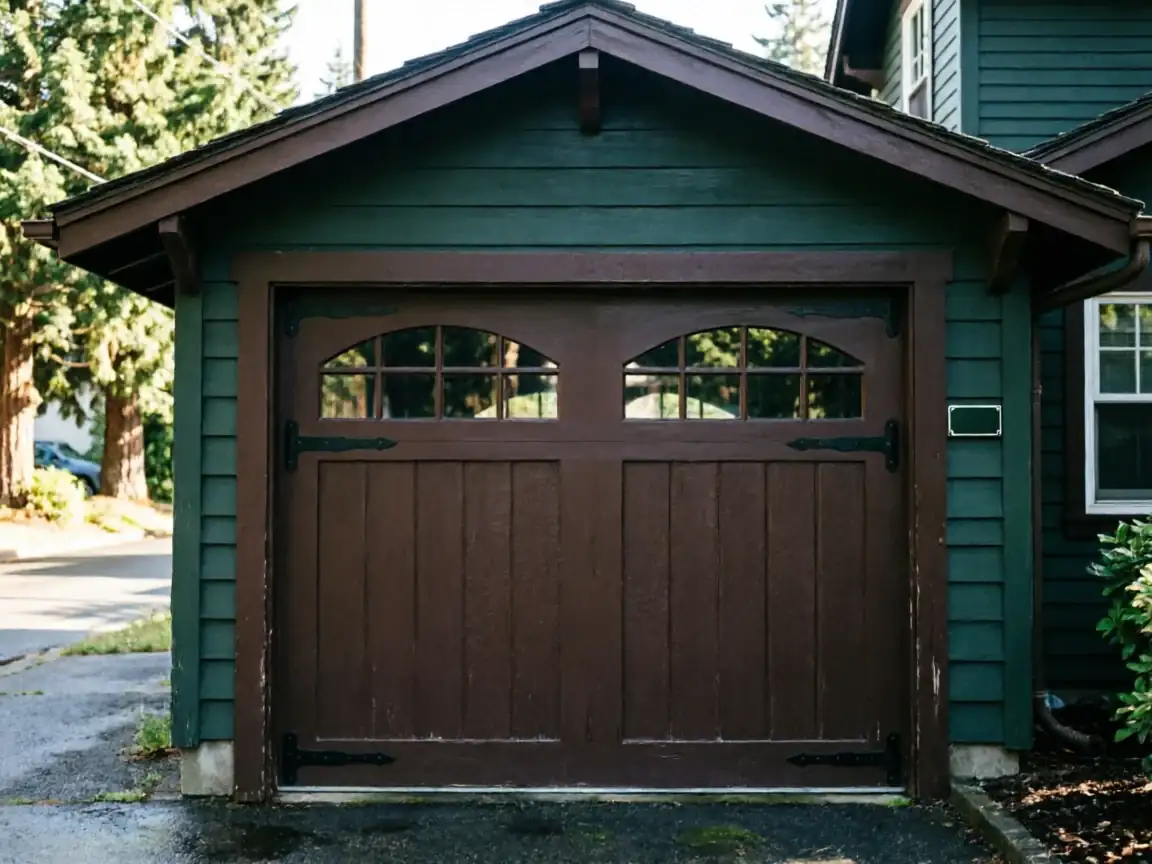
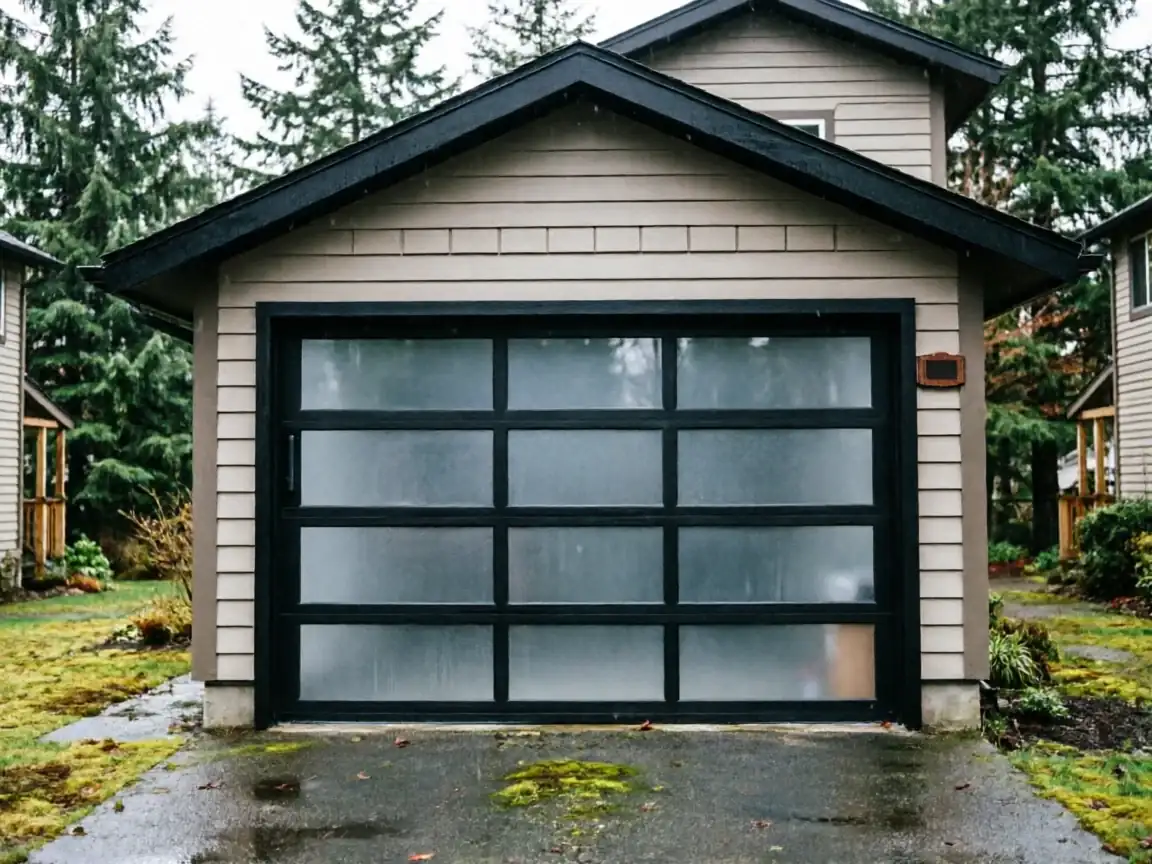
A frayed or snapped lift cable on a door from this era usually shows up as one corner dropping while the other holds, or the door going crooked in the track halfway up. Sometimes it's a loud bang and the door won't budge at all - that's the cable letting go under spring tension, and it's not something to force with the opener. On older galvanized cable, you'll often see rust bloom near the drum or visible strand separation before it fully breaks, especially after a Puget Sound winter. The cold-moderate climate out here doesn't freeze cables solid the way inland winters do, but damp air over four decades does work corrosion into galvanized strand faster than a dry climate would. If your door is original to a 1980 build and nobody's touched the cable, it's overdue regardless of how it looks.
How Long It Takes
A straight cable swap on a standard extension spring door, once we're on site, is usually a shorter job than people expect - the cable itself isn't the hard part, it's doing it safely with the spring tension released first. Where it runs longer is if the drum or pulley got chewed up by the failing cable, which happens more often on doors that have gone a long time without anyone checking them. We're coming from Mill Creek, about five miles to Picnic Point, so factor that drive into when we can get there rather than when the repair itself starts. We don't give a blanket number for every job because a double door with two cables and a worn drum takes longer than a single door with a clean break.
Getting It Booked In
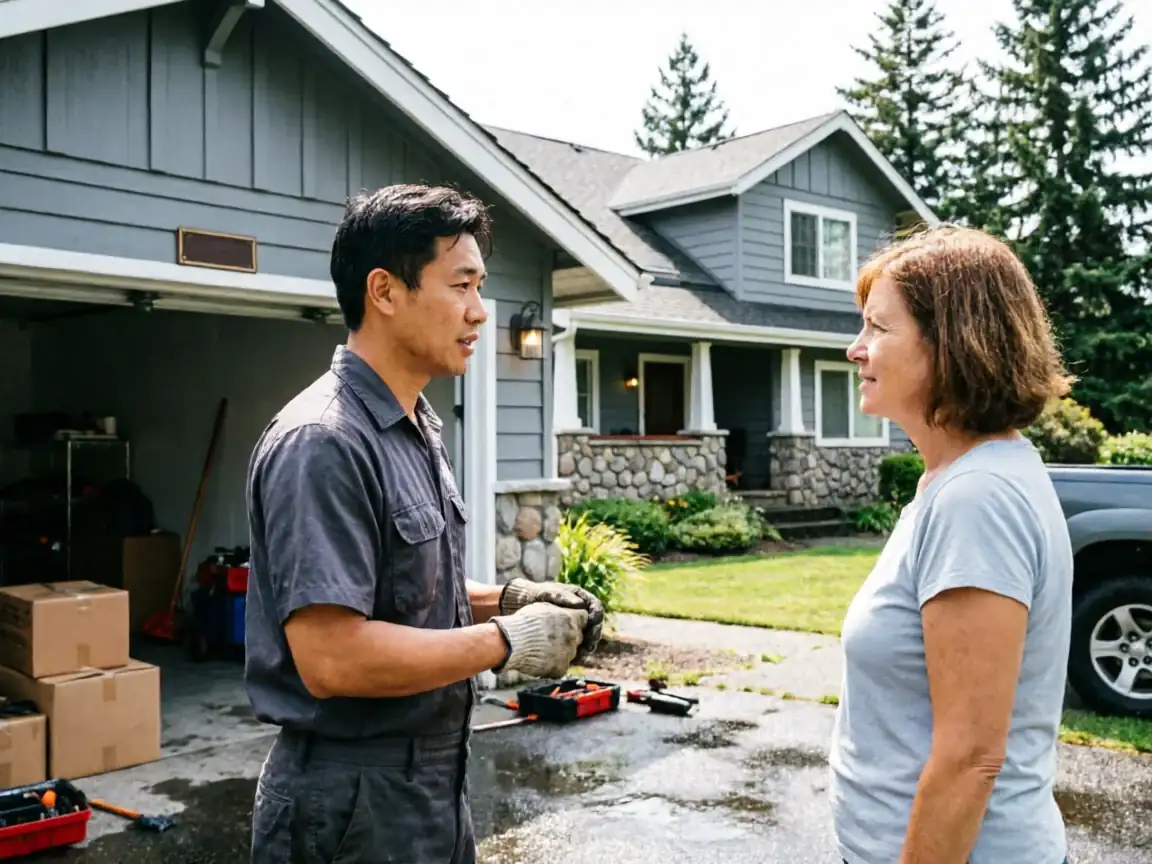
Tell us the door is stuck, crooked, or made a bang and won't move, and mention if you know it's original to the house - for a neighborhood built mostly around 1980, that's useful information before we even arrive. We serve Picnic Point from Mill Creek, so we schedule the trip out rather than running a local branch here; that's worth knowing if you're expecting a same-hour knock on the door. Have the door's rough age and whether it's single or double ready when you call - it changes what's on the truck.
What the Repair Takes
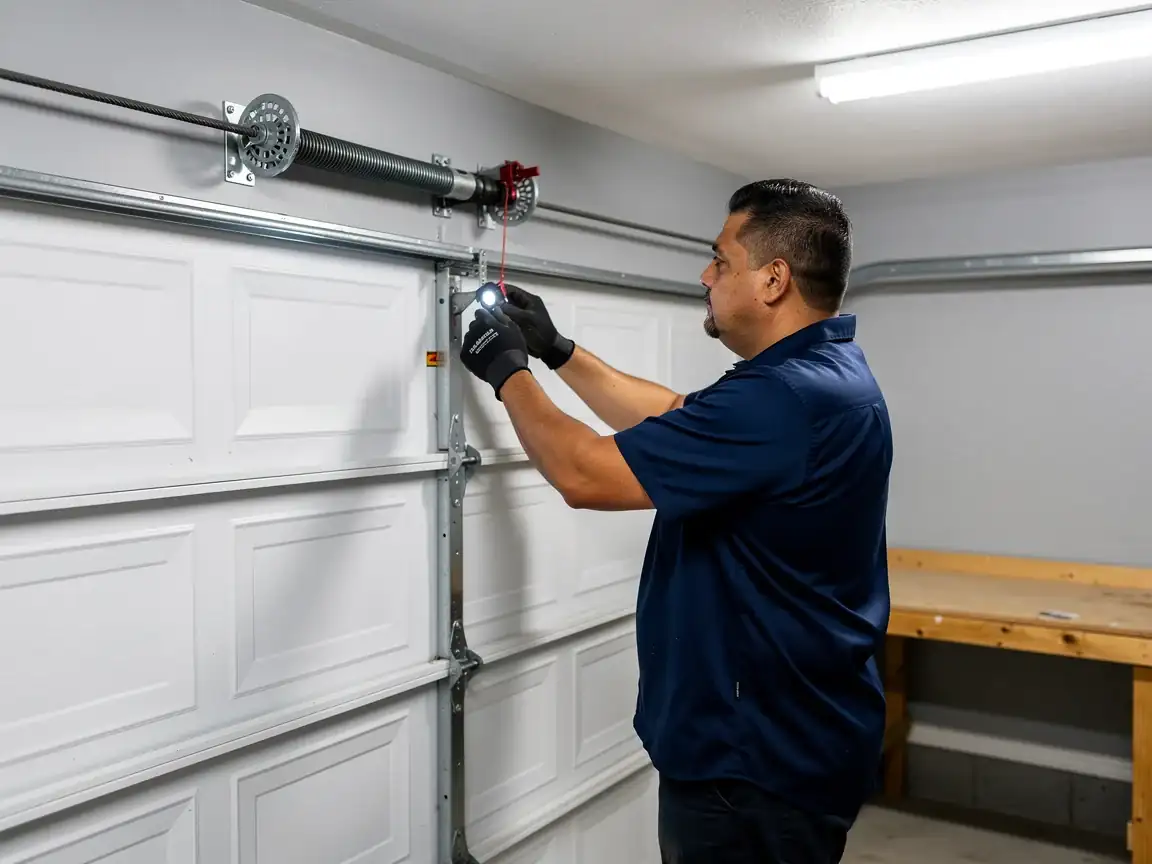
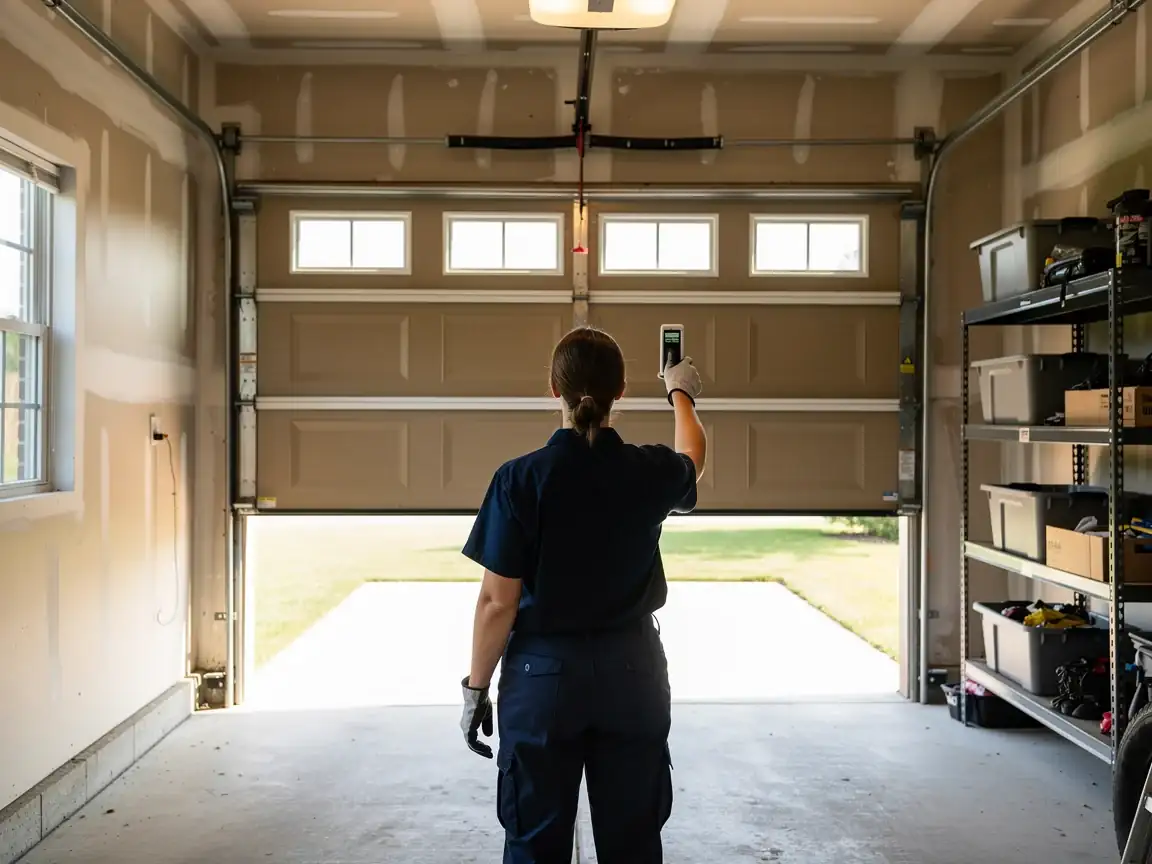
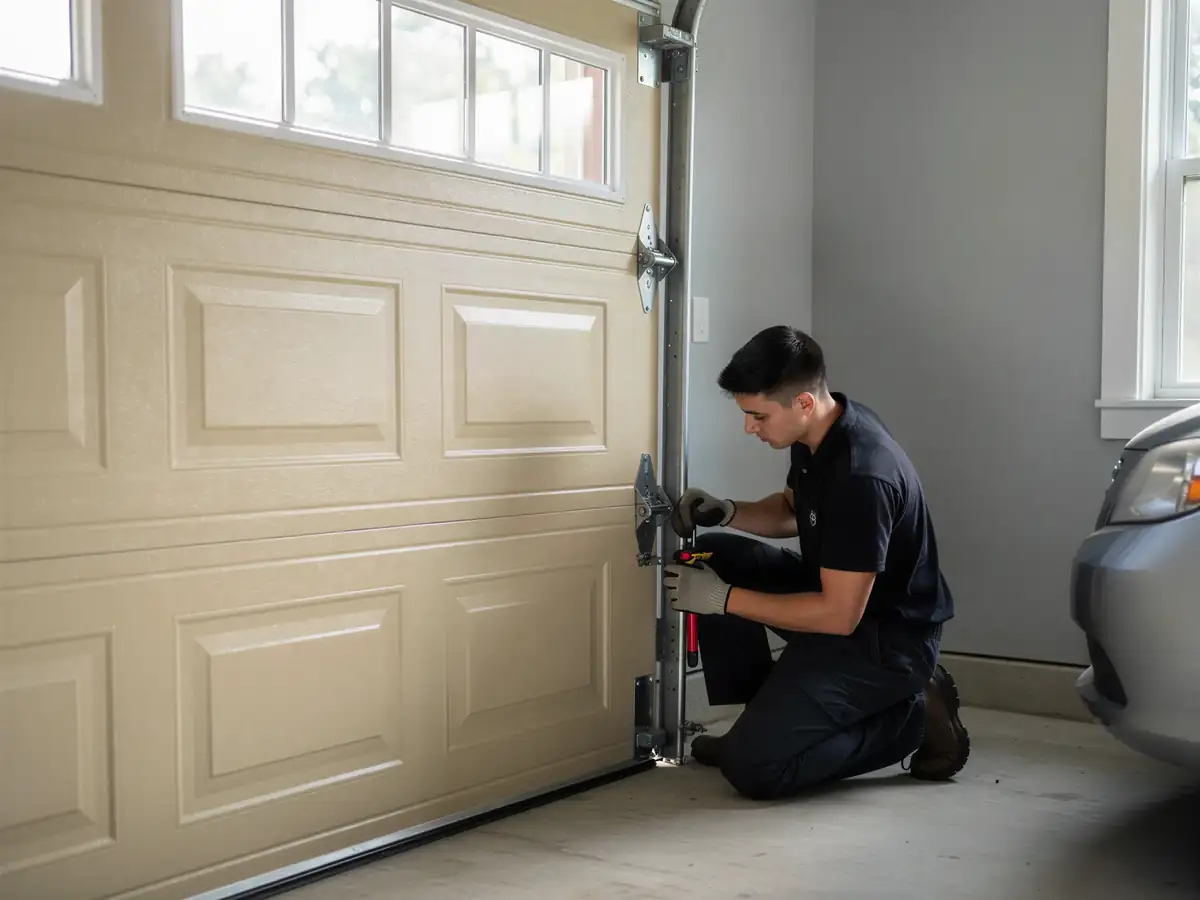
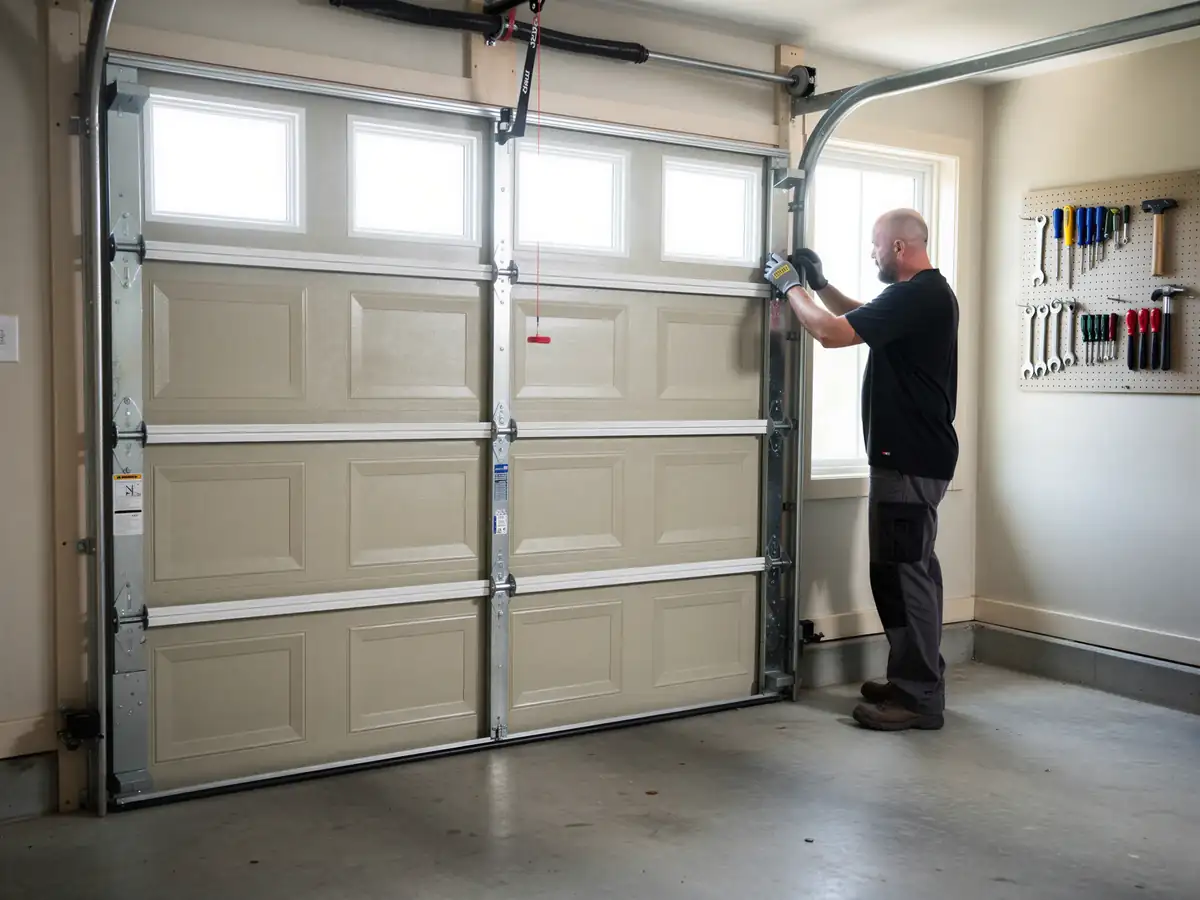
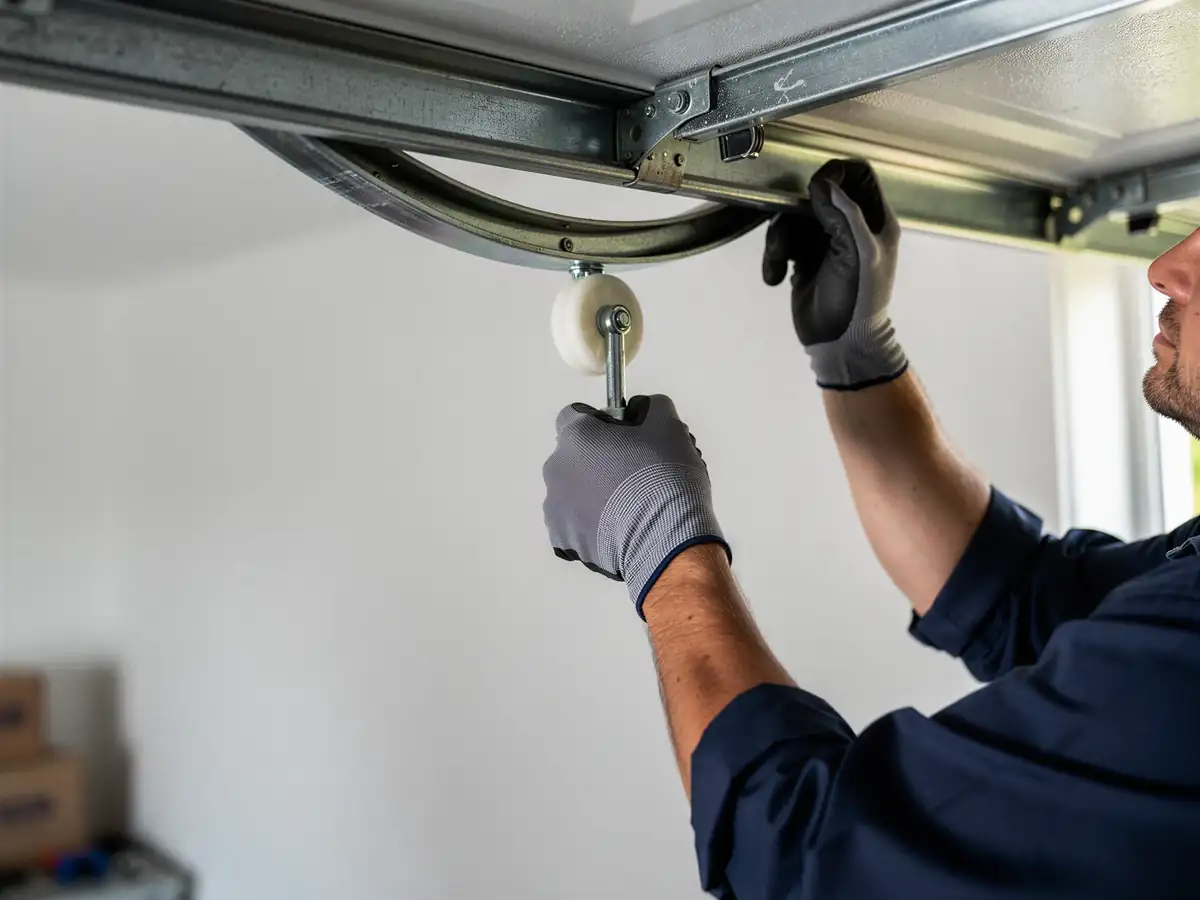
Replacing a lift cable means releasing spring tension safely, pulling the old cable off the drum, running new galvanized cable through the pulley, and reseating it under correct tension before testing balance across the full travel of the door. On a 1980-era extension system, we're also checking the pulley bracket and drum for wear, since a worn pulley will chew through a brand new cable just as fast as it did the old one. We won't replace a cable and call it done if the real problem is a cracked pulley or a bent drum - swapping the cable alone in that case just buys you a repeat call. Where the hardware is original to the house and showing broader fatigue, we'll say so and talk about whether a full spring-and-cable refresh makes more sense than a one-off fix.