Serving Mill Creek, WA & nearby
(425) 225-4815
Mill Creek, WA

Why Your Door Jumps the Track

Mill Creek homes built mostly 1968-2000 run original track hardware that cold-season metal movement can knock loose. Here's what causes it and when to call.

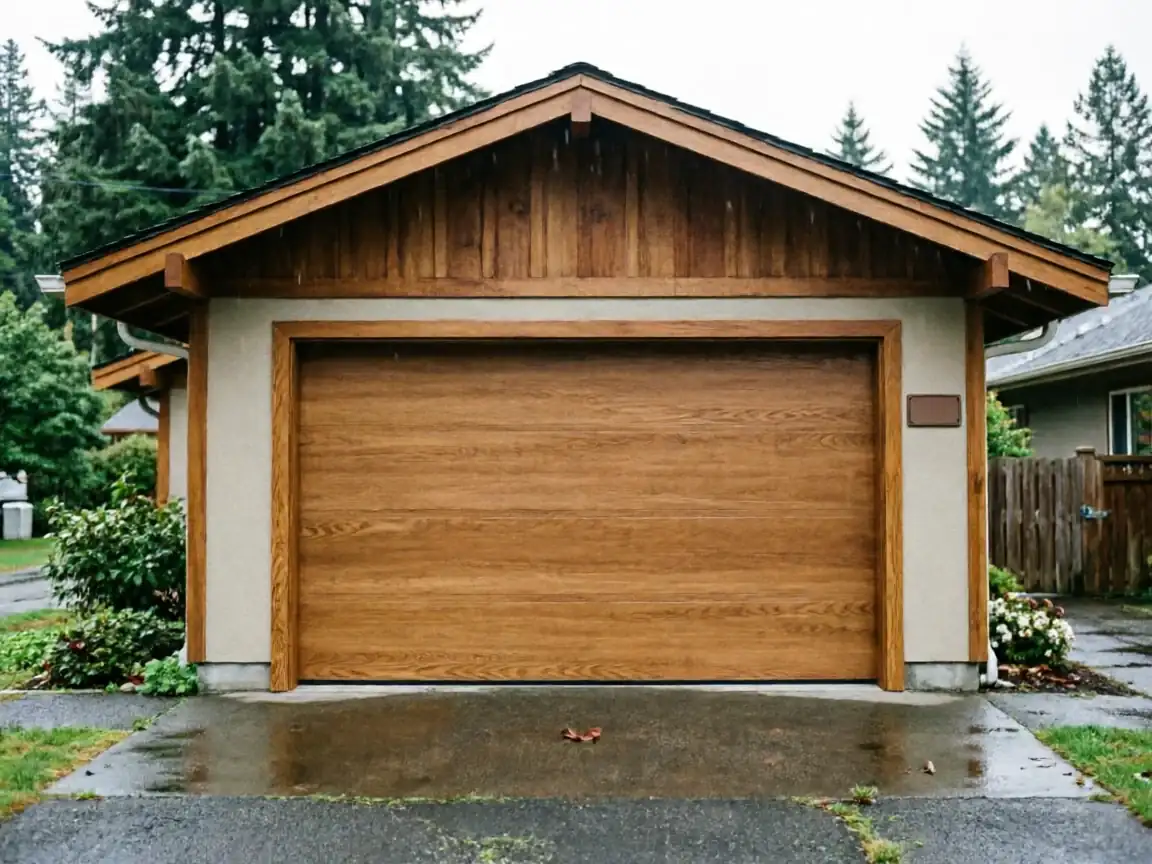
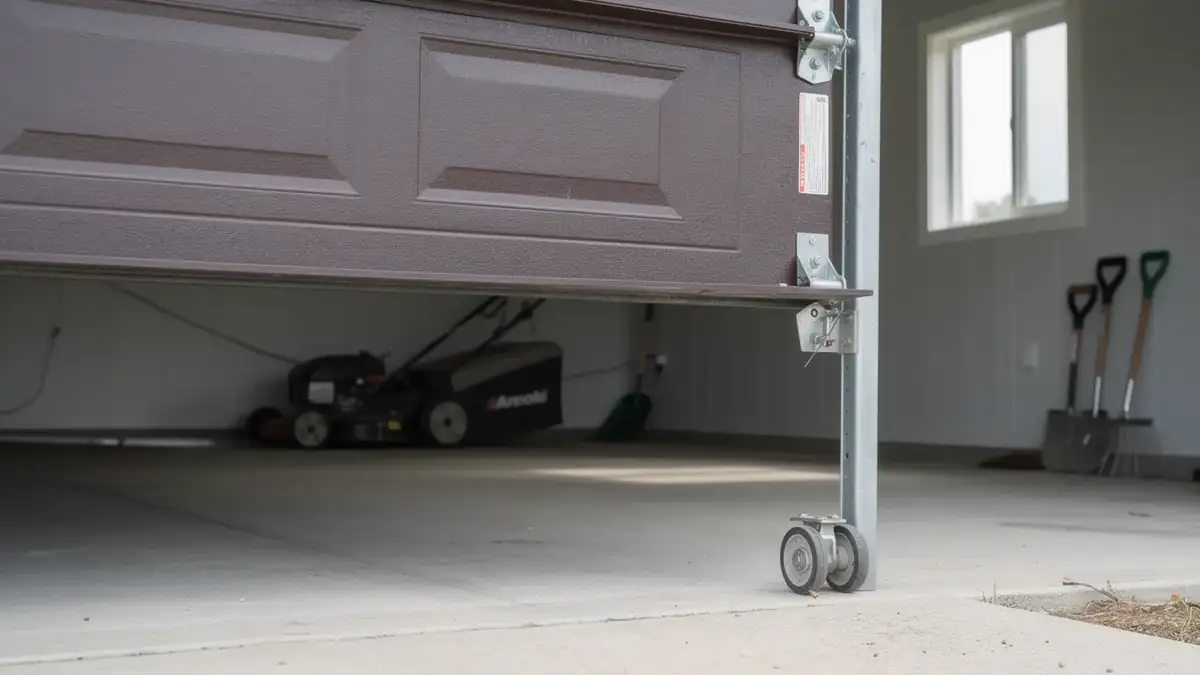
A brown garage door is partially open, showing a lawnmower and tools inside.

How Local Conditions Play In

Most houses on this side of Mill Creek went up between 1968 and 2000, with a lot of that stock clustered in the 1980s and 90s across the 31 named subdivisions in this area. That matters for tracks because the galvanized steel rail hung in a garage built in, say, 1986 has been through almost forty winters of expansion and contraction. The region sits in a cold-moderate climate band - not brutal, but enough freeze-thaw cycling each year to work the lag screws and track brackets loose a little at a time. Nobody notices a quarter-inch of drift in a bracket. Then a cold snap tightens the cable, the roller catches the gap, and the door walks off the rail on the next open cycle. Original builder-grade track from this era also tends to be lighter gauge than what gets installed today, so it flexes more under the same stress. None of this is damage you caused. It's just what forty-plus winters do to steel that was never meant to last forty-plus winters without a look.

What to Check

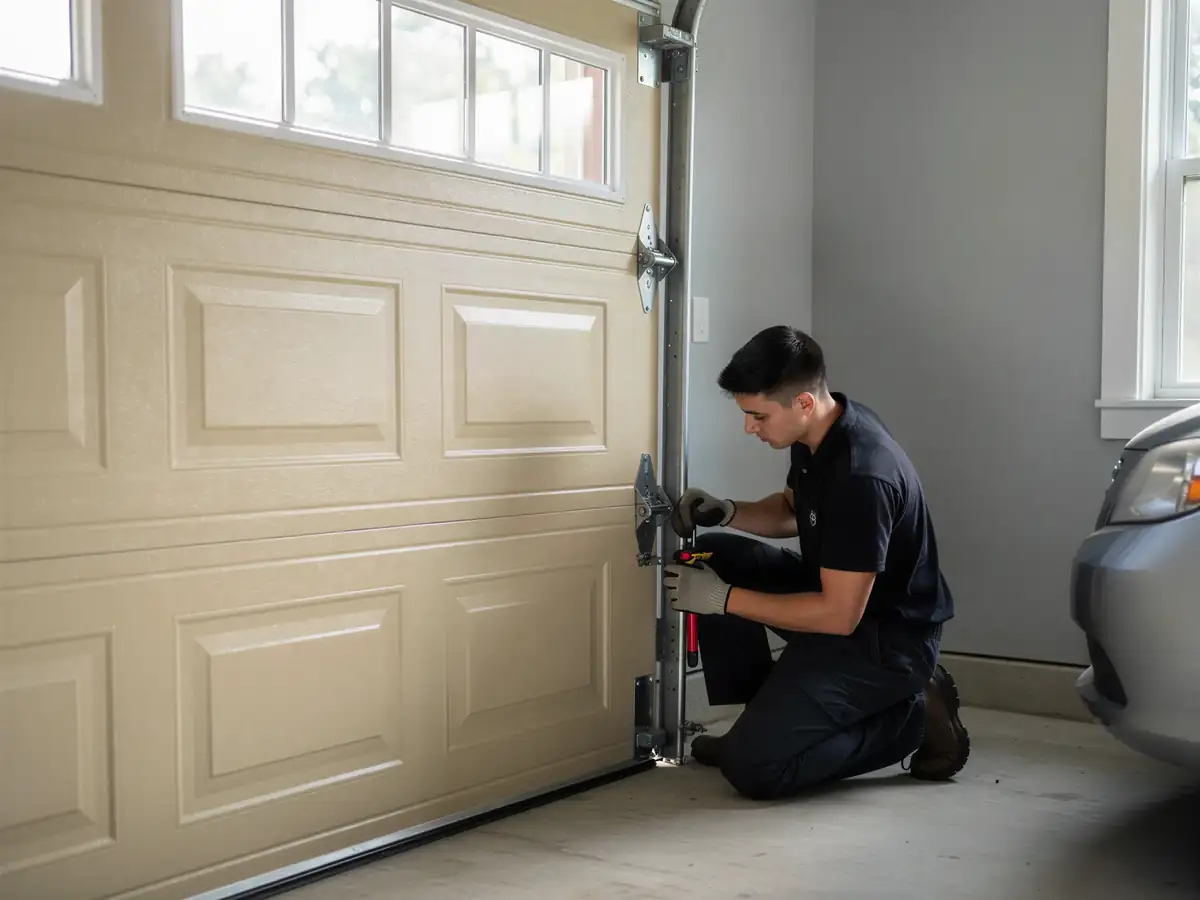
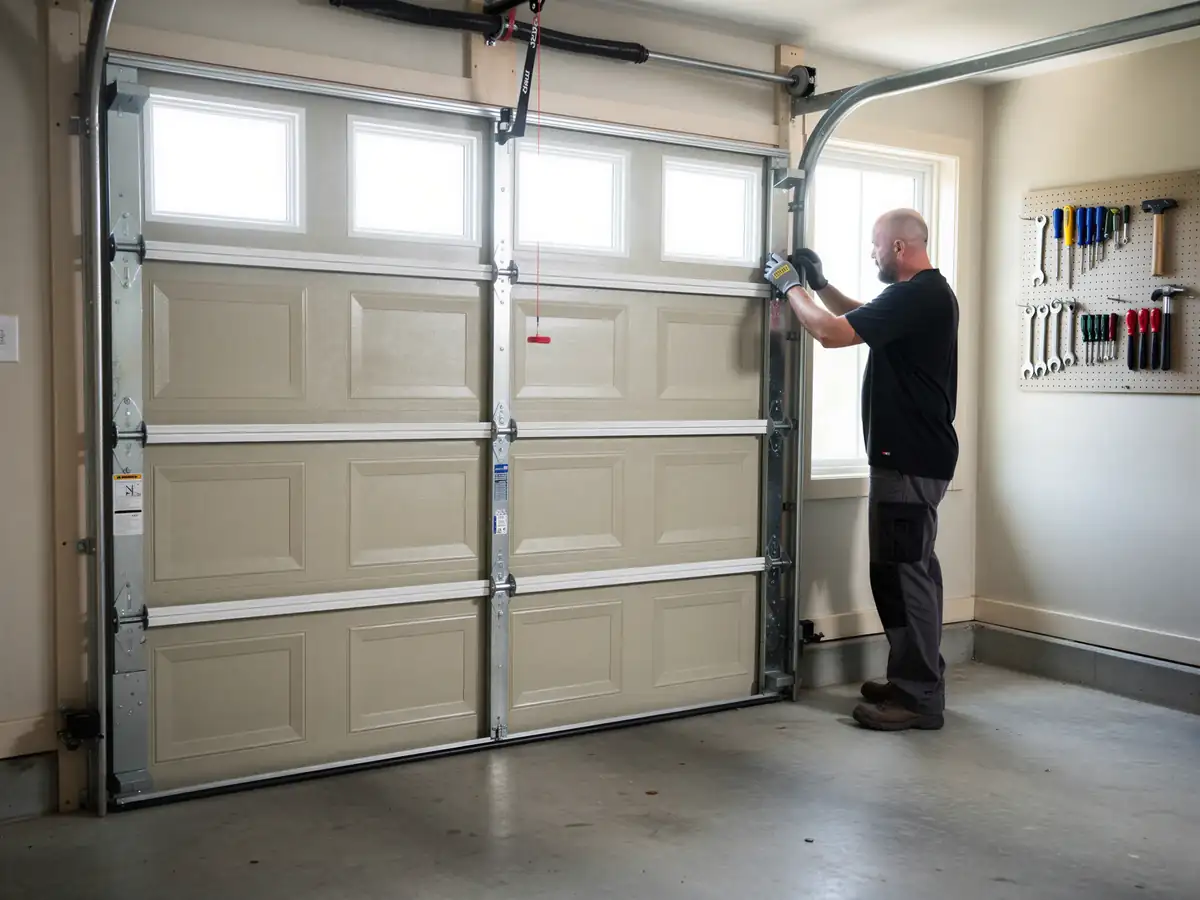
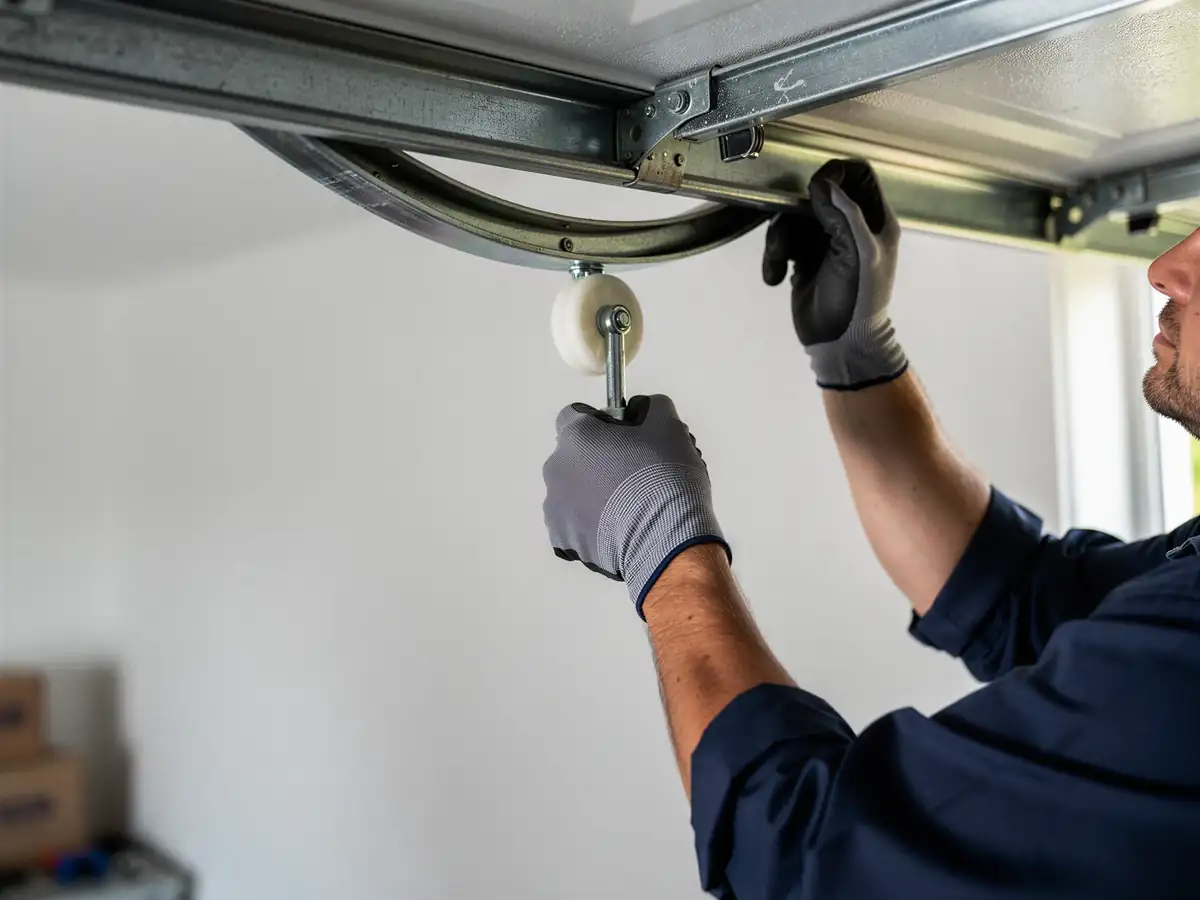
Start at the brackets holding the track to the frame - the ones near the top where the horizontal rail meets the vertical section. In homes from this 1968-2000 stock, these are usually bolted into wood framing that's shrunk slightly over the decades, so the bolts can be snug-looking but not actually tight. Grab the track and try to rock it. Any movement at all is your answer. Next, look at the rollers themselves. Original steel rollers from this period are noisy and prone to chipping; if you see a flat spot or a crack, that roller is what's walking the door sideways. Check that the two vertical tracks are parallel - measure the gap at the bottom and again at the top. More than an eighth-inch difference means the door is already running crooked before it even jumps. Last, look at the cable on the side where the door is drifting. A frayed or slightly stretched cable pulls the door unevenly every single cycle, which is often the root cause that gets blamed on the track instead.

When It Stops Being a DIY Job

Tightening a loose bracket bolt is fine to do yourself. Once the door is actually off the track - sitting crooked in the opening, or a roller has come out of the rail entirely - stop. The door is under spring tension, and a torsion or extension spring from a house built in this era is old enough that nobody can tell you from the outside how much life is left in it. Trying to force the door back onto the track by hand while it's under that tension is how fingers and hands get hurt. If the track itself is bent, not just loose, it needs to come off and get reset or replaced - bending it back by eye usually leaves it just straight enough to fail again in a month. We don't recommend trying to re-tension a cable yourself either; that's a ten-minute job for us and a trip to urgent care for most people who try it without the right bar.
The Problem

The honest version: in a lot of these 1980s and 90s Mill Creek garages, the track going off isn't really a track problem, it's an age-of-hardware problem that shows up as a track problem. Brackets loosen, rollers wear, cables stretch, and the track is just the part that visibly gives. We'll straighten or reset a track on a call, but if the rollers are original and chipped or the cable is frayed, patching the track alone just buys you a repeat visit. One limitation worth saying plainly - if the vertical track is bent more than slightly, we're not going to hammer it back into shape and call it fixed. That section gets replaced, because a track that's been bent once is weaker at that bend point even after it looks straight again.

How it works

From “it’s stuck” to “it’s fixed”

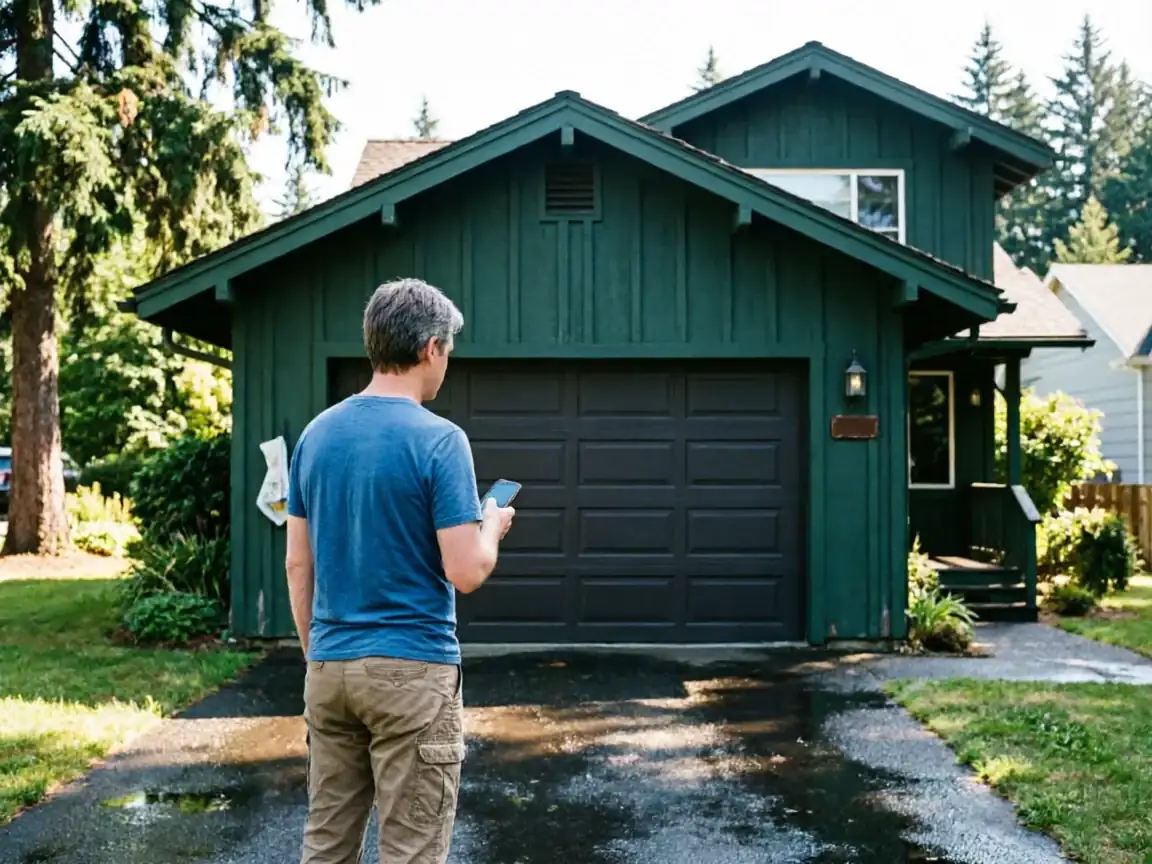
A man stands in a driveway, looking at his phone and a dark green house.
1

Tell us what’s wrong

Describe the symptom - won’t open, loud bang, opener runs but the door won’t move.

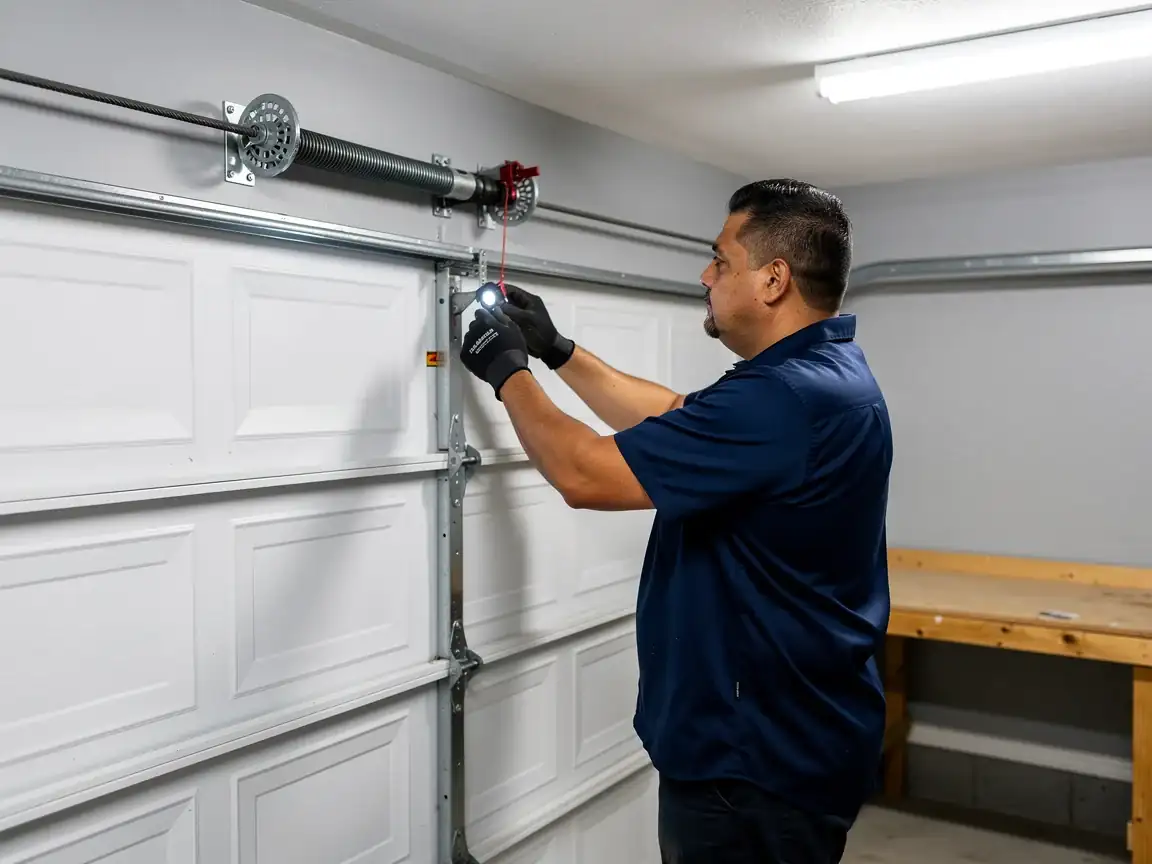
A technician inspects the garage door torsion spring with a flashlight.
2

On-site diagnosis

A technician tests the door under power and by hand and finds what actually failed.

A technician in a gray uniform talks to a woman in a light blue shirt.
3

Clear, up-front plan

You get the fix that’s needed and what drives the cost - before any work starts.

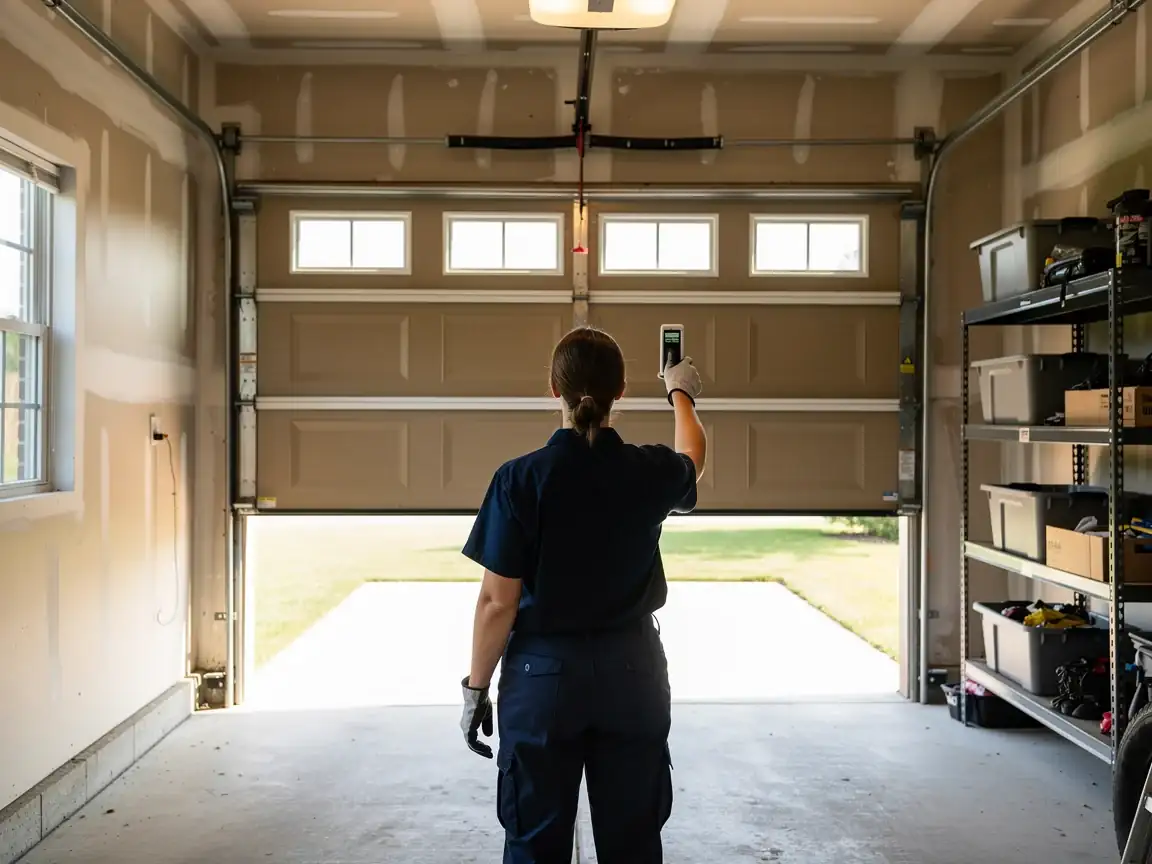
A technician operates a garage door opener with a remote control.
4

Repaired & tested

The repair is done, the door is set true and tested, and the work area left clean.

Not sure which repair your door needs in Mill Creek, WA? Describe what it’s doing - every job starts with a diagnosis.

8areas covered
How we work

What to expect

A straight, honest approach on every Mill Creek job.

Diagnosis first

Every visit starts by finding what actually failed - not a pre-written parts list.

The right part for the door

Springs and openers matched to the door’s weight and age, so the fix holds up.

Straight answers

When a repair makes more sense than a replacement - or the reverse - you hear it plainly.

Clean, careful work

Tension released safely, hardware set true, the door tested under power before we leave.

What we do

Garage Door Services

Repair and installation work for Mill Creek homes and businesses.

Questions

Frequently asked

Straight answers about garage door repair in Mill Creek. Still unsure? Ask us directly.

Is it normal for an older Mill Creek garage door to go off track more than once?

If the house dates from the 1968-2000 era common in this area, yes - once hardware starts loosening from age, it tends to keep loosening unless you replace the worn parts rather than just resetting the track each time.

Can cold weather really cause the track to shift?

Yes. Mill Creek sits in a cold-moderate band, and the repeated freeze-thaw cycling each winter works metal brackets and lag screws loose over years. It's gradual, not a single event, which is why it tends to show up as the door suddenly jumping the track.

Should I just replace the whole track system?

Not always. If the brackets are loose but the rail and rollers are sound, a reset and tightening handles it. We only recommend full track replacement when the rail itself is bent or the rollers are original and worn out.

Ready to get your garage door sorted?

Tell us what it’s doing and where you are in Mill Creek - we’ll take it from there.

Request a QuoteCall