How Local Conditions Play In
Most houses in this area went up between 1968 and 2000
With a lot of that stock clustered in the 1980s and 90s across the 31 named neighborhoods we work in, around Silver Firs. That matters because doors and openers from that build era are hitting 25 to 45 years old right now, which is past the working life of most torsion springs, most chain-drive openers, and a good share of the original rollers.
- 45 years
The climate here is cold-moderate, not desert, not deep freeze
That's good news in one way: you don't get the extreme thermal swings that crack panels or warp wood doors the way you'd see in a harsher band. But damp, repeated cold mornings still stiffen grease in old bearings and corrode steel cable strand by strand where water sits on the bottom rollers. A door that looks fine in July can bind hard in January.
So the question with an older Mill Creek door usually isn't storm damage
It's slow wear on parts nobody's touched since the house was built, compounded by a climate that's mild enough to hide the problem until the spring finally lets go.
What to Check
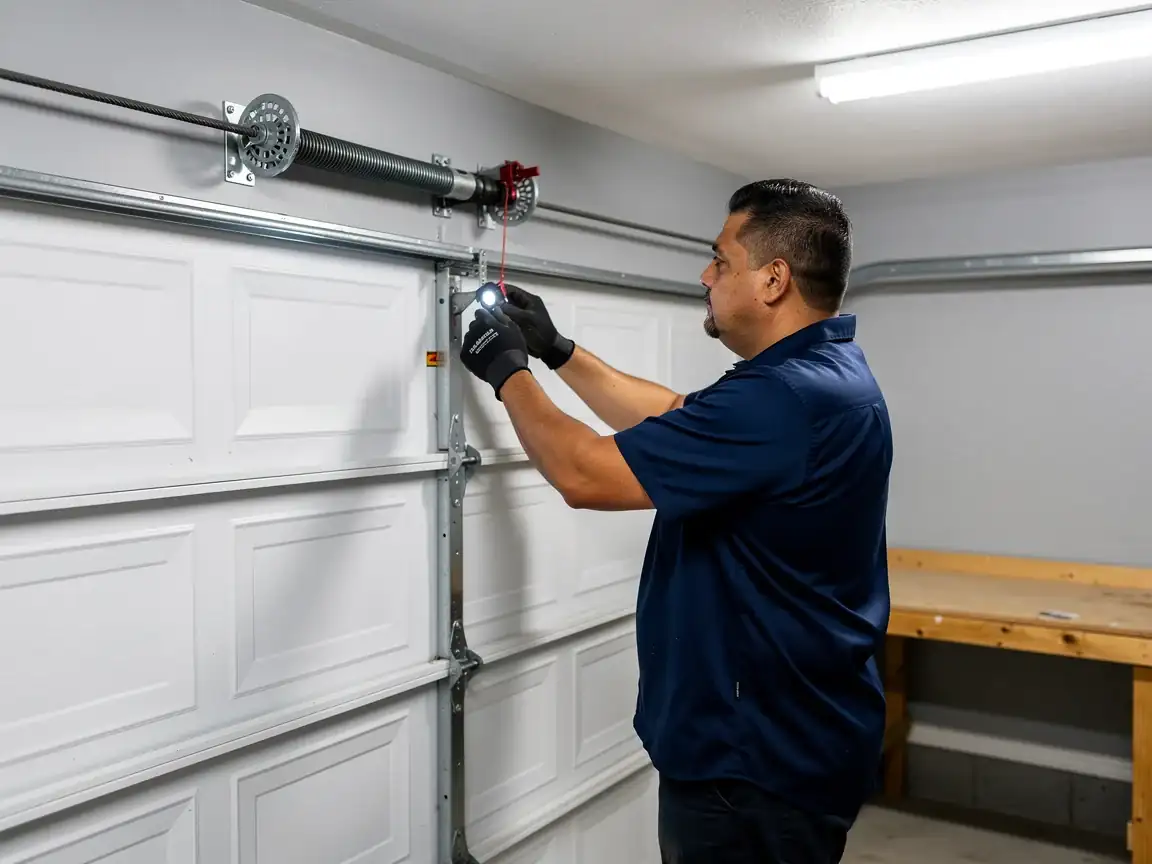
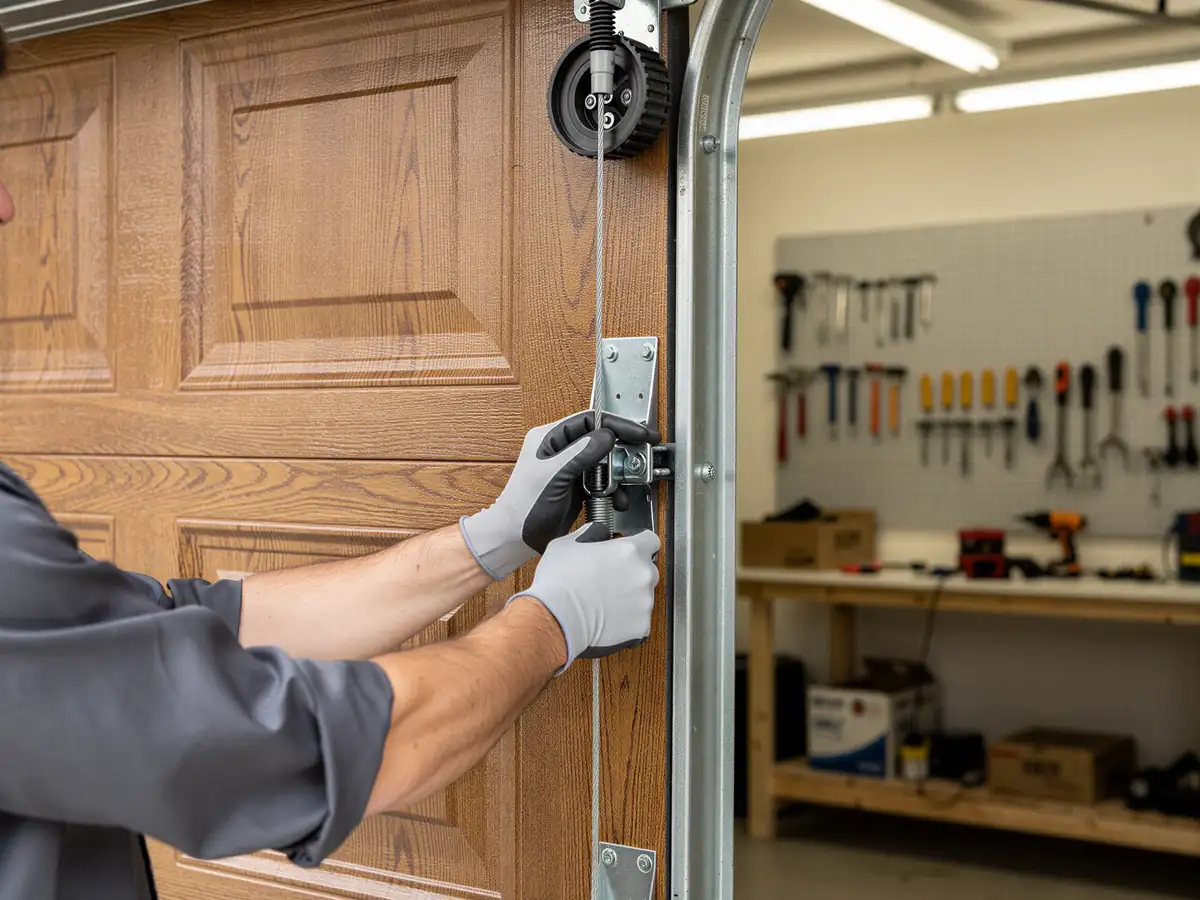
Start with the springs. If the door is original to a house built in the 1980s or 90s, the torsion spring has done tens of thousands of cycles and the steel is fatigued whether or not it looks rusty. Lift the door by hand with the opener disconnected - if it's heavy or uneven, the spring is going, not the opener.
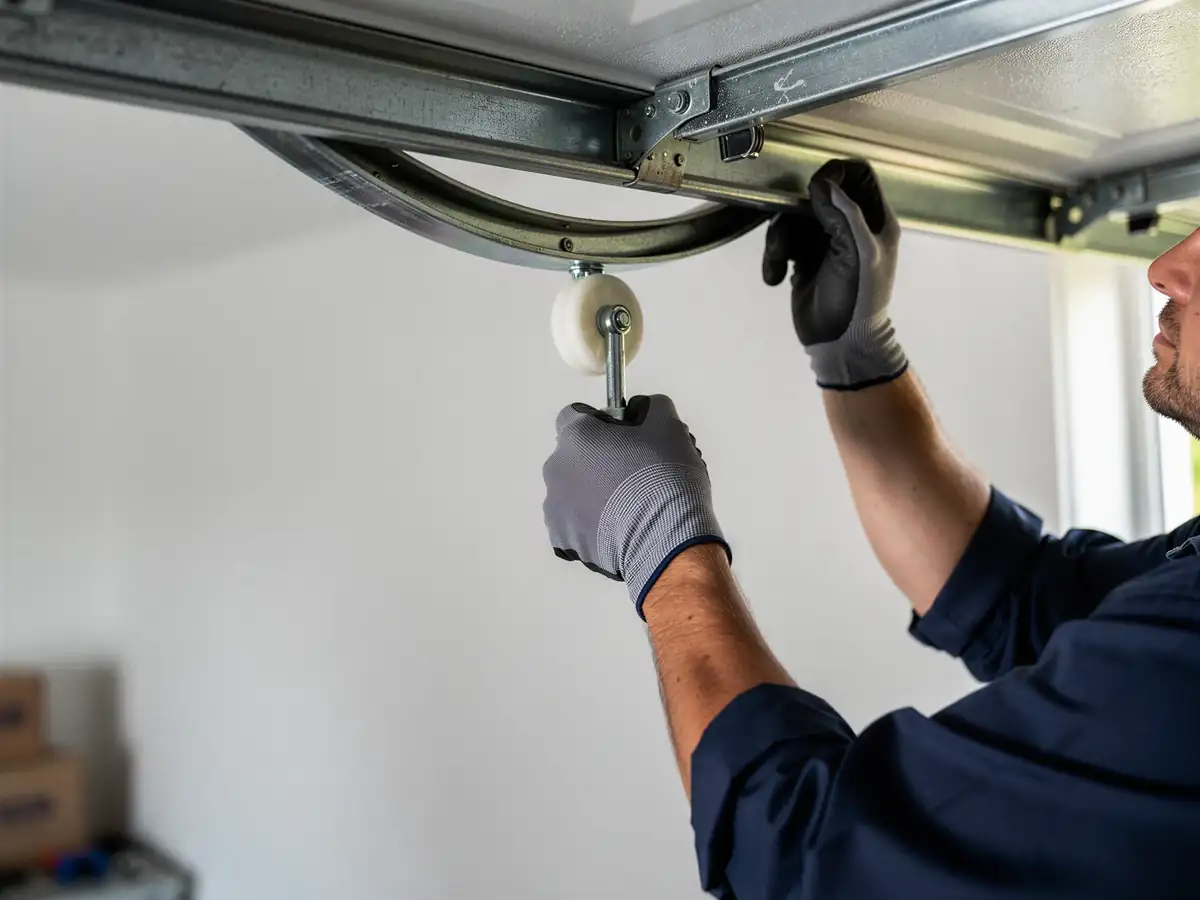
Check the track for rust pitting at the bottom few feet, where runoff and condensation collect over decades in this climate. Light surface rust wipes off; pitting that catches a fingernail means the track is thinning and will eventually bind the rollers.
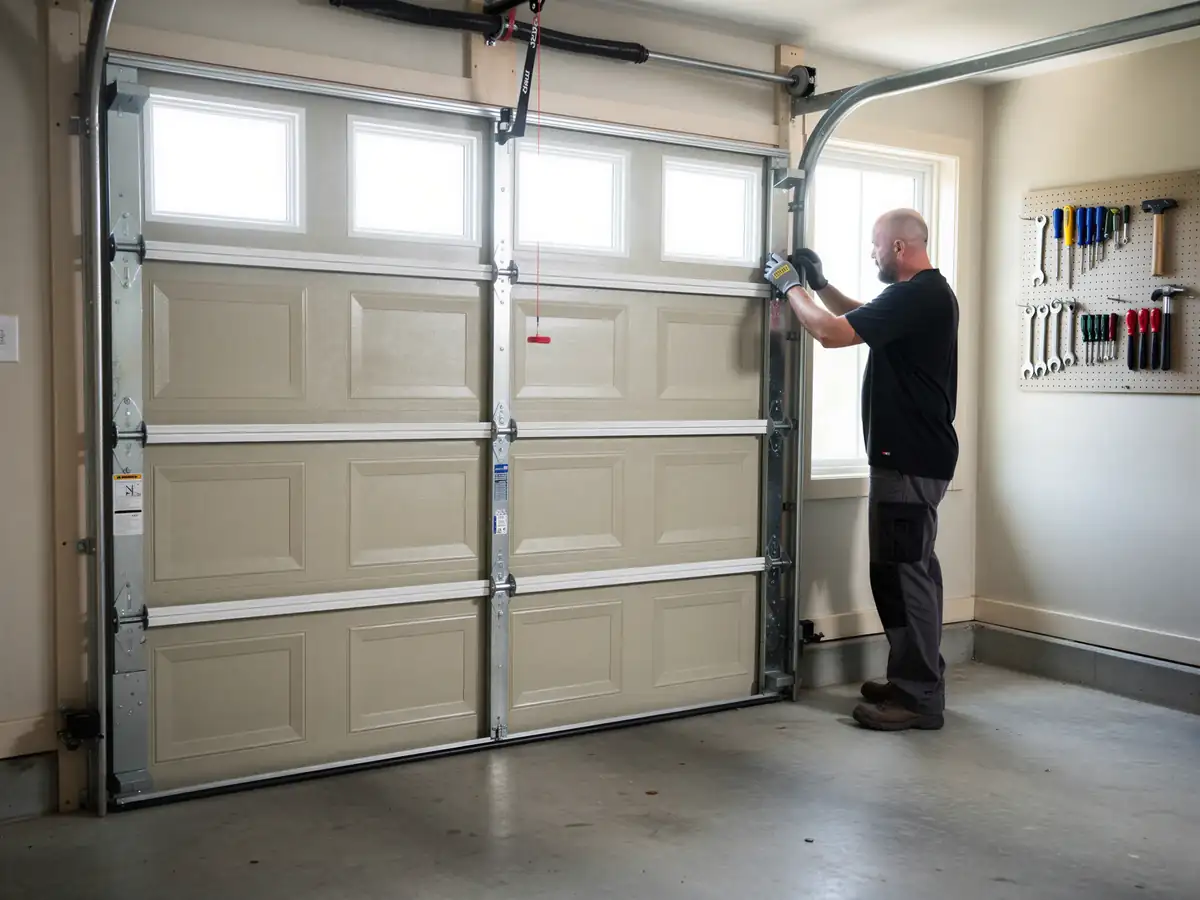
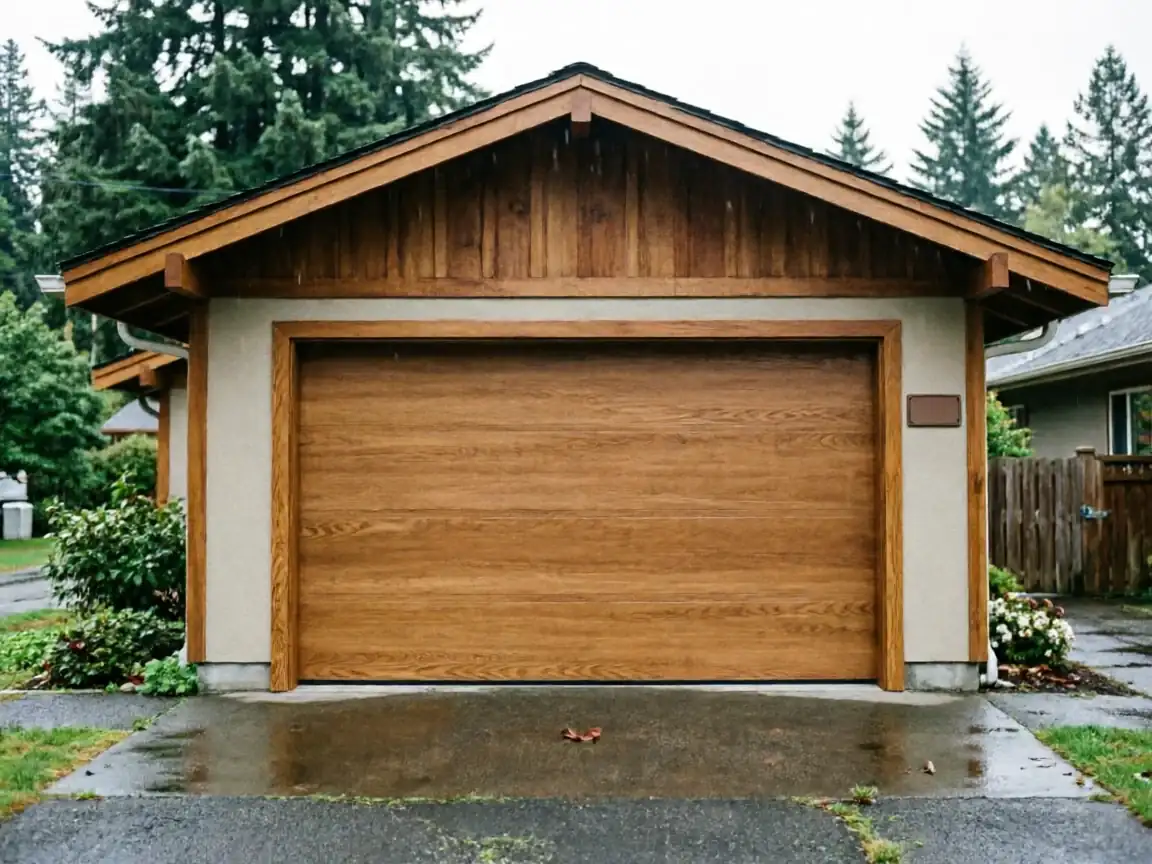
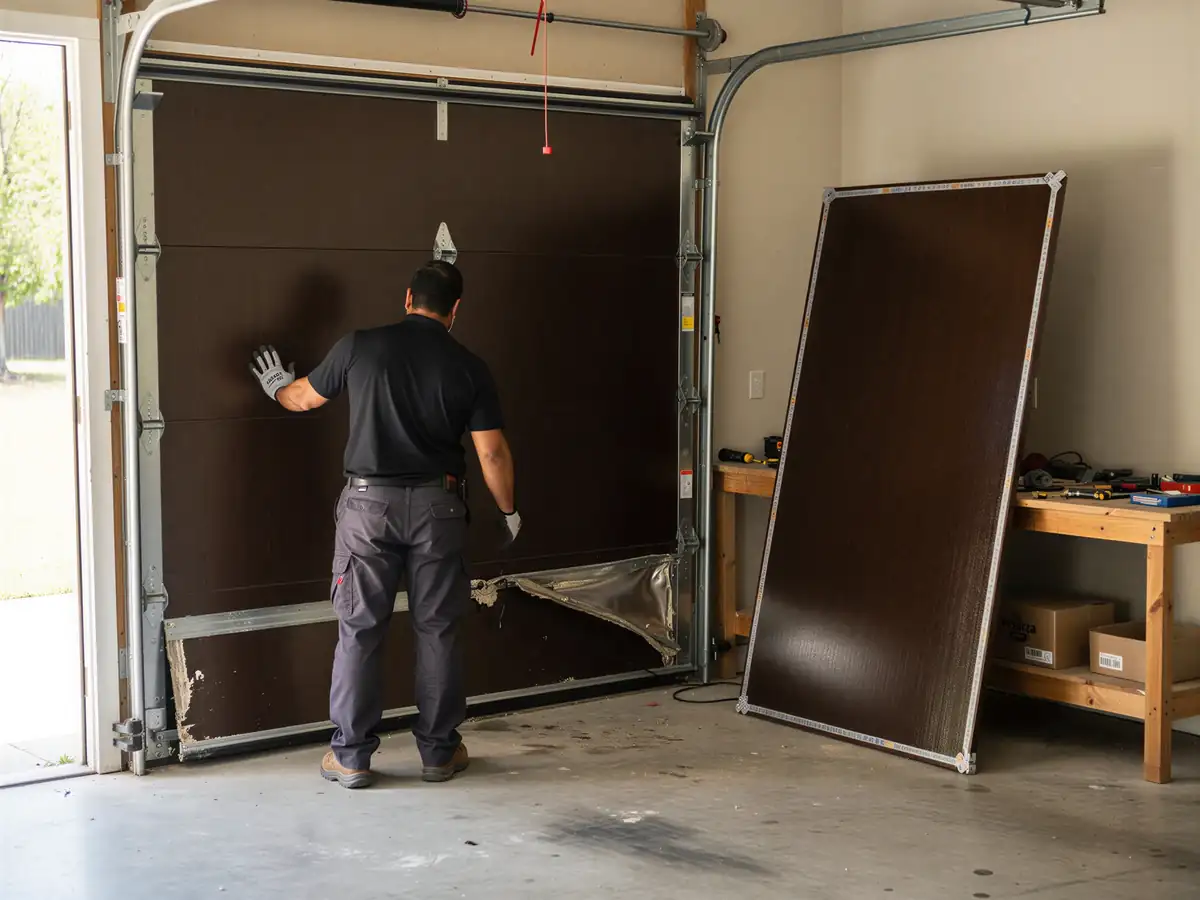
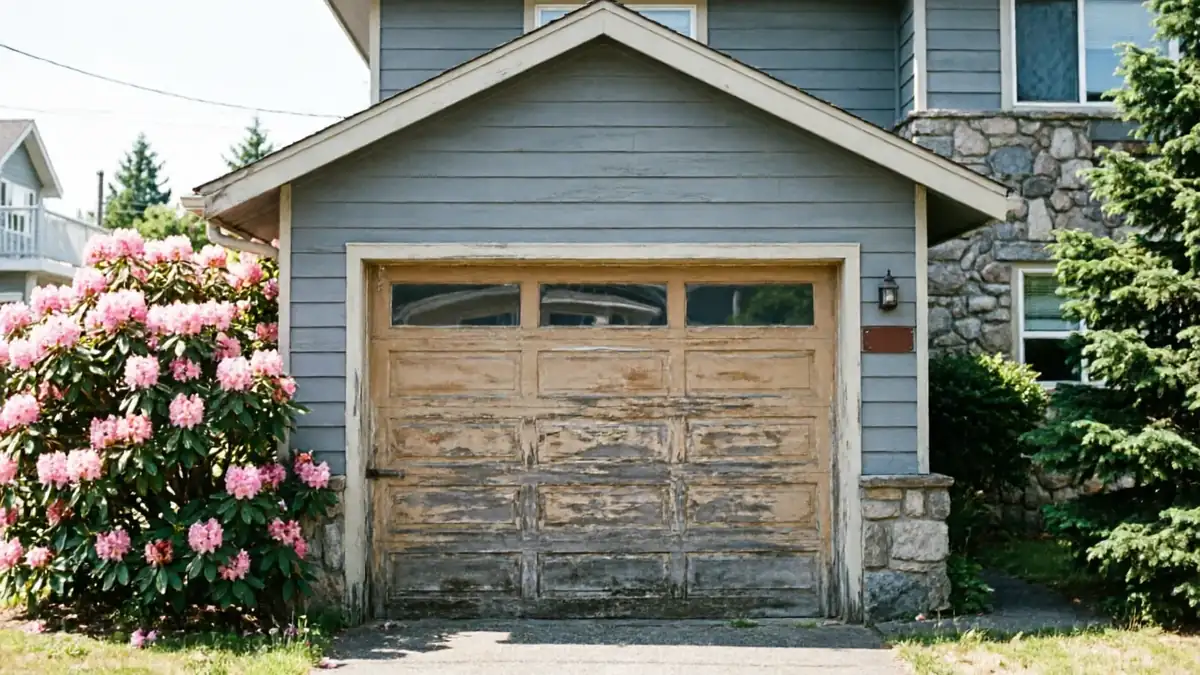
Look at the panels themselves. Steel doors from that era usually have a foam core that's fine structurally even after 30-plus years; the failure point is almost always hardware, not the panel skin. Wood doors from the same vintage are a different story - check bottom corners for soft spots where moisture has worked in over the years.
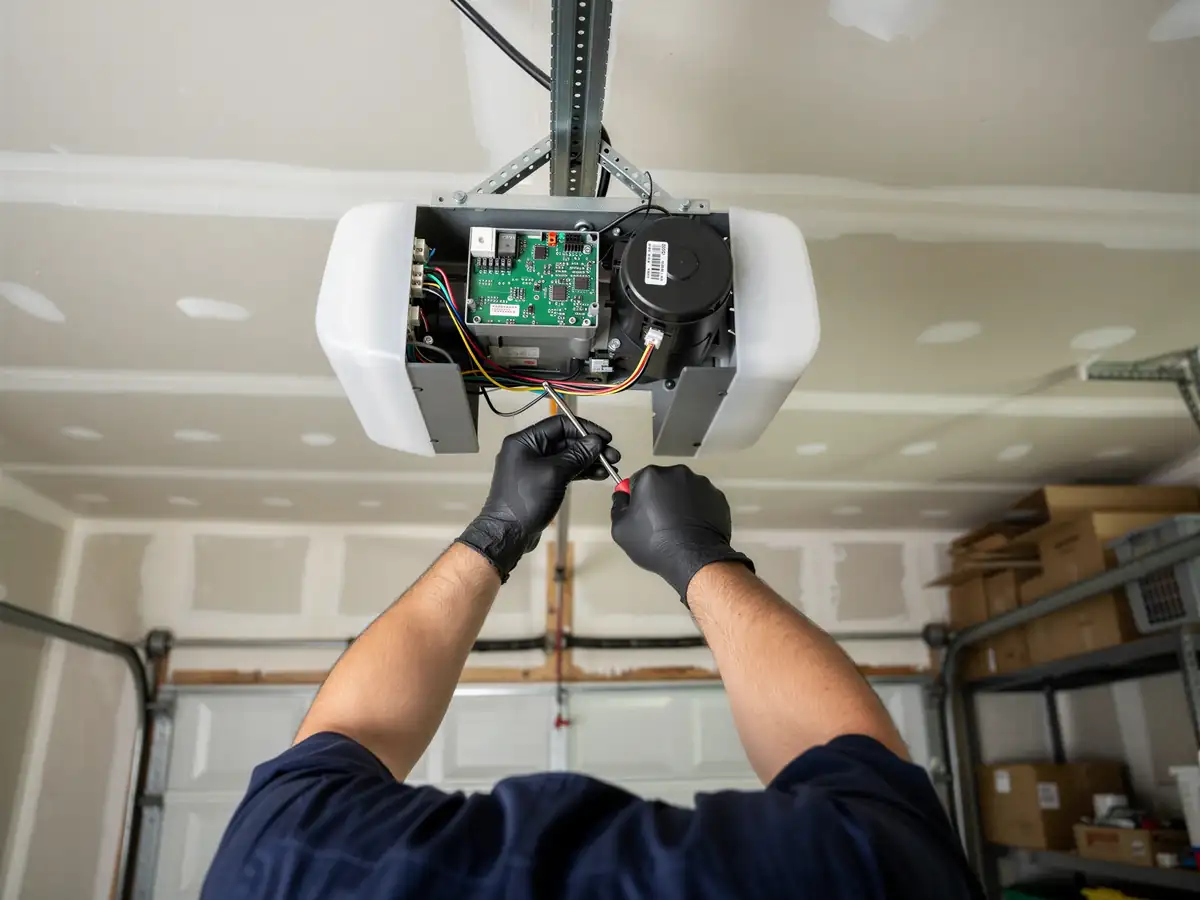
Last, listen to the opener. A chain drive from the 80s or 90s grinding or hesitating on the rail usually means worn gears, not a wiring fault.
When It Stops Being a DIY Job
A spring under tension is not a weekend project, full stop - that's true on a brand-new door and it's truer on one that's been loaded and released for 30 years, because nobody knows exactly how much fatigue is left in that steel. If the door won't lift evenly, or it slams down instead of lowering, call someone rather than working under it.
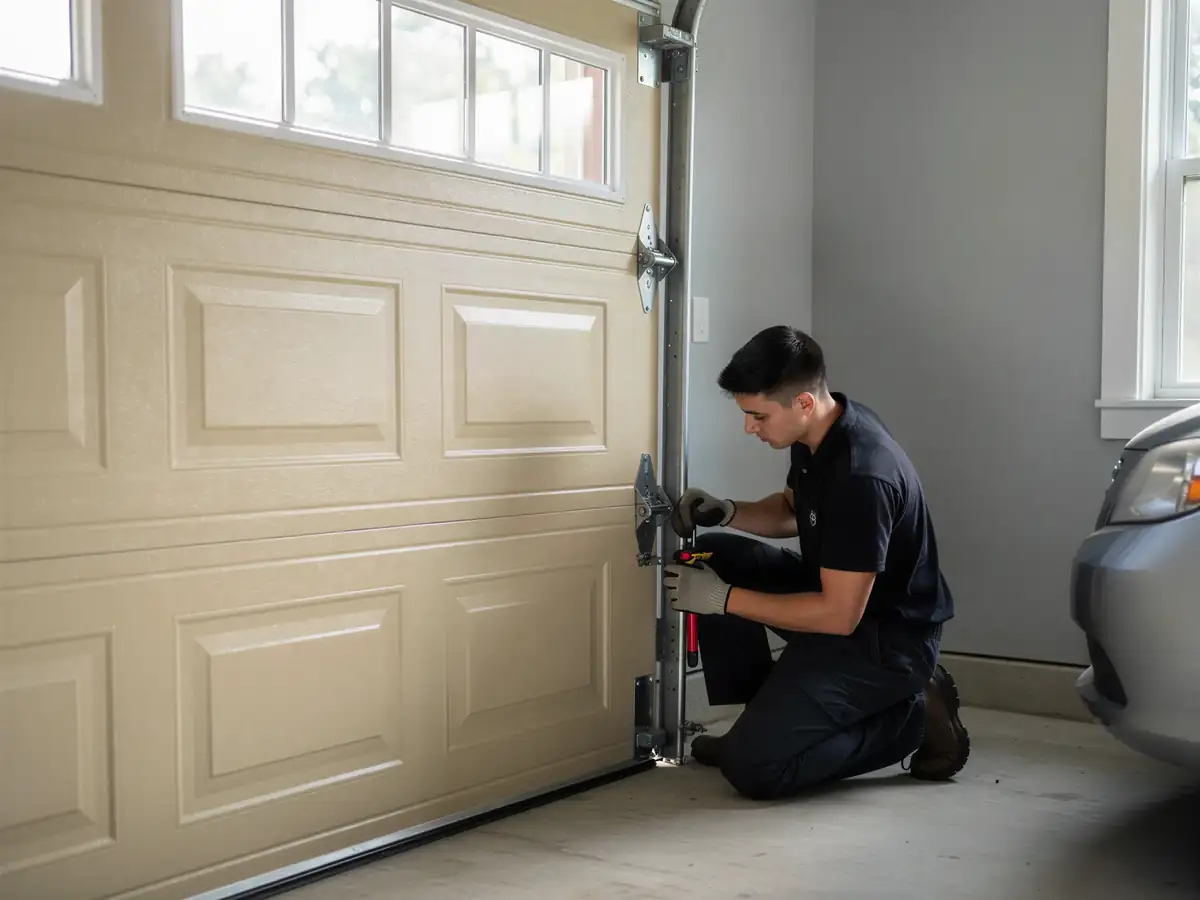
Track realignment on an older door is also past DIY once the holes in the jamb have worn oversized from decades of vibration - redrilling and resetting brackets is a job that needs the door supported, not just a ladder and a wrench.
We'll say plainly what we can't do: if the opener is a model from the original build and the control board is dead, we're not always going to find an exact replacement part for something that old. Sometimes the honest fix is a new opener, not a repaired one.
The Problem
The real problem with doors from this era isn't that they're bad doors
1980s and 90s steel sectional doors were built solid. It's that the hardware around them has a shelf life the door itself doesn't, and in a household income range like this area's median of $127,043, most owners would rather spend $200 on a spring and cable job than $1,800 replacing a door that's structurally fine.
The trouble is telling those two situations apart without opening it up
A door that sags on one side, chatters on the track, or has visibly stretched cable is still a repair candidate. A door with rotted wood panels, a bent top section from an old impact, or a track bent beyond reseating is a replacement conversation, and we'll tell you that straight rather than patch something that'll fail again in a year.