Why It Happens Here
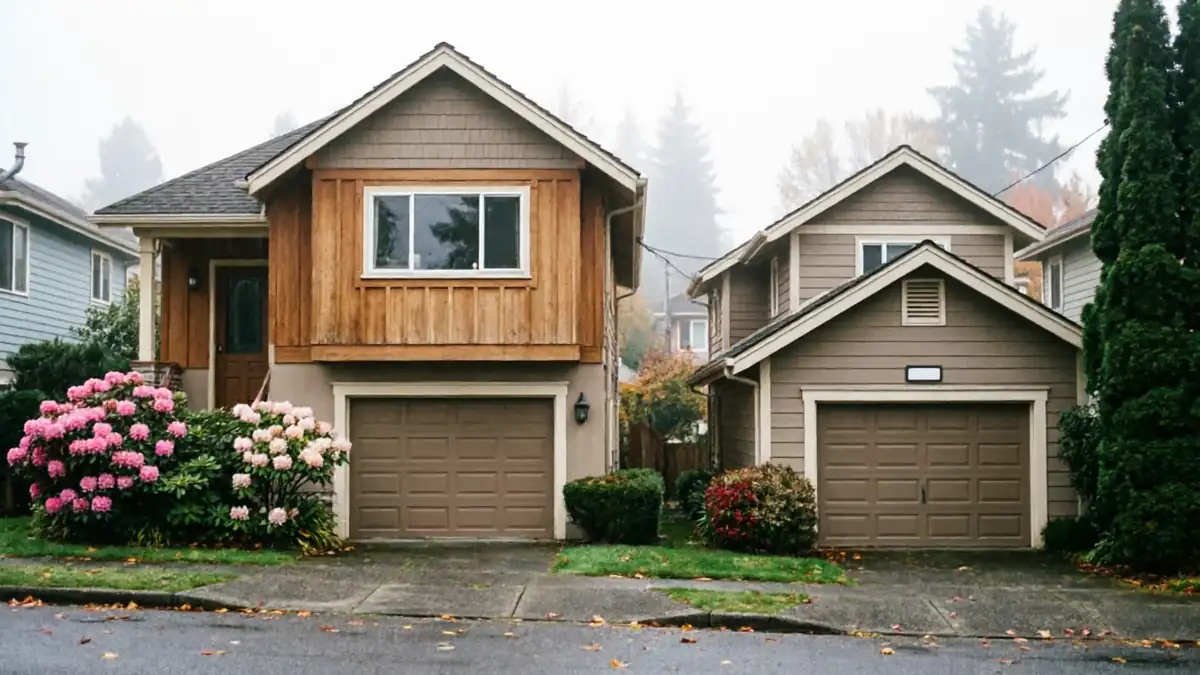
Most of the housing stock around Mill Creek went up between 1968 and 2000
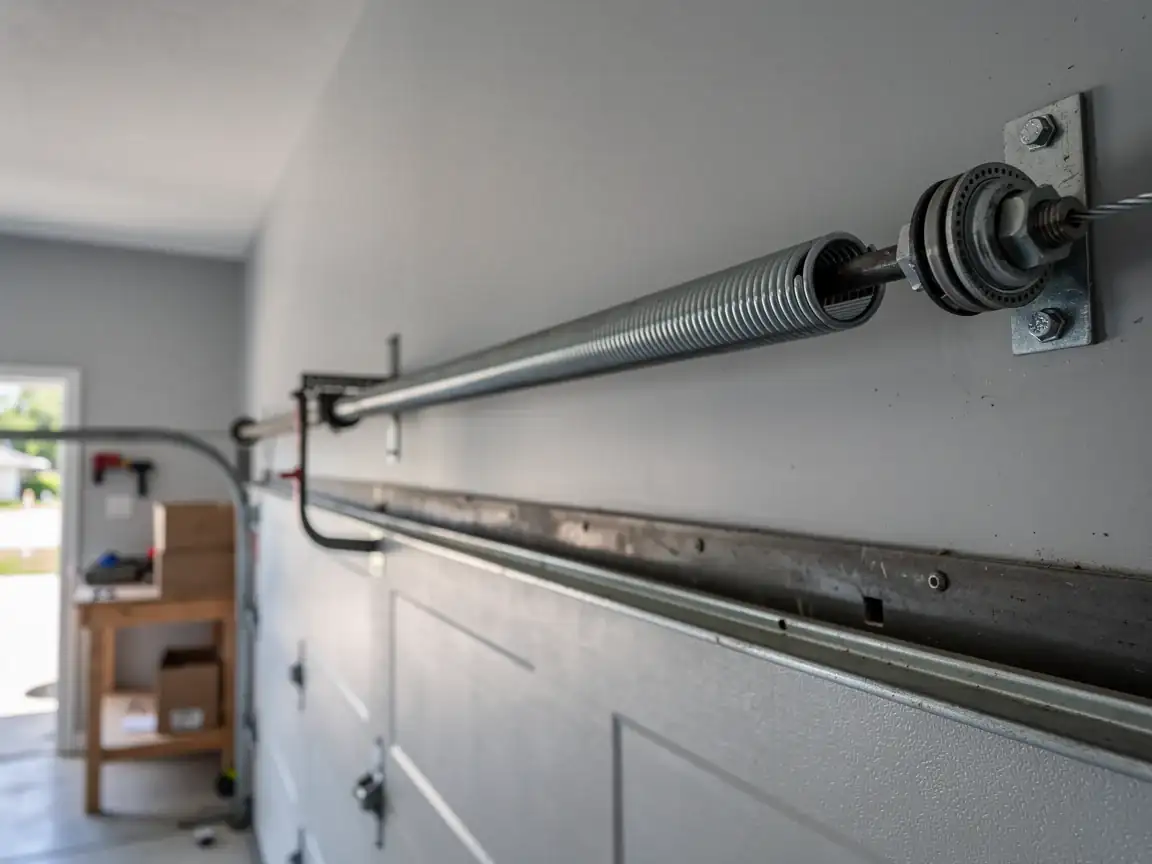
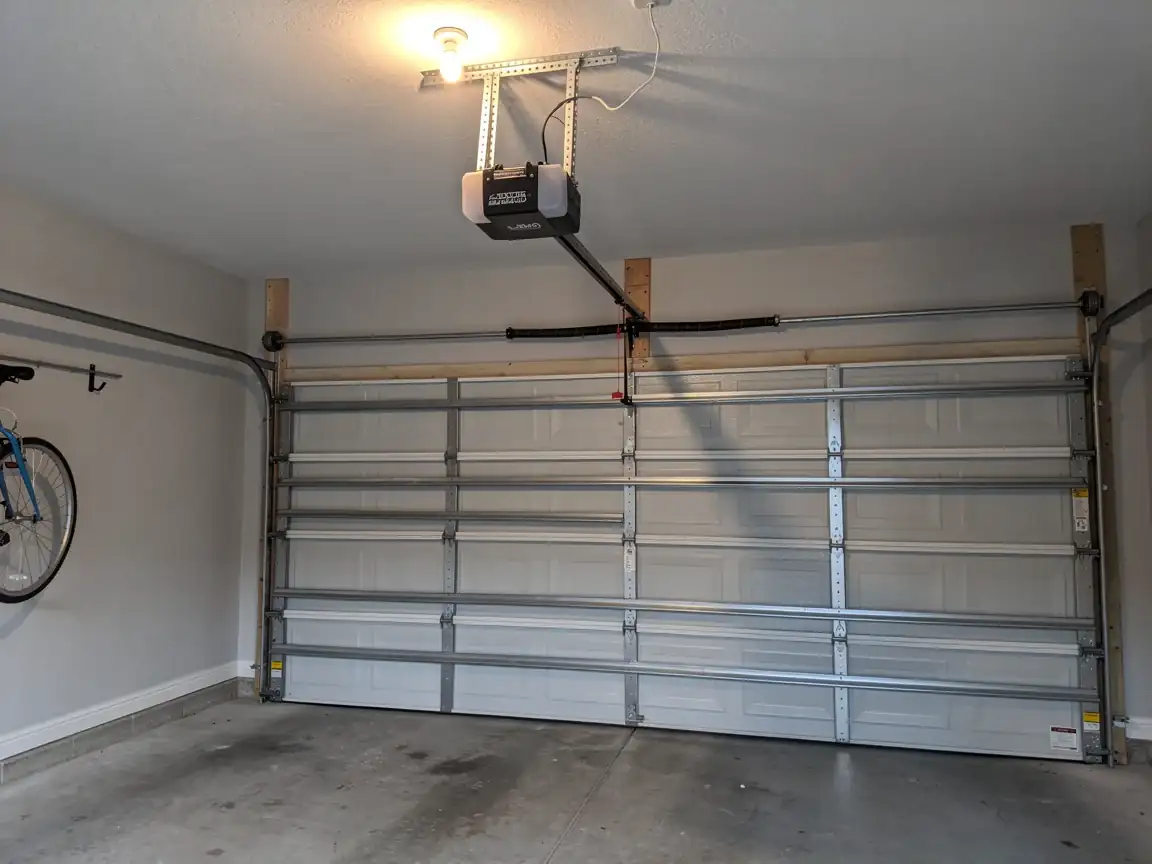
With a lot of it clustered in the 1980s and 90s build years across the named neighborhoods in this part of Snohomish County. That matters because a torsion spring is rated for a set number of cycles, usually somewhere around 10,000, and a door installed when a house was framed in, say, 1989 is now well past the point where that spring was ever expected to last. Openers from that same era are on their second or third drive belt if they're lucky, and a lot of them are still running the original logic board.
The cold moderate climate here adds its own wear pattern
It's not extreme heat cracking seals the way it would somewhere drier, it's repeated damp-cold cycles that work on exposed metal - rollers, hinges, the bottom bracket where the cable terminates. Steel that's been sitting in an unheated garage through thirty-plus winters corrodes slower than people expect, right up until the day it doesn't. We see a lot of doors that look fine from the driveway and have a spring or a cable that's one cold snap from letting go.
None of this is about bad luck
It's the math of a 1980s build date meeting a damp winter climate, repeated across tens of thousands of houses in roughly the same age bracket.
The DIY Question
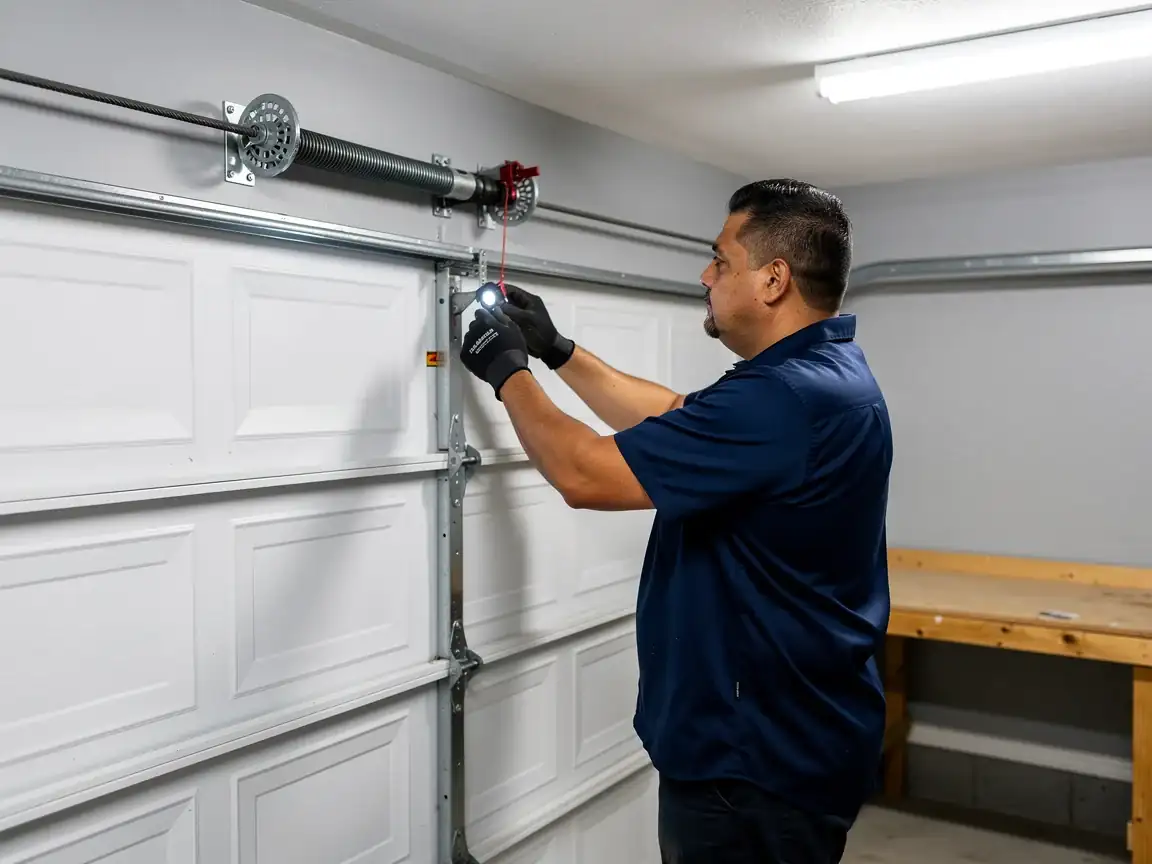
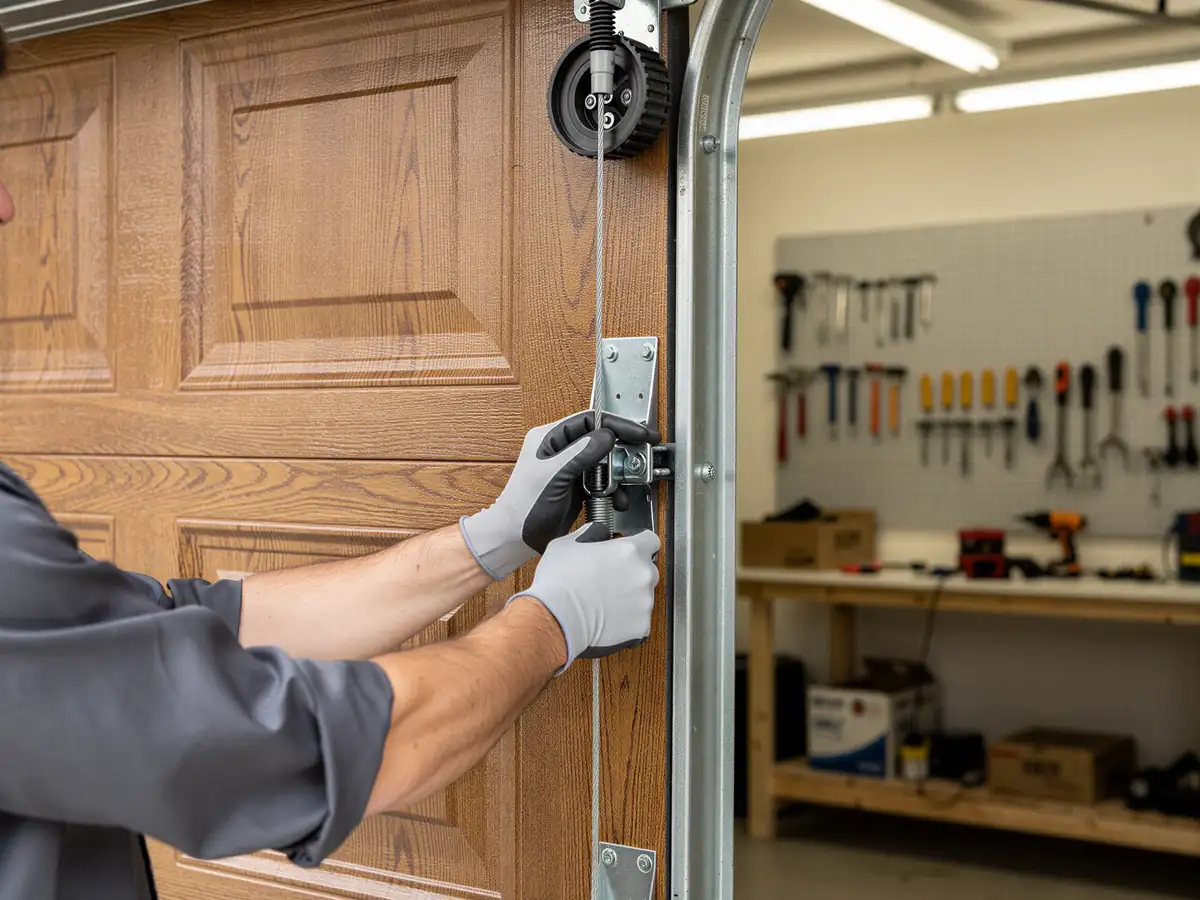
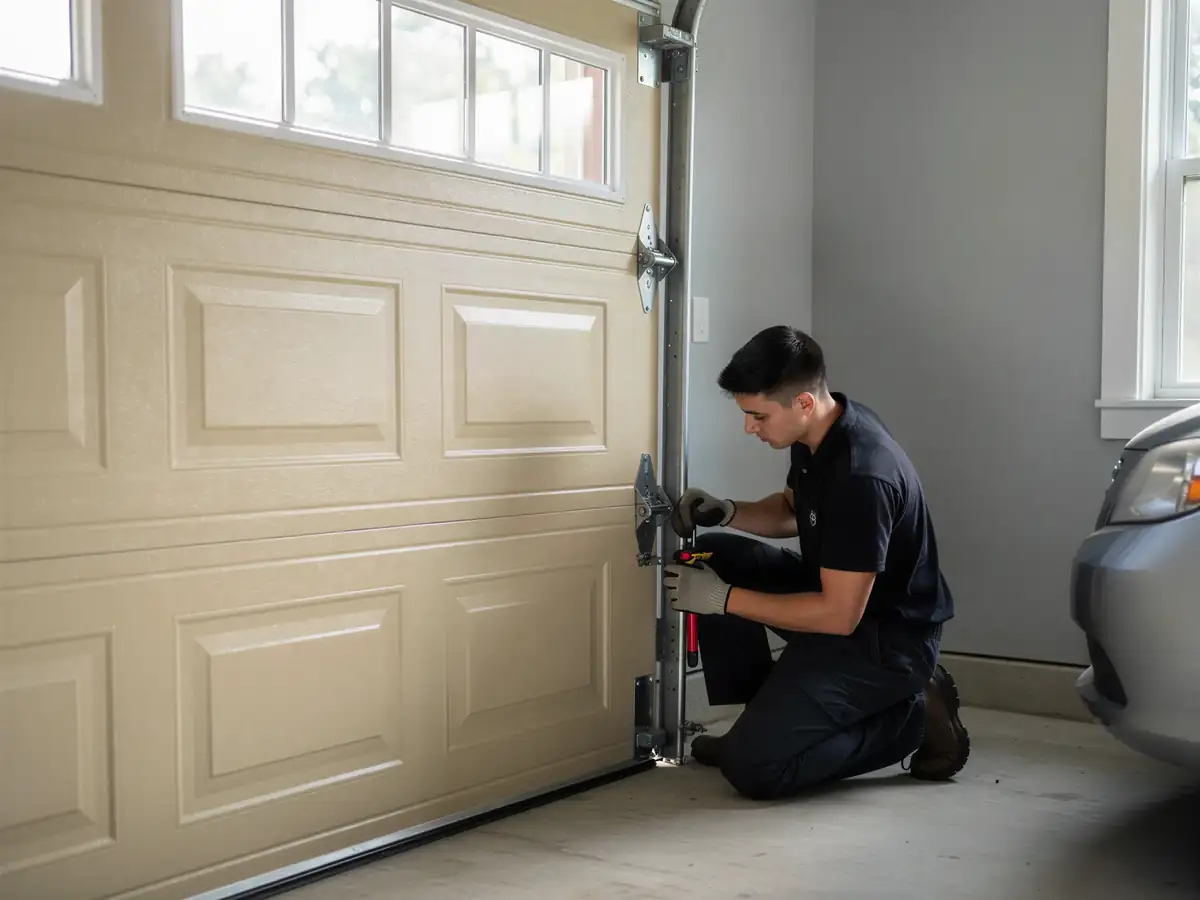
A torsion spring is under enough stored tension to do real damage if it lets go while you're working on it, and that's true whether the door is five years old or thirty-five. If your door won't open, or opens a few inches and stops, or the spring is visibly separated, that's not a YouTube-on-Saturday job - call it in.
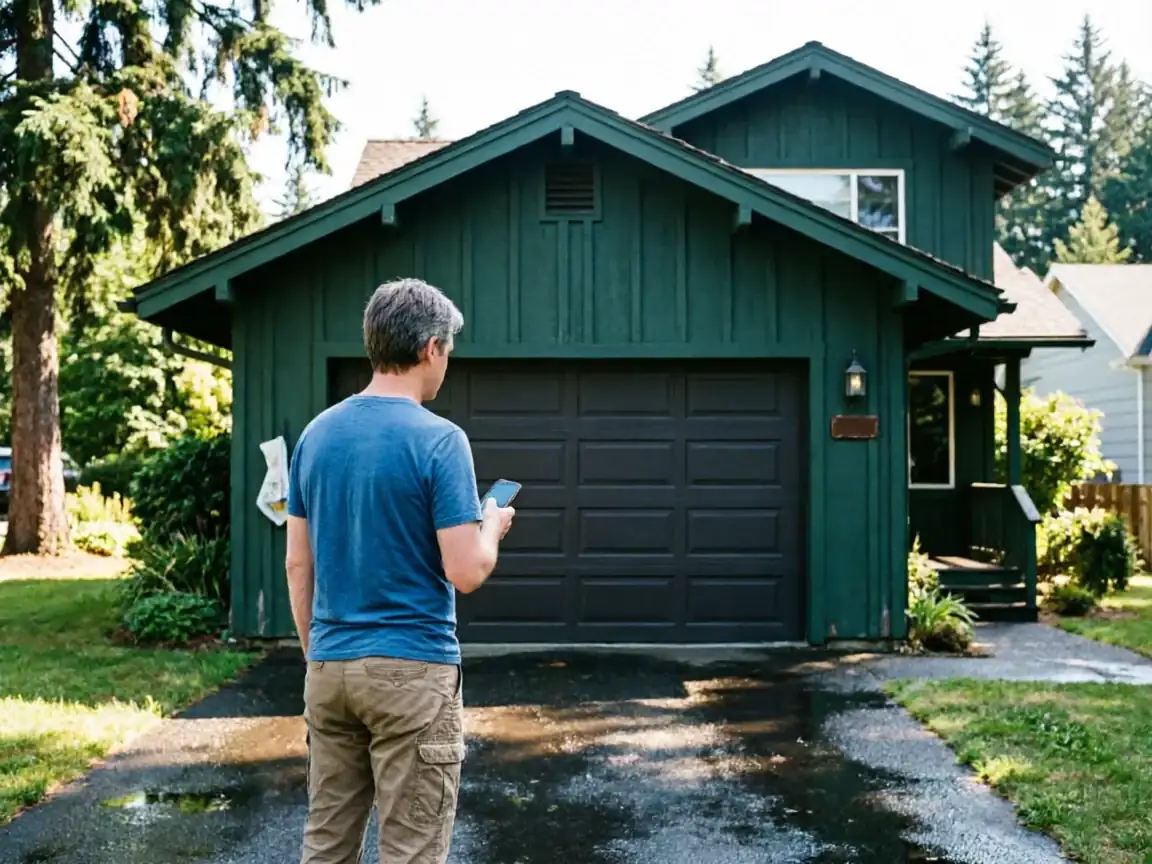
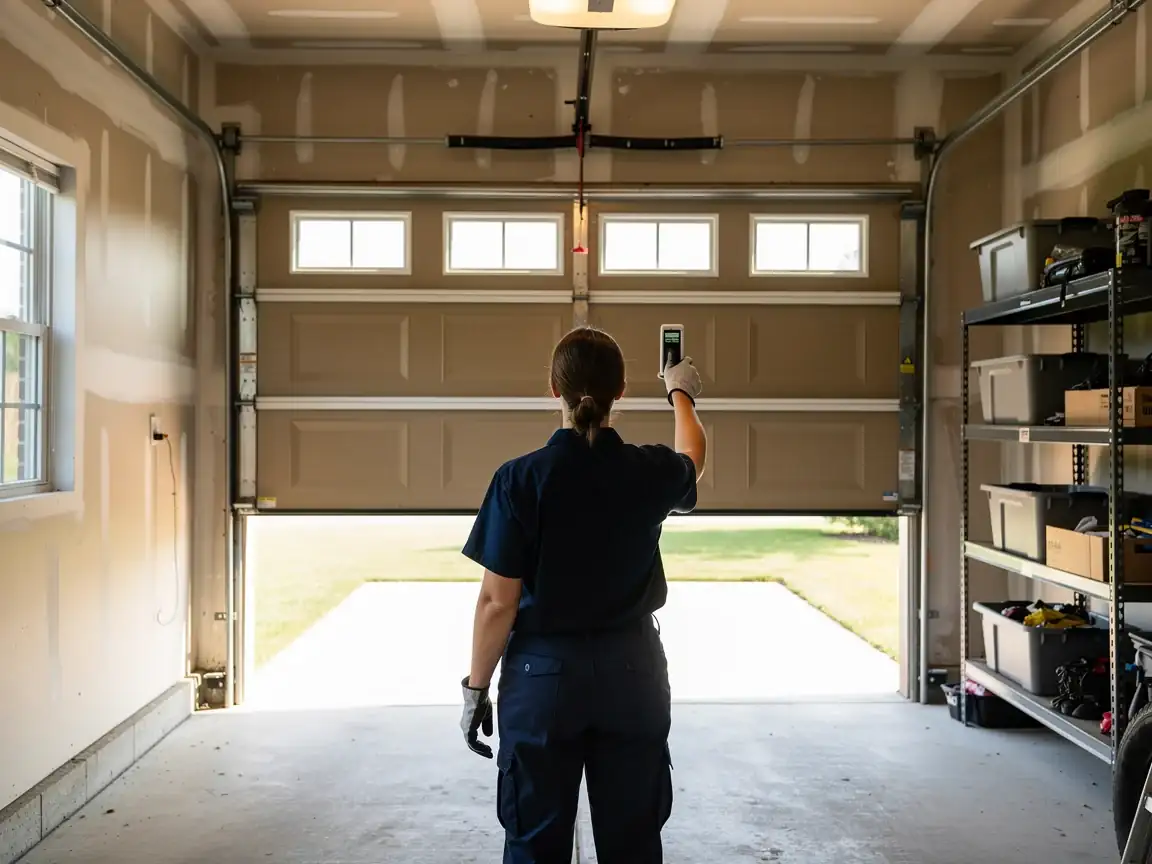
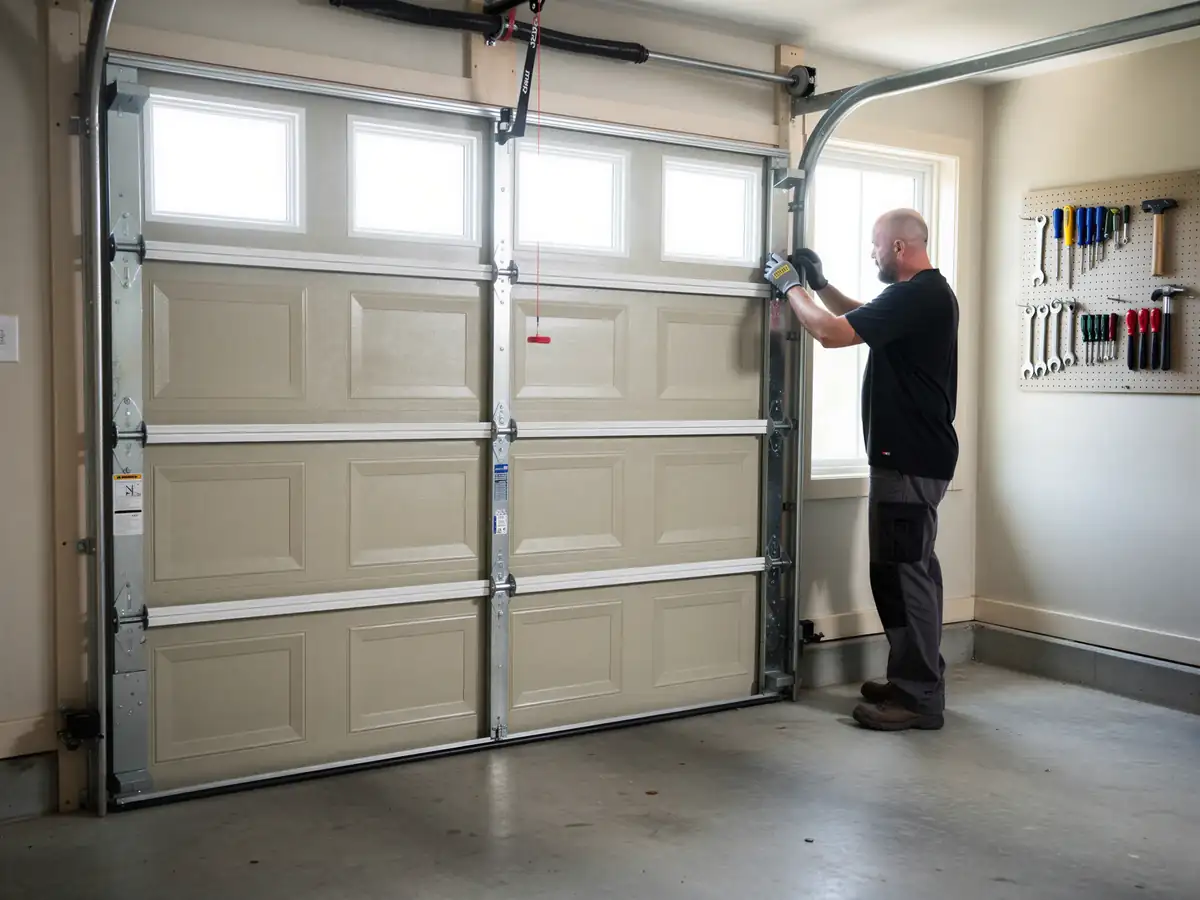
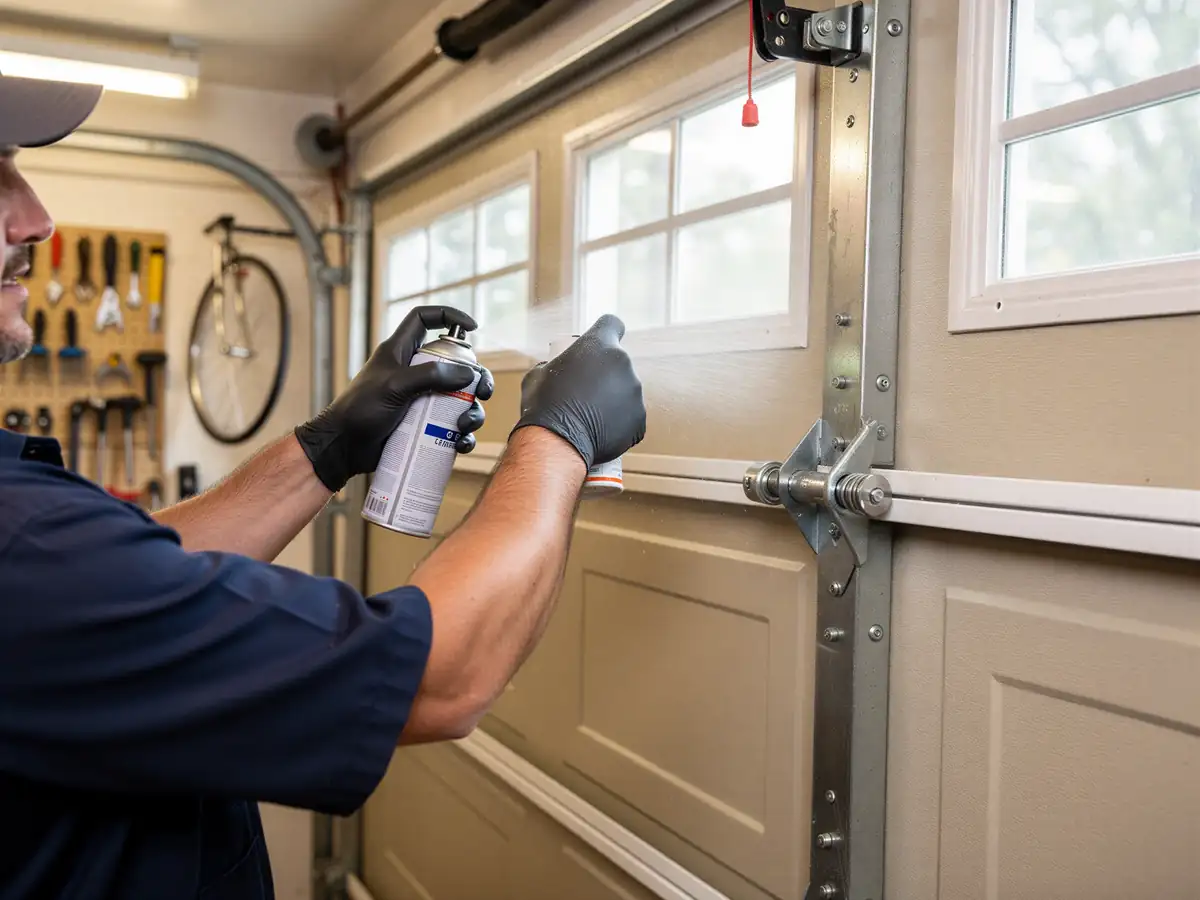
There's a smaller category of stuff that's reasonable to check yourself first. Tighten loose hardware with a wrench, listen for which part is making the noise, check that the photo-eye sensors near the floor aren't knocked out of alignment or have a cobweb across the lens. Those sensors are a common nuisance call: the door reverses before it closes, and nine times out of ten it's dirt or alignment, not a wiring fault.
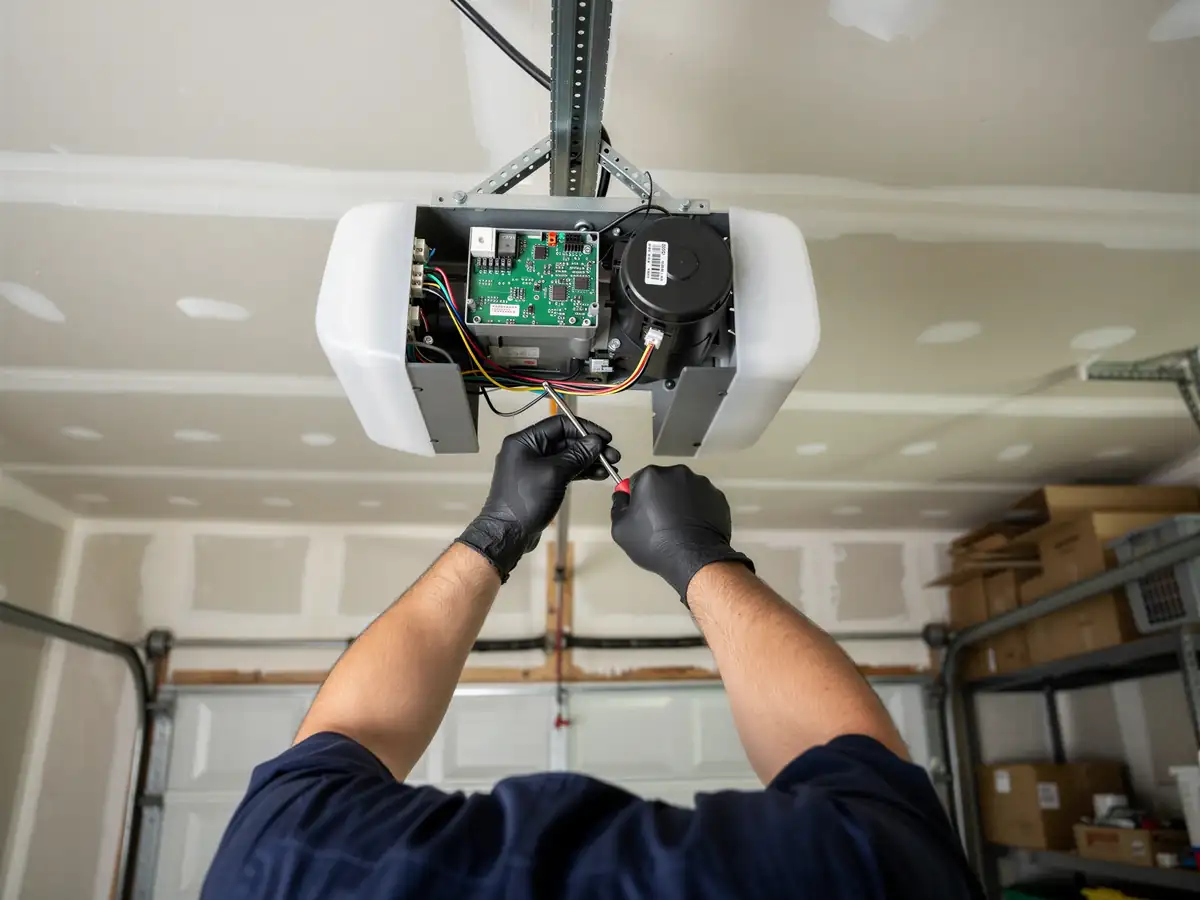
Our honest limitation here: if your opener is old enough that the manufacturer's stopped making the logic board or remote for it, we're not going to pretend we can source an exact replacement part. At that point a full opener swap is usually the straighter path than chasing parts for a unit that was already near the end of its run when the house was still fairly new.
Getting It Booked In
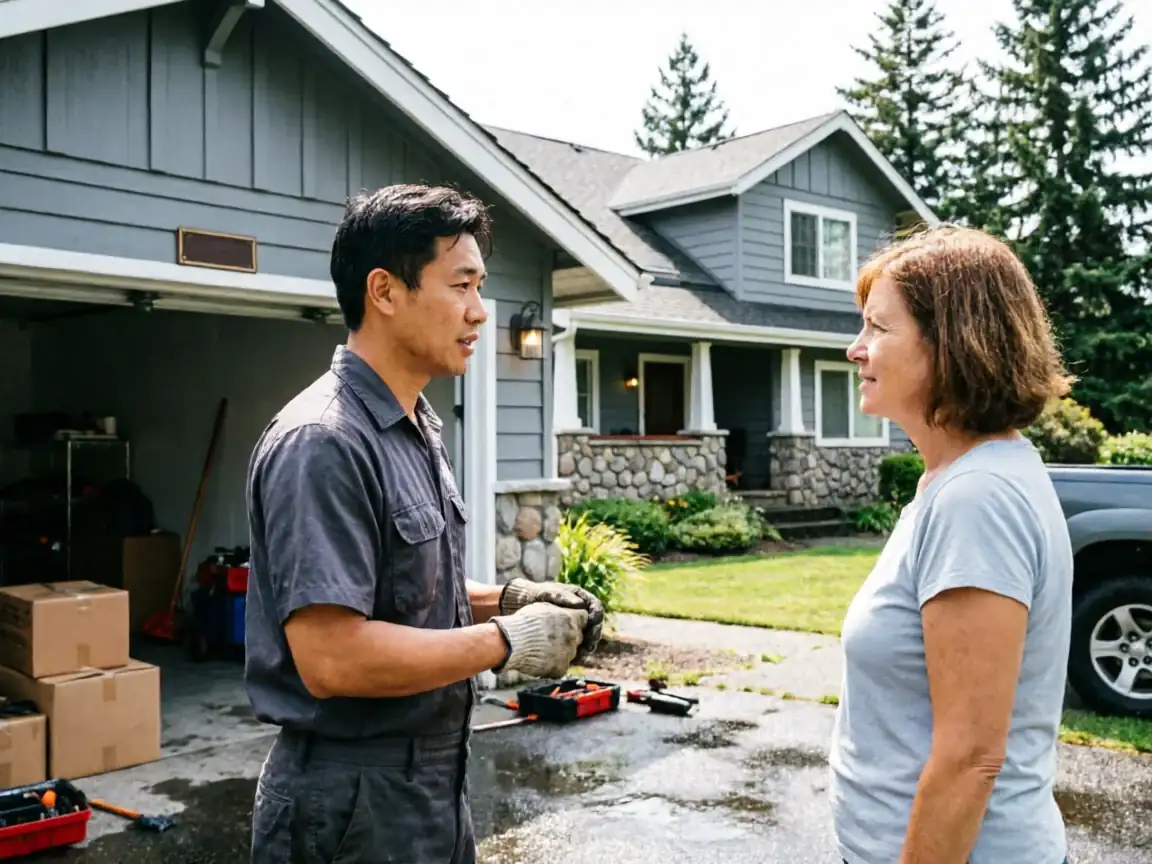
When you call, tell us what the door is doing - won't open, opens partway, loud bang then nothing, opener runs but door doesn't move. That narrows down whether we're looking at a spring, a cable, the opener itself, or something in the track before a truck is even on the way.
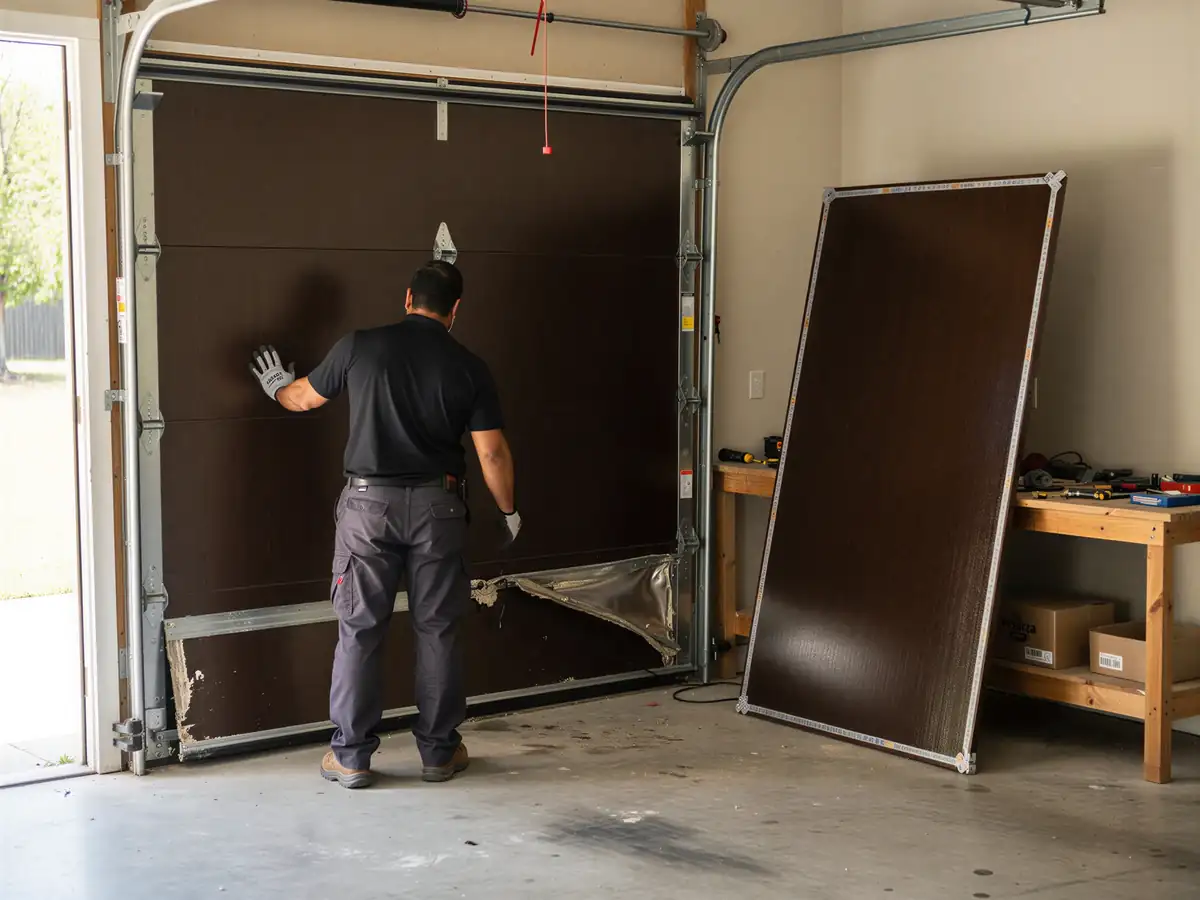
Given how much of the stock in this area sits in that 1968-2000 window, we carry common torsion spring sizes and standard opener parts that fit what's typically installed in houses from that build period. If your setup turns out to be a less common size or an older sectional panel style, that part may need to be ordered, and we'll tell you that up front rather than guess.
We work across the Mill Creek area and the surrounding communities, from Martha Lake and Lake Stickney out through Silver Firs, Alderwood Manor, and the rest of the nearby areas. If you're outside that immediate radius, just ask when you call - easier to confirm than to assume.
What You Are Seeing
A door that slams the last foot of travel instead of lowering smoothly is usually a spring that's lost tension
Not a track problem. A door that reverses right before it touches the floor is almost always the photo-eye sensors, not the motor. A loud bang from the garage followed by a door that won't budge is a broken spring, full stop - don't force the opener, you can burn out the motor trying to lift against a dead spring.
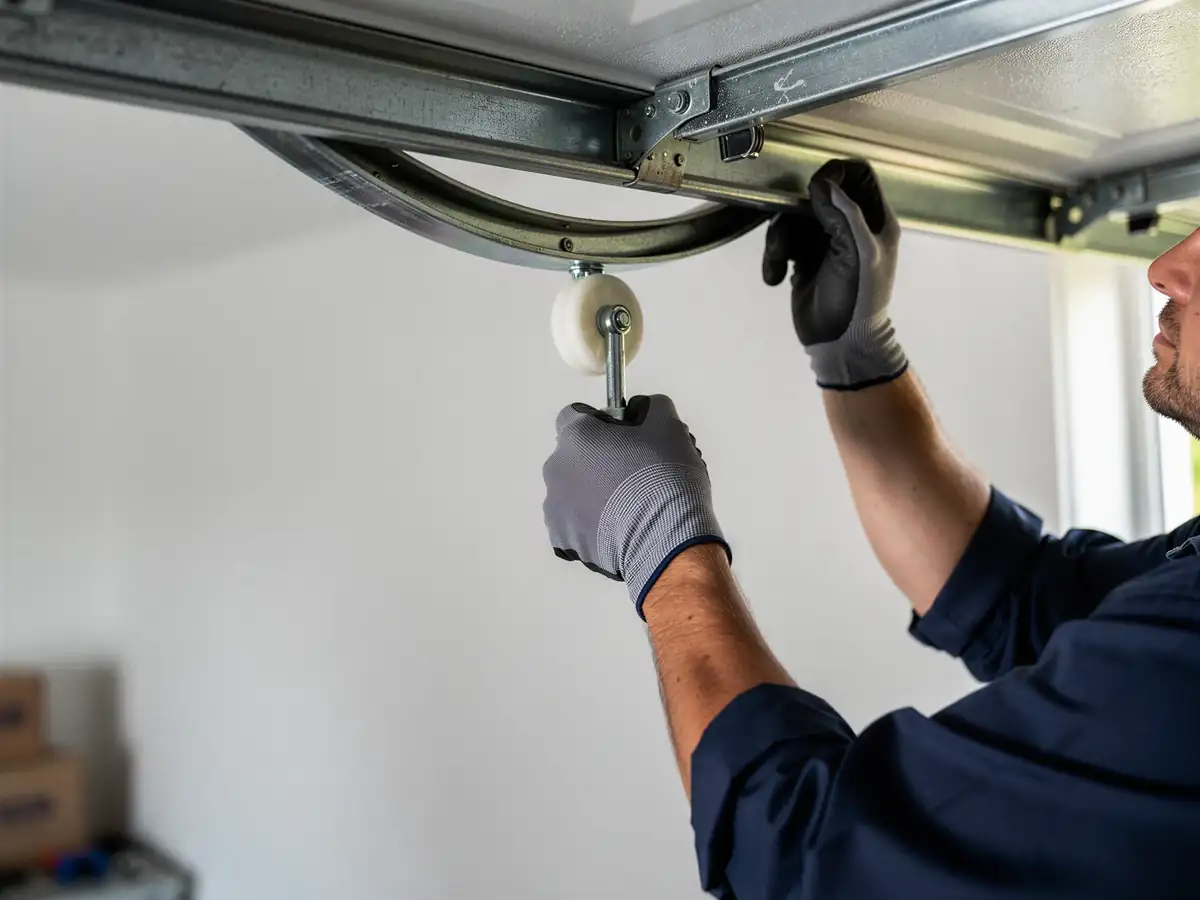
Grinding or popping from one side of the door as it travels usually means a roller's gone bad or a hinge is bent
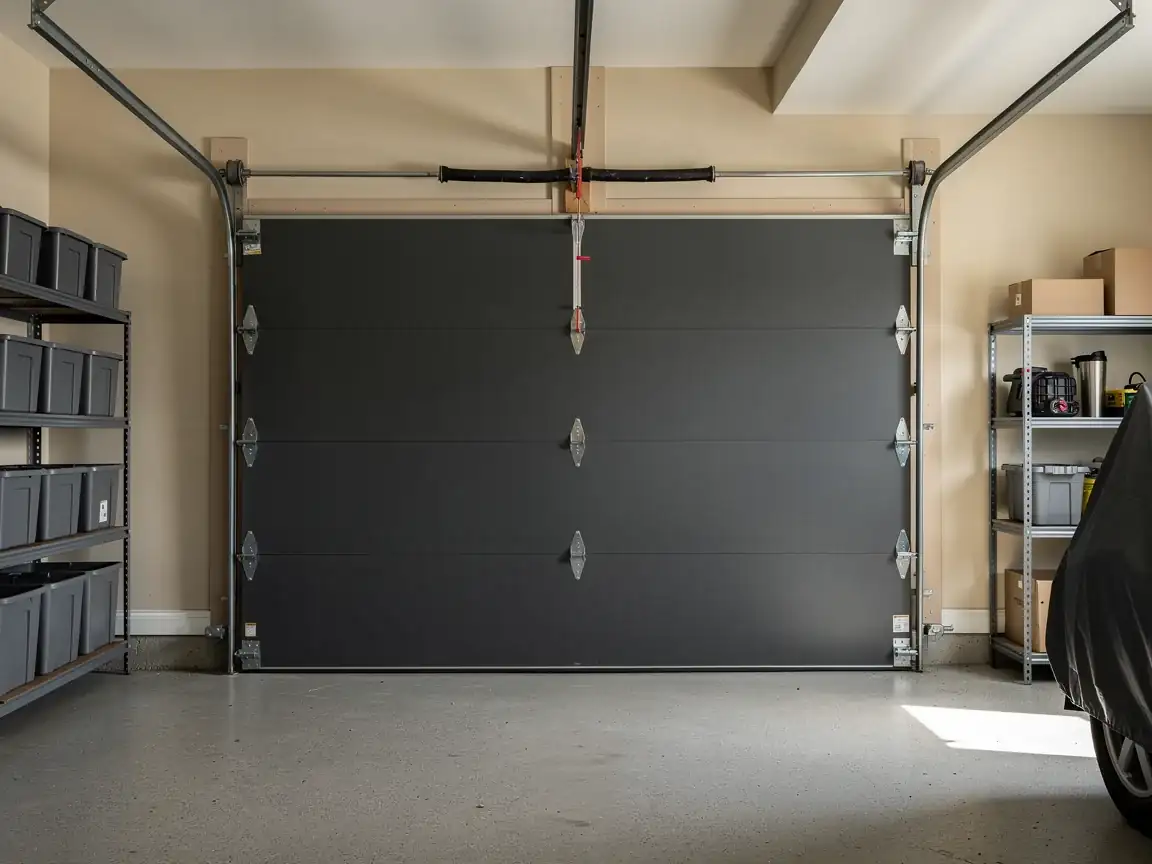
Which is common once a door's logged enough open-close cycles - and across houses built in the 80s and 90s around here, a lot of original hardware is now at or past that point. A door that's noticeably heavier to lift by hand than it used to be is telling you the spring is weakening before it fails outright, which is the window where a repair is still cheap.
If the opener light blinks a set number of times when it fails
That's a diagnostic code specific to your opener brand and model - worth noting down and mentioning when you call, it saves a step.