How Local Conditions Play In
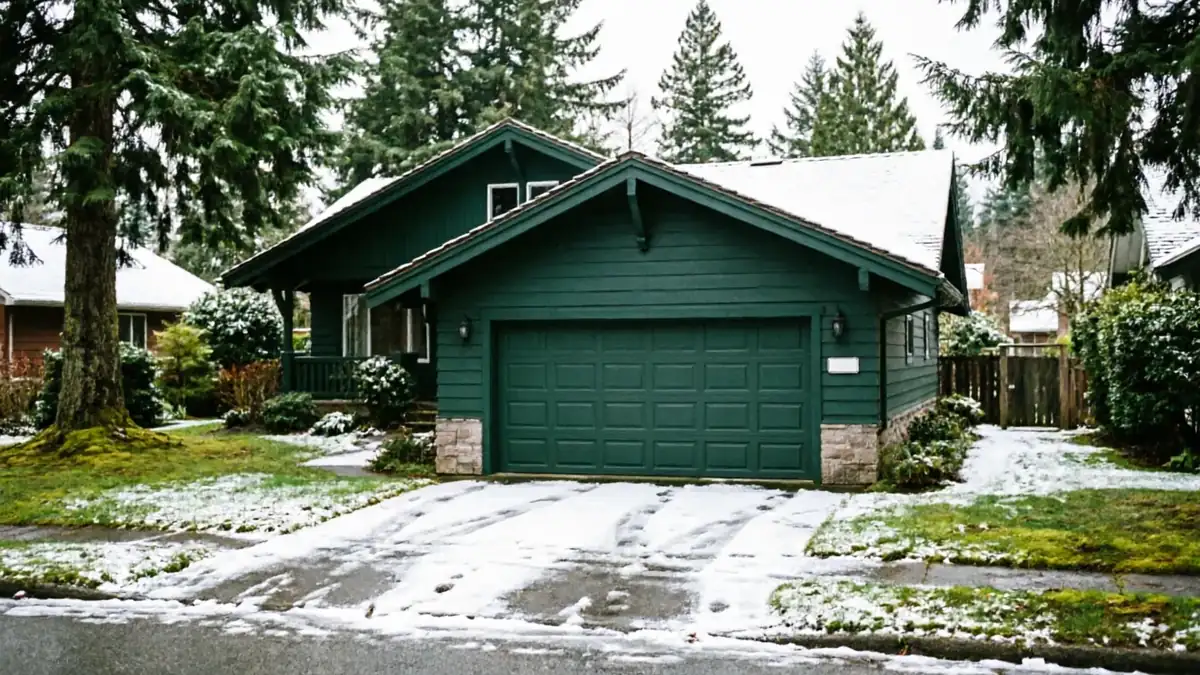
Mill Creek sits in a cold-moderate climate band
And that matters more for a garage door spring than most homeowners expect. Steel contracts as the temperature drops, and a torsion spring that's been flexing for twenty or thirty years loses some of its give right when the cold tightens it up. The spring doesn't know it's old until the morning it's also cold - then the two stack up and it snaps.
Most houses in this area were built between 1968 and 2000, with the median landing around 1989
That means a huge share of the doors on your street still carry original or first-replacement torsion hardware, now thirty-plus years into a part rated for about 10,000 cycles. Across the 31 named subdivisions that make up this stock - Martha Lake, Silver Firs, Alderwood Manor, and the rest within a few miles - builders from that era used similar spring sizing and similar side-mount or center-mount torsion setups. When a hard freeze hits one neighborhood, we tend to see the same failure show up a few streets over within days, because the hardware and the age are the same.
This isn't a Mill Creek-specific design flaw
It's just math: cold plus fatigue plus an original part that was never meant to outlive the house's second owner.
What to Check
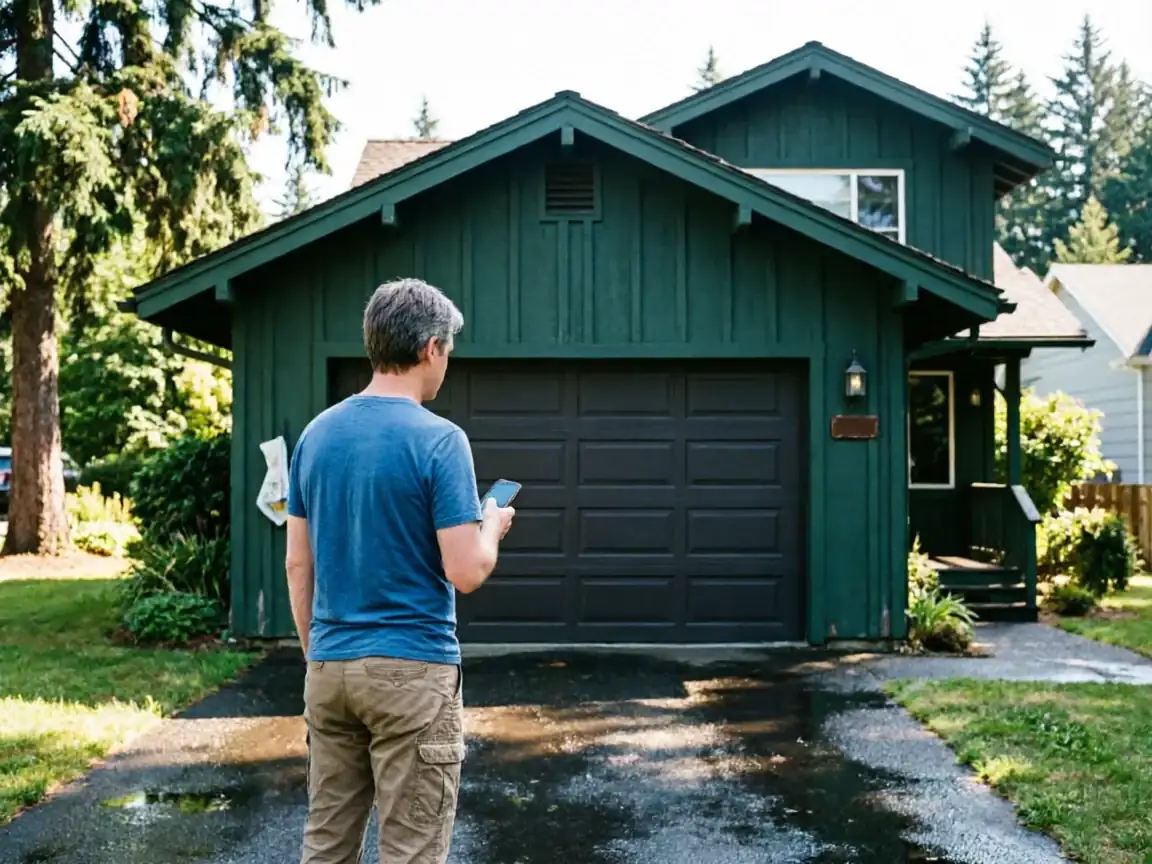
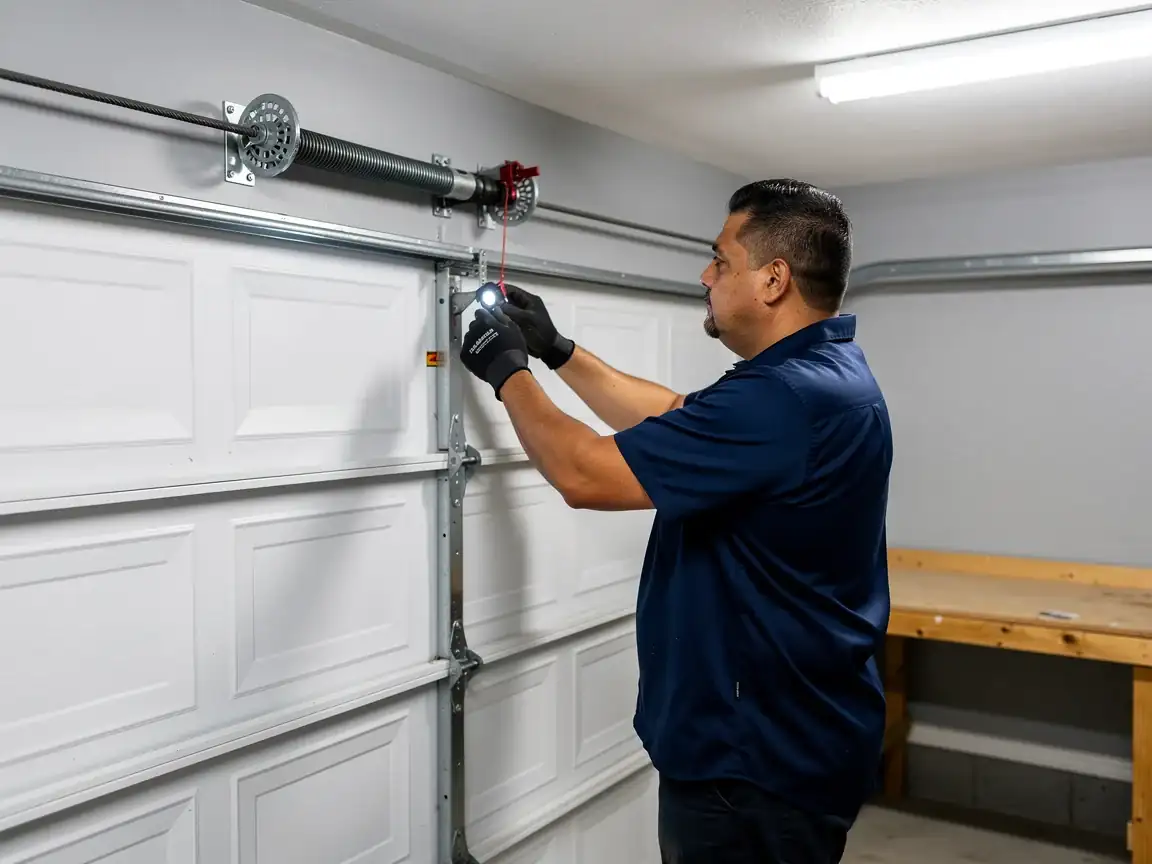
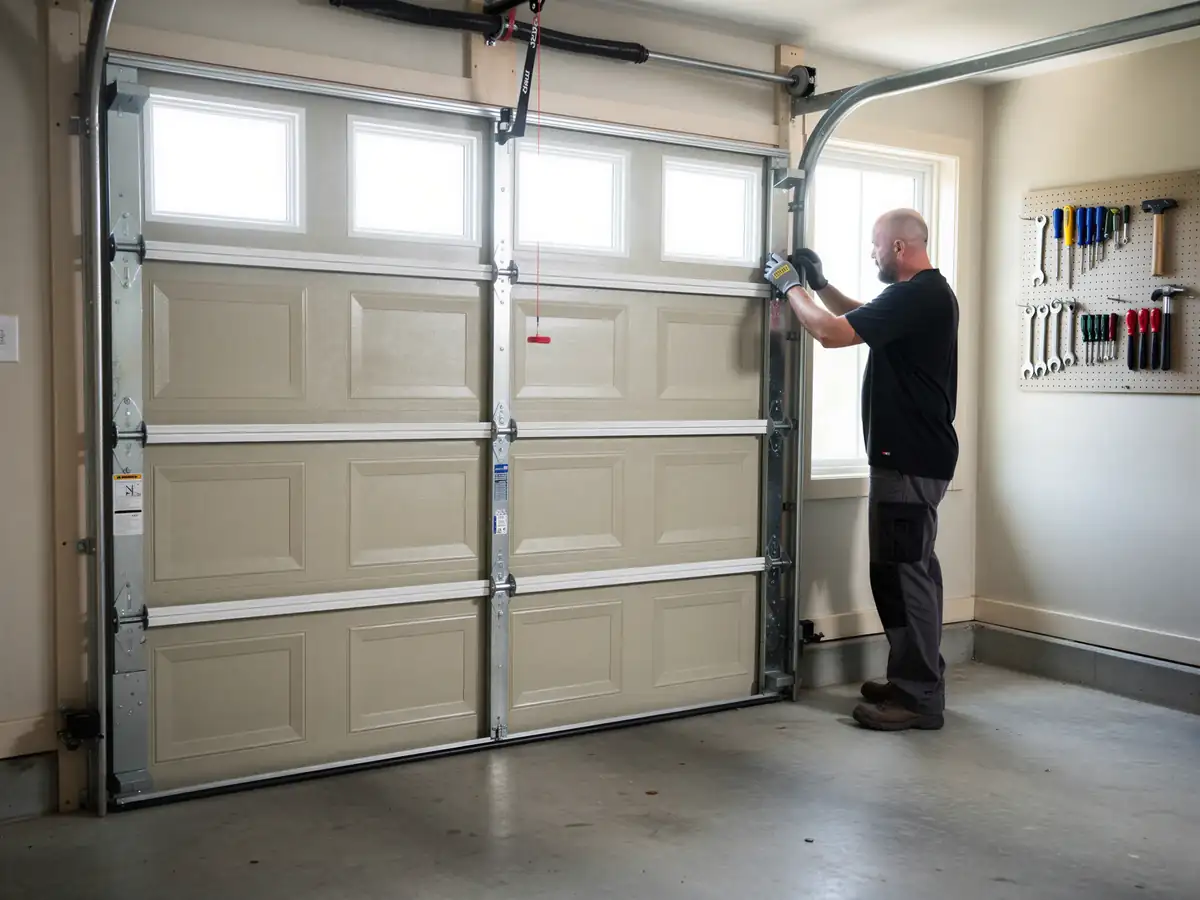
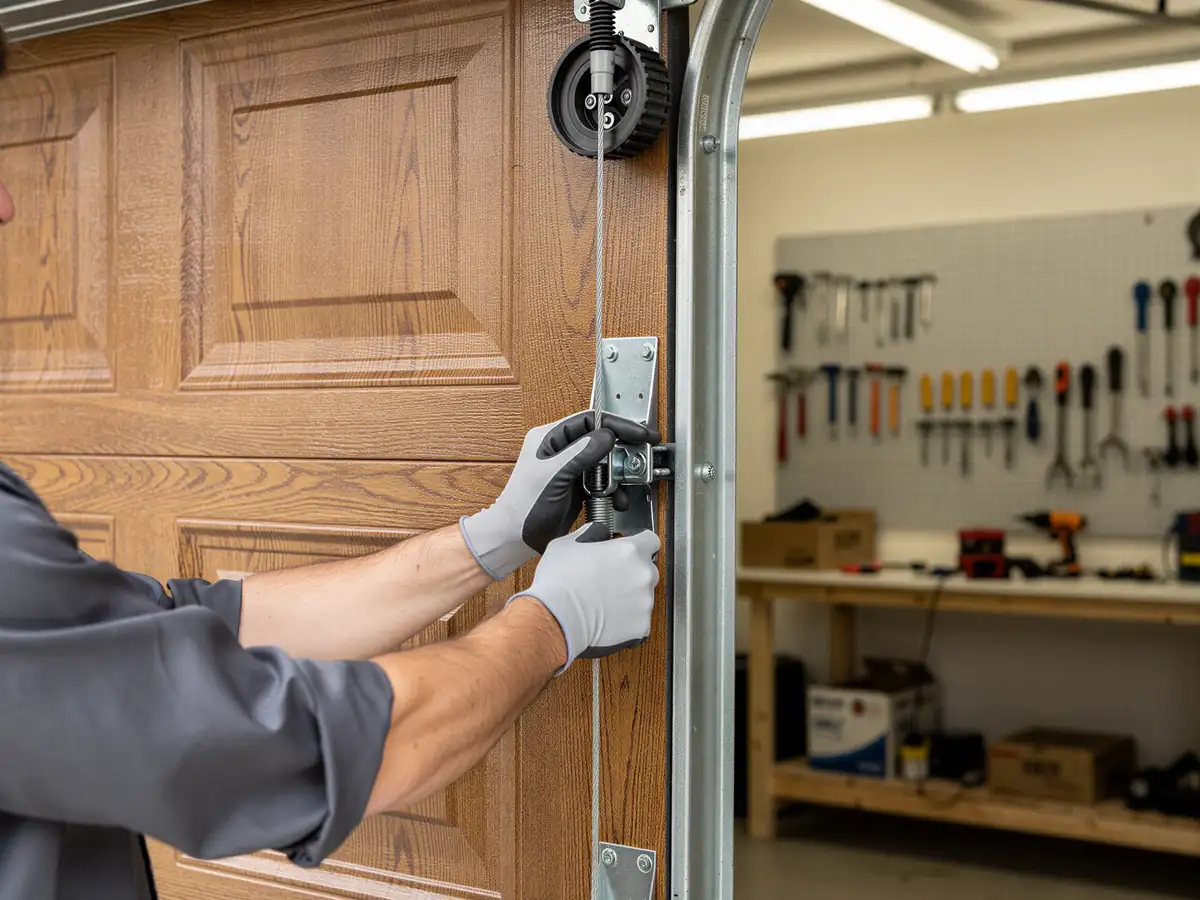
Before you call anyone, look at a few things. First, the spring itself - is it stretched with a visible gap, or has one coil separated from the next? That's a spring on its way out, not one that's already gone, and it's worth knowing the difference before a cold morning finishes the job.
Second, listen when the door moves. A spring losing tension in cold weather often makes a hard thump or a loud bang right before it goes, not a quiet fray. If you hear that sound, stop opening and closing the door until someone's looked at it - a spring under partial tension is more dangerous than one that's already broken, because it's still storing energy.
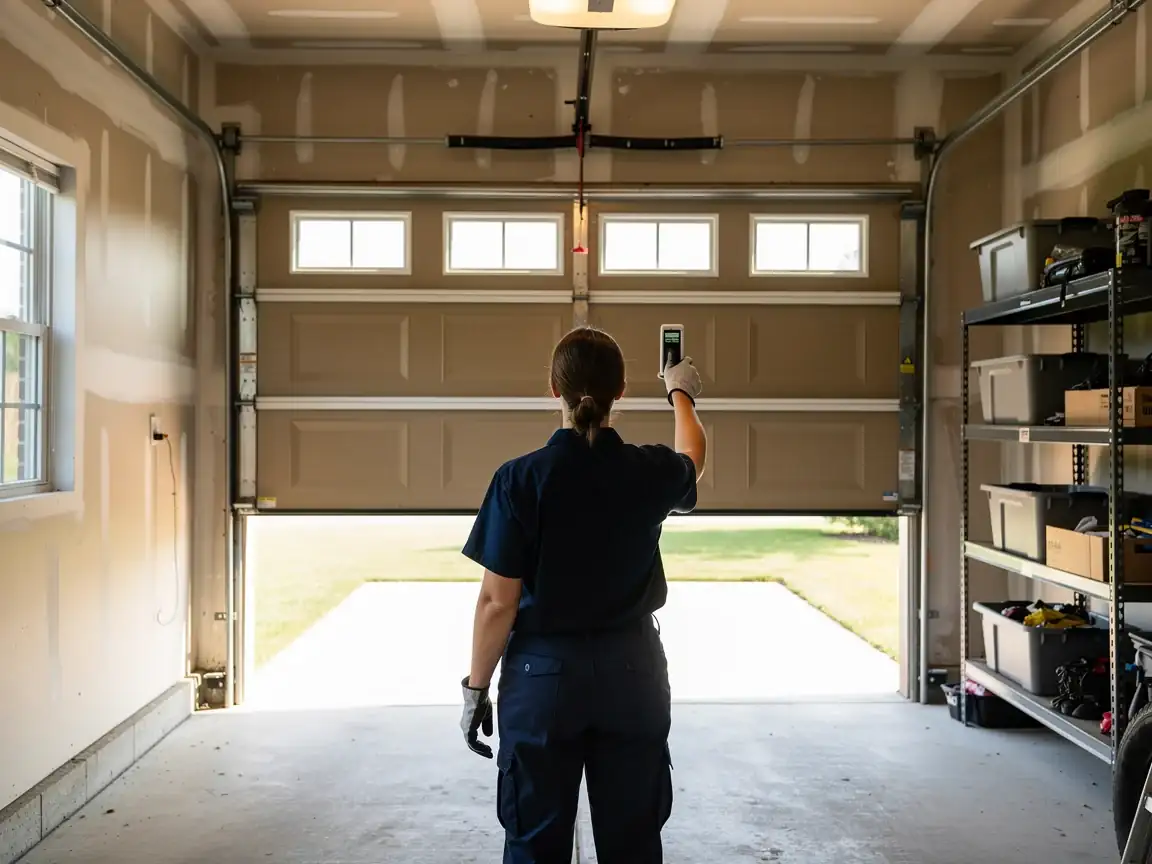
Third, check how the door sits when it's halfway open. If it won't hold position and starts drifting down on its own, the spring has already lost meaningful tension even if it hasn't snapped. That's common in houses from the 1980s and 90s stock around here, where the original spring is now carrying decades of cycles plus a cold morning's extra load.
Fourth, don't try to adjust the winding cones yourself. Torsion springs under tension are the one part of a garage door that puts people in the ER, and a cold, stiff spring is worse to work with than a warm one.
When It Stops Being a DIY Job
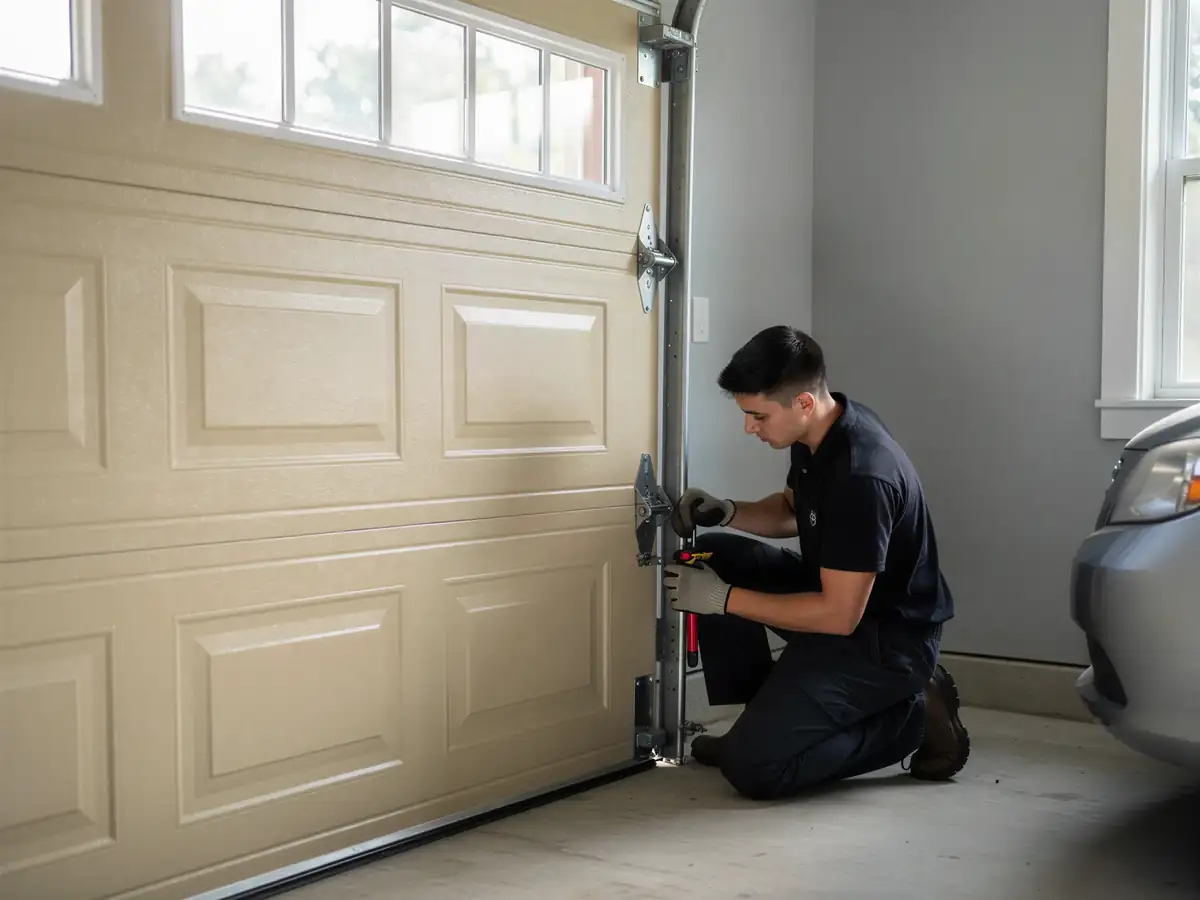
If the spring has already broken - you'll know, because the door won't lift, or it drops hard and uneven - that's the end of the DIY line. A broken torsion spring means the door is just dead weight on cables that are now holding tension they weren't built to hold alone. Do not put a ladder under it and try to muscle it open.
It's also not a DIY job if you're looking at a double door with two springs and only one has gone. Running on a single spring, even briefly, puts uneven load on the track and the opener, and in a cold-moderate climate like this one, the second spring - same age, same cycles - is usually not far behind.
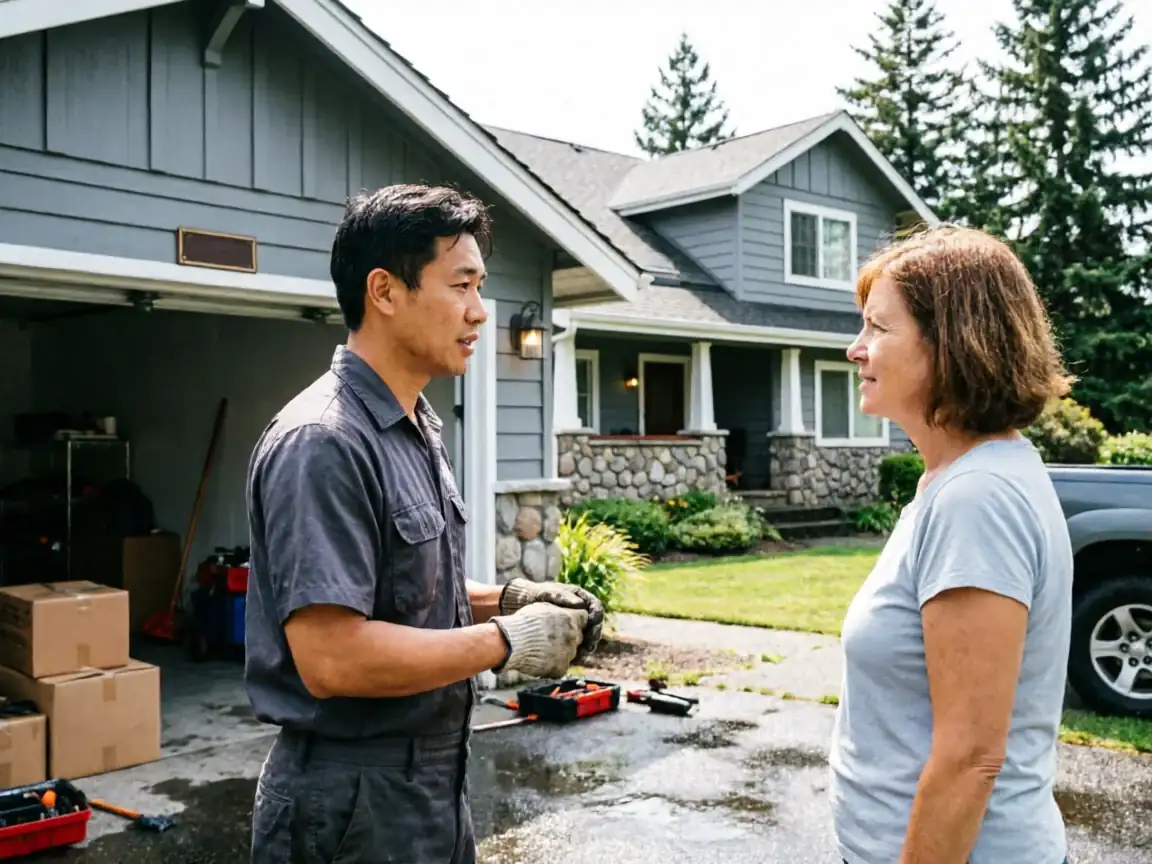
With a median household income of $127,043 across the area, most owners here are deciding between a spring swap and a full opener-and-hardware look at the same visit, since the labor to access the spring is most of the job either way. That's a reasonable call to make with a tech standing in front of the door, not over the phone.
Honest limitation: we don't stock every spring size on the truck for every house built between 1968 and 2000 - some of the older wind sizes take a day to get in, and we'll tell you straight if yours is one of them.
The Problem
The core problem isn't that springs break
Springs are a wear part; they're supposed to wear out. The problem is that a huge share of Mill Creek's housing stock - built in that 1968-to-2000 window, median 1989 - is now aging into spring failure at the same time the area sees its coldest mornings, and homeowners read the two as unrelated when they're not.
With 81,984 households and 53,676 owner-occupied houses across the service area
That's a lot of garages built in the same thirty-year window, carrying the same hardware, aging on roughly the same clock. A cold snap doesn't cause the failure so much as it picks the day. The spring was already near the end either way.
- 81,984 households
- 53,676 owner-occupied
The fix isn't complicated
A torsion spring replacement is routine work - but the timing problem is real. If your house falls in that 1980s-90s build range, a spring that's merely stiff on a cold morning this year is a spring that's likely to break next winter. Catching it stiff, rather than snapped, is the whole difference between a scheduled repair and a dead door on the one morning you needed to leave for work.