Serving Mill Creek, WA & nearby
(425) 225-4815
Mill Creek, WA

What Fits a 1980s-90s Mill Creek Garage Opening

Mill Creek homes built mostly from 1968 to 2000 call for replacement doors sized to original openings and rated for our cold, wet winters. See what fits.

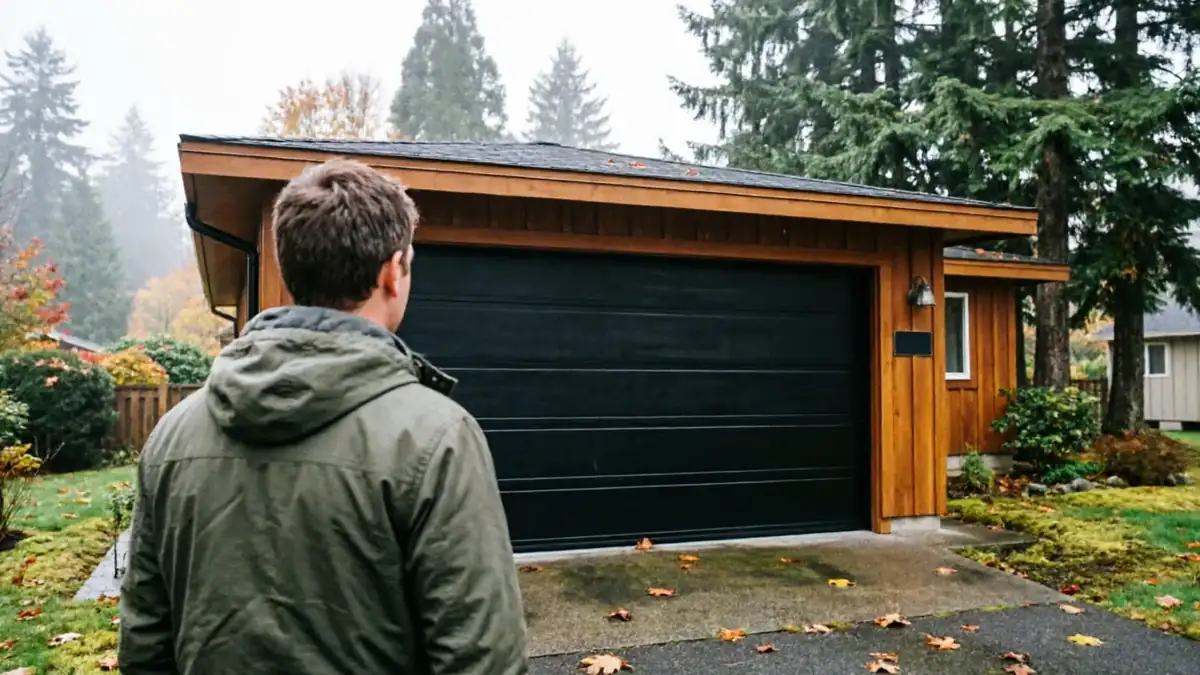
A person in a green jacket stands facing a house with a black garage door.

How Local Conditions Play In

Mill Creek sits in a cold, moderate climate zone, not the kind of weather that cracks a cheap door outright but enough to make insulation and weatherseal choices matter over a 20-year ownership span. Most houses here went up between 1968 and 2000, with the bulk from the 1980s and 90s, so you're not dealing with century-old framing quirks - you're dealing with builder-grade steel sectional doors that have usually outlived their springs and bottom seals by the time anyone starts shopping for a replacement. That's true whether you're in Mill Creek proper or out toward Silver Firs, Martha Lake, or Lake Stickney, where the same era of development took over within a couple miles either way. Those original doors were sized to match the track and header clearances common in that building era, and swapping in a new one means matching the rough opening, not matching the old door's brand name. One thing we don't do is window or framing work - if the opening itself is out of square or too shallow for a modern insulated door, that's a carpentry fix before it's a door order.

What to Check

Start with the rough opening, not the door that's currently hanging there. Measure width and height at the framing, then check headroom above the opening and backroom depth inside the garage, since spring and track hardware from the 80s and 90s era often sits tighter than what current doors expect. Builders across this area standardized on a handful of rough-opening sizes through the 80s and 90s, so a door that looks right off a big-box shelf often doesn't match the header height or track clearance your house was framed for. Next, look at the jamb condition - thirty to fifty-year-old wood jambs can be soft at the base even when the door itself looks fine. With a median household income above $127,000 in this area, a lot of homeowners upgrade to insulated steel or composite doors rather than the bare single-layer steel that shipped standard back then, which matters more here given the cold winters than it would somewhere milder. Finally, check what opener you already have - older chain-drive units sometimes won't carry the extra weight of a thicker insulated panel without a bracket or gear change.

When It Stops Being a DIY Job

Measuring and ordering a door is something a homeowner can do alone. Hanging it isn't, not safely. A standard double door section weighs enough that getting it plumb in the opening is a two-person job at minimum, and that's before you touch the torsion spring, which stores enough force to break a hand or worse if it's wound wrong. If your opening doesn't match a standard size - common on homes built before uniform code sizing became typical - you're also looking at a custom order, and those carry longer lead times than anything off a shelf. We'll say plainly that if the existing track or jamb is damaged, trying to reuse hardware to save money usually costs more in a return trip than it saves up front. Once you're past measuring and into removing the old door, disconnecting springs, or wiring a new opener, that's the point to call someone who does this daily rather than working it out as you go.

The Problem

The core issue with replacing a door on a house from this era isn't finding a door - it's finding one that actually fits without a custom order. Builders in the 1968 to 2000 window used openings sized to the door products available at the time, and those sizes don't always line up with what's sold as standard today. Homeowners measure the old door, order the same nominal size online, and then find the new unit is an inch off in height or the track doesn't clear the header the way the old one did. That mismatch is common enough across the housing stock here - mostly 1980s and 90s builds - that it's worth field-measuring the opening itself before ordering anything, rather than trusting the dimensions stamped on the door currently installed. It's not a dramatic problem, just an expensive one if it's caught after the door shows up and doesn't fit.

How it works

From “it’s stuck” to “it’s fixed”

A man stands in a driveway, looking at his phone and a dark green house.
1

Tell us what’s wrong

Describe the symptom - won’t open, loud bang, opener runs but the door won’t move.

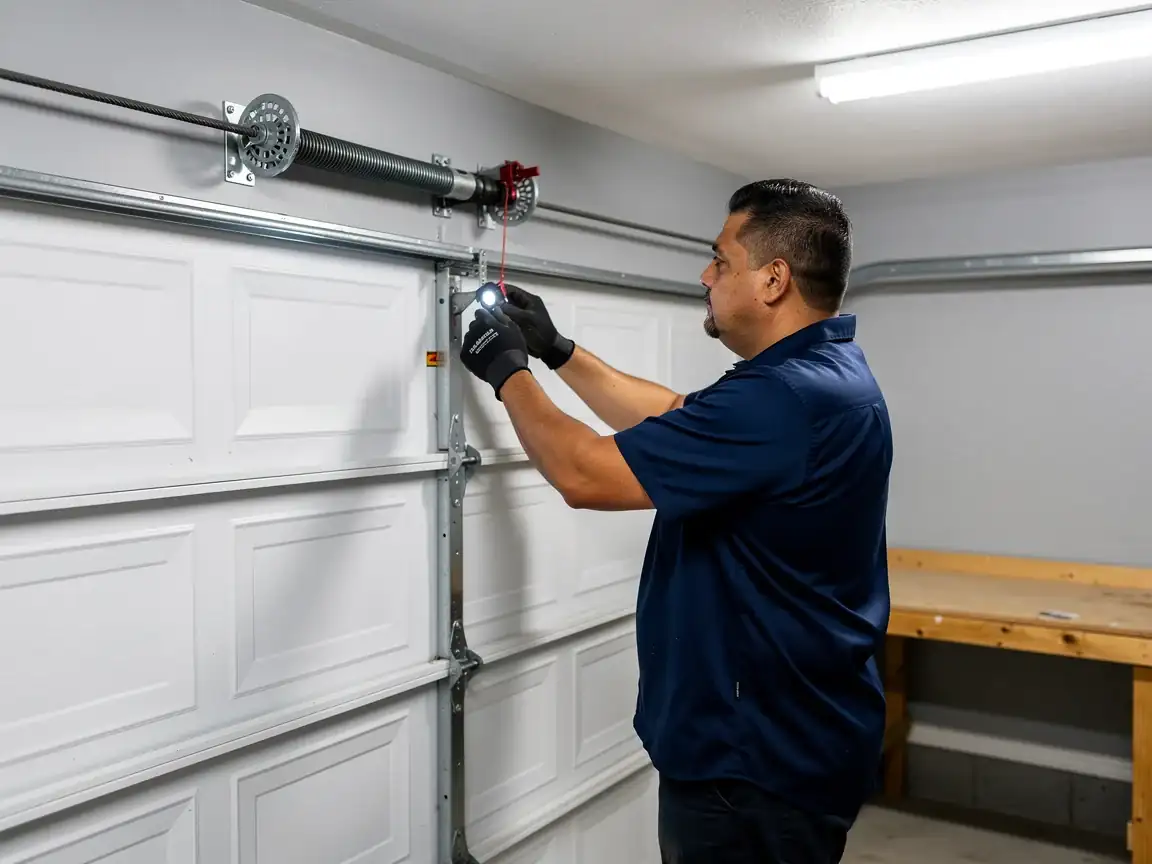
A technician inspects the garage door torsion spring with a flashlight.
2

On-site diagnosis

A technician tests the door under power and by hand and finds what actually failed.

A technician in a gray uniform talks to a woman in a light blue shirt.
3

Clear, up-front plan

You get the fix that’s needed and what drives the cost - before any work starts.

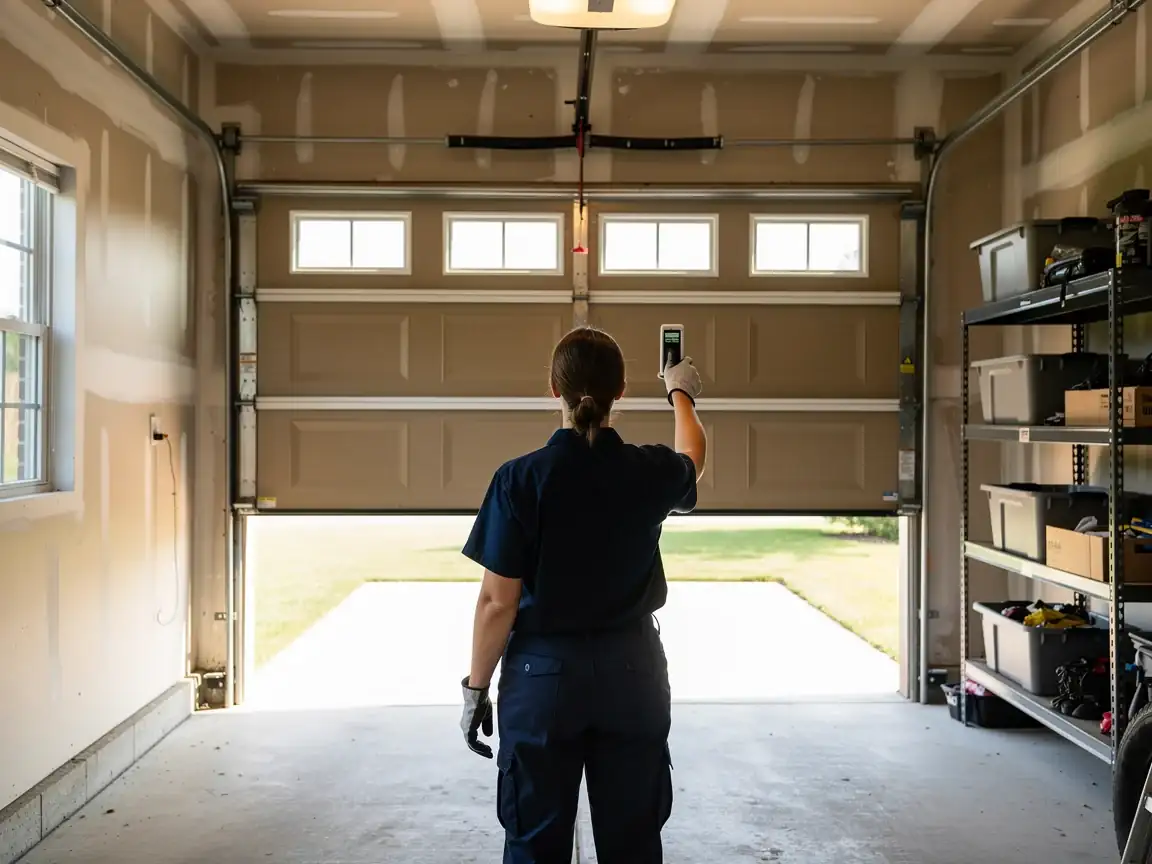
A technician operates a garage door opener with a remote control.
4

Repaired & tested

The repair is done, the door is set true and tested, and the work area left clean.

Not sure which repair your door needs in Mill Creek, WA? Describe what it’s doing - every job starts with a diagnosis.

8areas covered
How we work

What to expect

A straight, honest approach on every Mill Creek job.

Diagnosis first

Every visit starts by finding what actually failed - not a pre-written parts list.

The right part for the door

Springs and openers matched to the door’s weight and age, so the fix holds up.

Straight answers

When a repair makes more sense than a replacement - or the reverse - you hear it plainly.

Clean, careful work

Tension released safely, hardware set true, the door tested under power before we leave.

What we do

Garage Door Services

Repair and installation work for Mill Creek homes and businesses.

Questions

Frequently asked

Straight answers about garage door repair in Mill Creek. Still unsure? Ask us directly.

What size door do I need for a house built in Mill Creek in the 80s or 90s?

It depends on the actual rough opening, not the nominal size of the door currently installed. Builders in that era used several common opening sizes that don't always match what's sold as standard today, so measure the framing width and height directly before ordering, and check headroom and backroom clearance too.

Does the cold climate here mean I need an insulated door?

It's not required, but it matters more here than in a milder climate. An insulated steel or composite door keeps the garage warmer in winter and cuts down on condensation on the inside of the panel, which bare single-layer steel from older builds doesn't manage as well.

Can I measure and order a door myself but have someone else install it?

Yes, that split is common. Measuring the opening is something most homeowners can do carefully with a tape measure. Installing it - especially winding the torsion spring and aligning the track - carries real injury risk and is worth having a pro handle, particularly on openings that don't match standard sizing.

Ready to get your garage door sorted?

Tell us what it’s doing and where you are in Mill Creek - we’ll take it from there.

Request a QuoteCall