How Local Conditions Play In
Mill Creek's housing stock mostly went up between 1968 and 2000
With most neighborhoods built in the 1980s and 90s across the area's named subdivisions. That means the garage doors on most streets here are between 25 and 55 years old, and the hardware behind the panel - springs, rollers, hinges, the torsion bar itself - is either original or a first replacement job done by whoever owned the house before.
- 55 years
Add in the area's cold moderate climate band
Real temperature swings through the year make steel contract and expand, grease stiffen, and rubber weatherseals crack faster than they would in a mild coastal town. A door that worked fine last October can start grinding by January because cold has pulled moisture into bearings that haven't seen fresh lubricant since the house was framed.
None of this is a dramatic event
No single storm wrecks a door here. It's thirty-plus years of thermal cycling working steadily on parts installed decades before anyone thought to check them. The noise you hear now is usually the sound of that slow process finally showing up.
What to Check
Start with what the sound is actually doing, not just how loud it is.
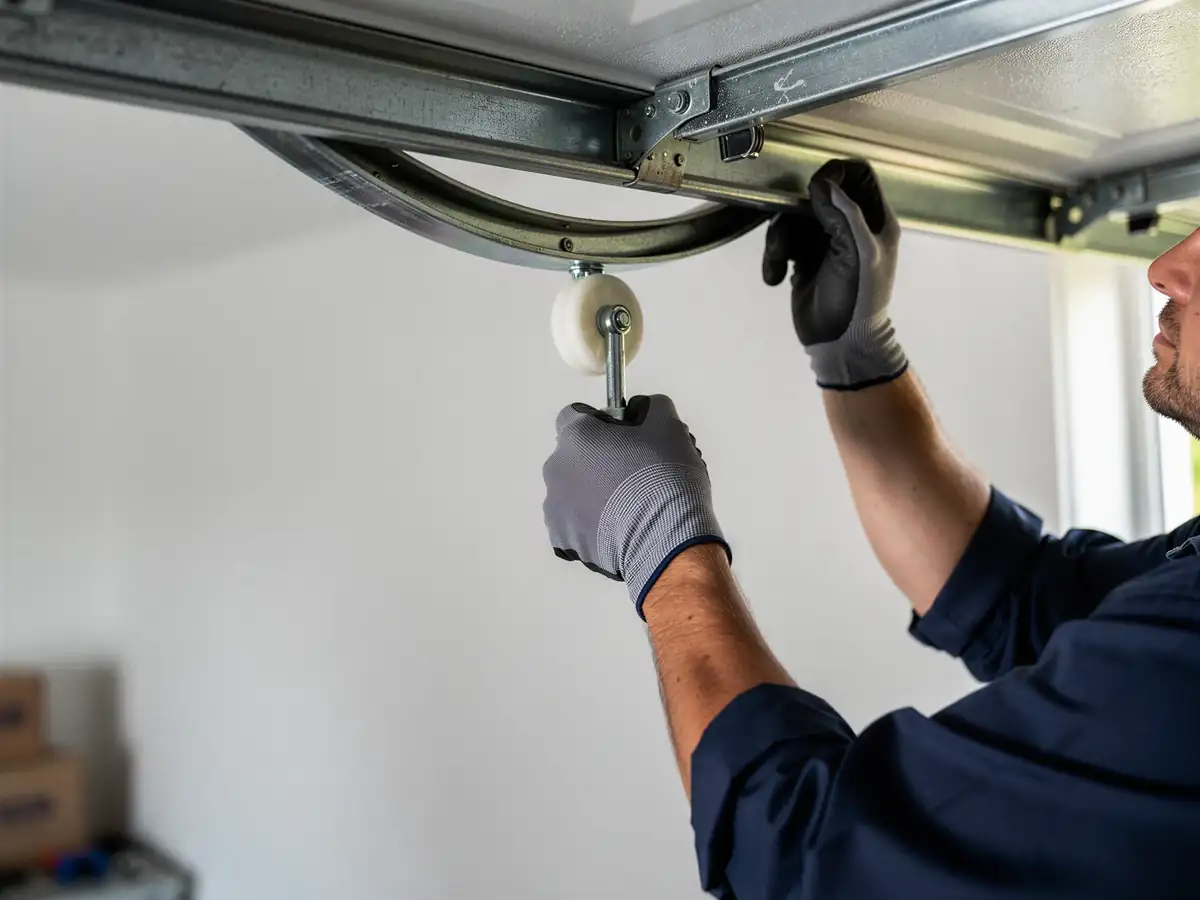
- A rhythmic thump as the door travels usually means the track has drifted out of alignment - common on houses from the 1968-2000 wave of construction, where decades of minor settling have shifted the track brackets a fraction at a time.
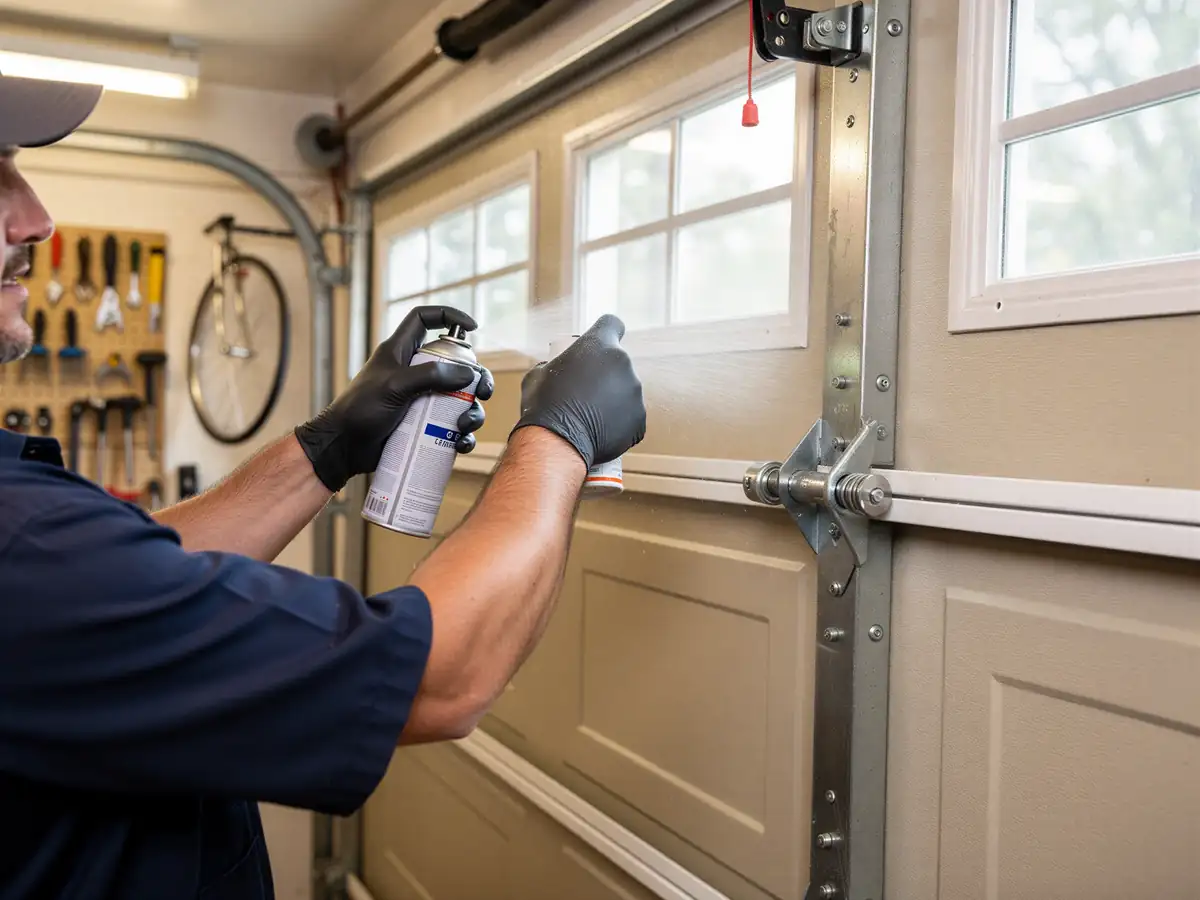
- A sharp metallic squeal, worse on cold mornings, is almost always dried-out hinge or roller grease. Cold moderate winters here stiffen old lubricant fast.
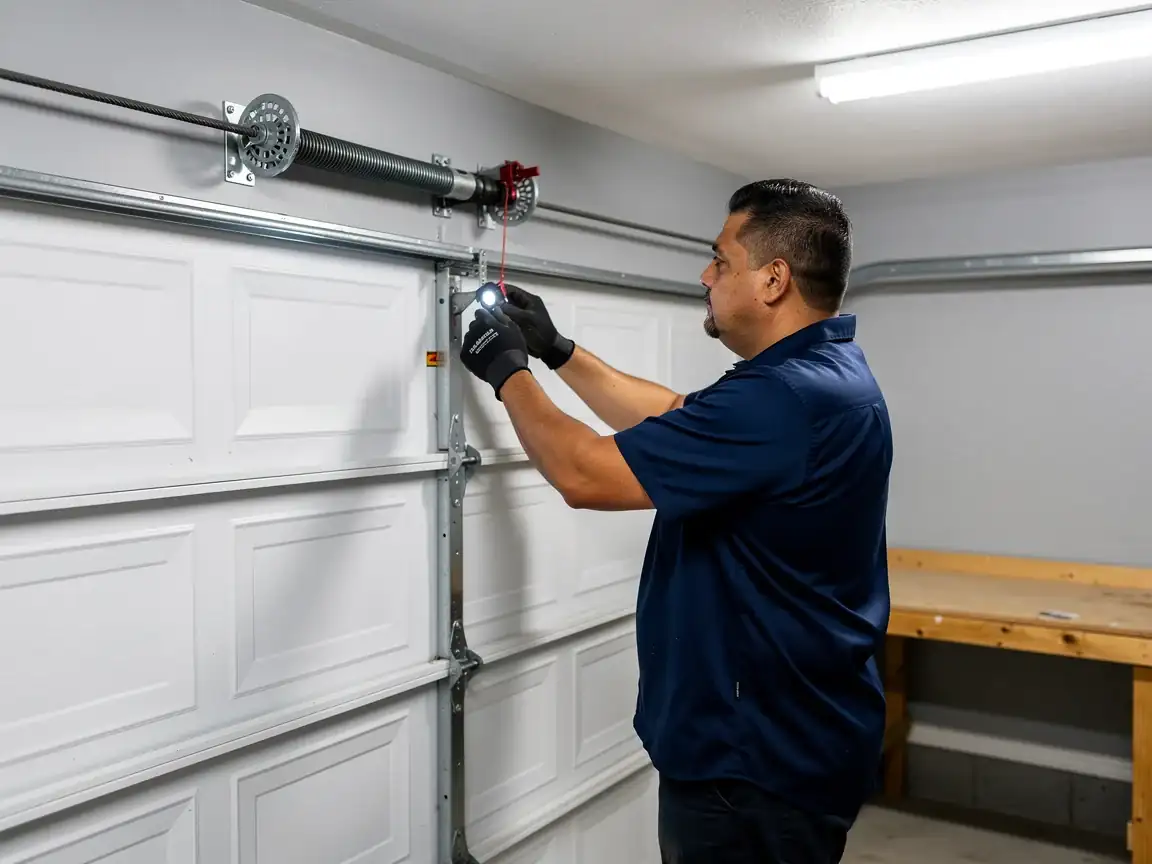
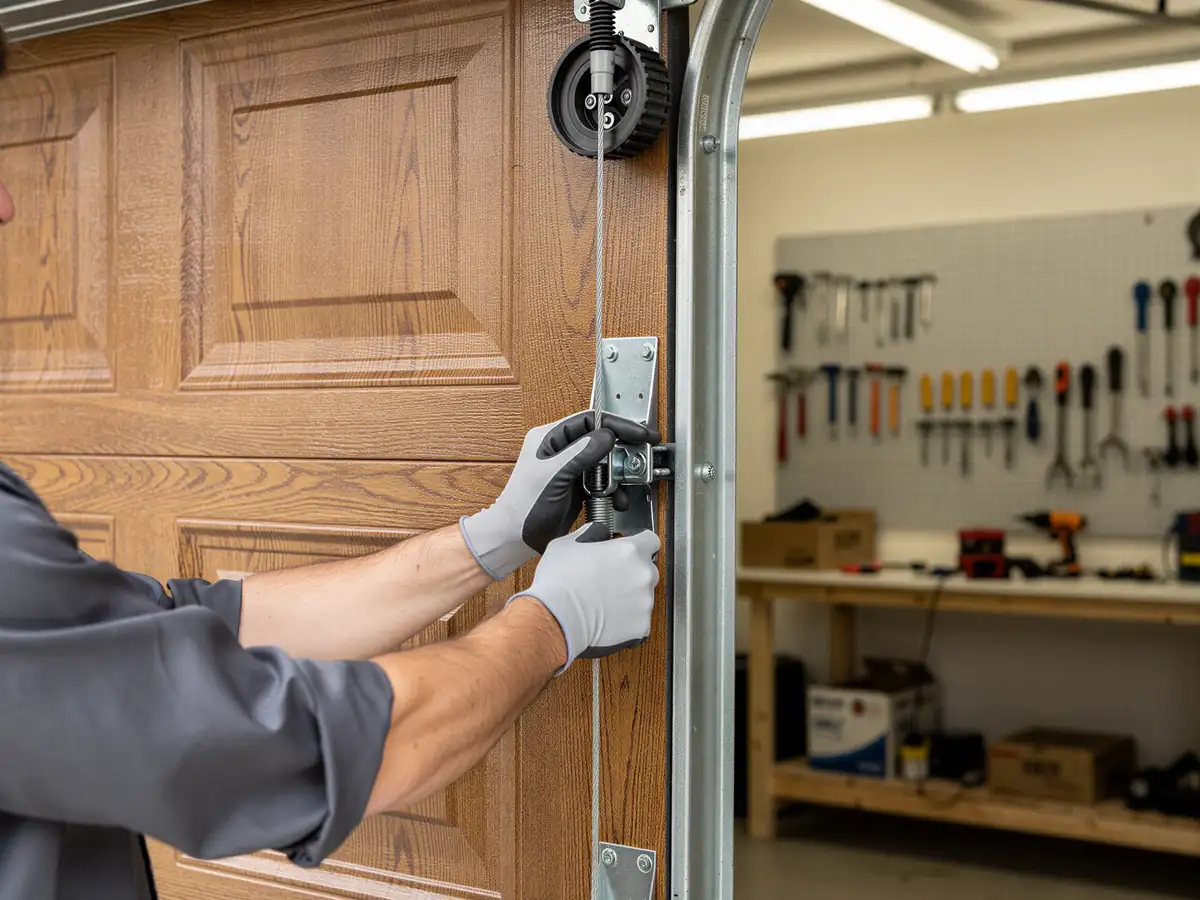
- Metal-on-metal grinding at the top of the door, near the springs, means worn bearing plates or a spring nearing the end of its life.
- A loud bang, usually mid-cycle, is a torsion spring that has already broken. Stop using the opener immediately.
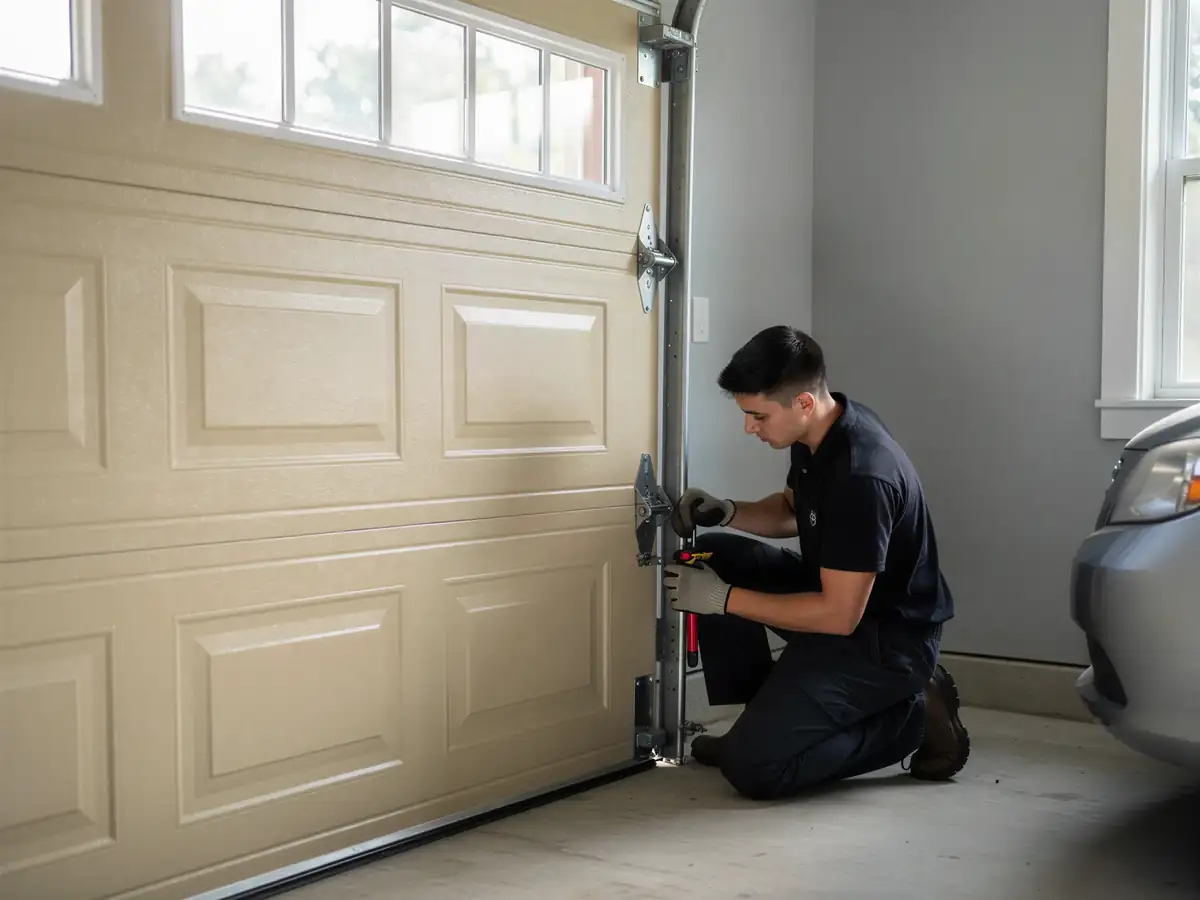
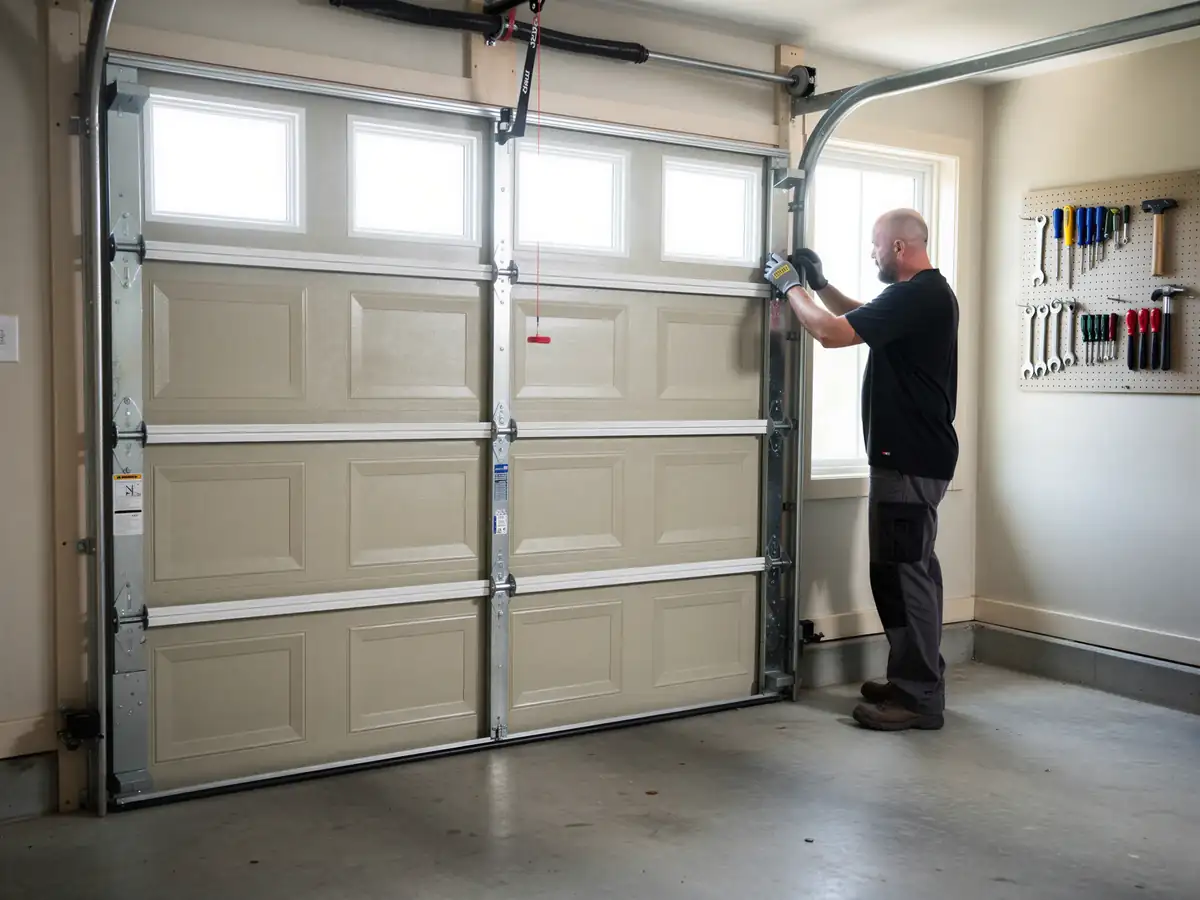
Walk the track with the door closed. Look for rust streaks, flaking paint, or gaps where the bracket has pulled from the jamb - all more common on original hardware than on anything installed in the last ten years. If you can name which of these four sounds you're hearing, you already know roughly where the problem lives before anyone shows up with a truck.
When It Stops Being a DIY Job
Tightening a loose bracket or dabbing fresh grease on a hinge is reasonable weekend work. A torsion spring is not. These springs hold enough tension to break fingers or worse, and on doors from the 1968-2000 era the mounting hardware itself is often as fatigued as the spring. If you hear that bang, call someone - don't reach for a wrench.
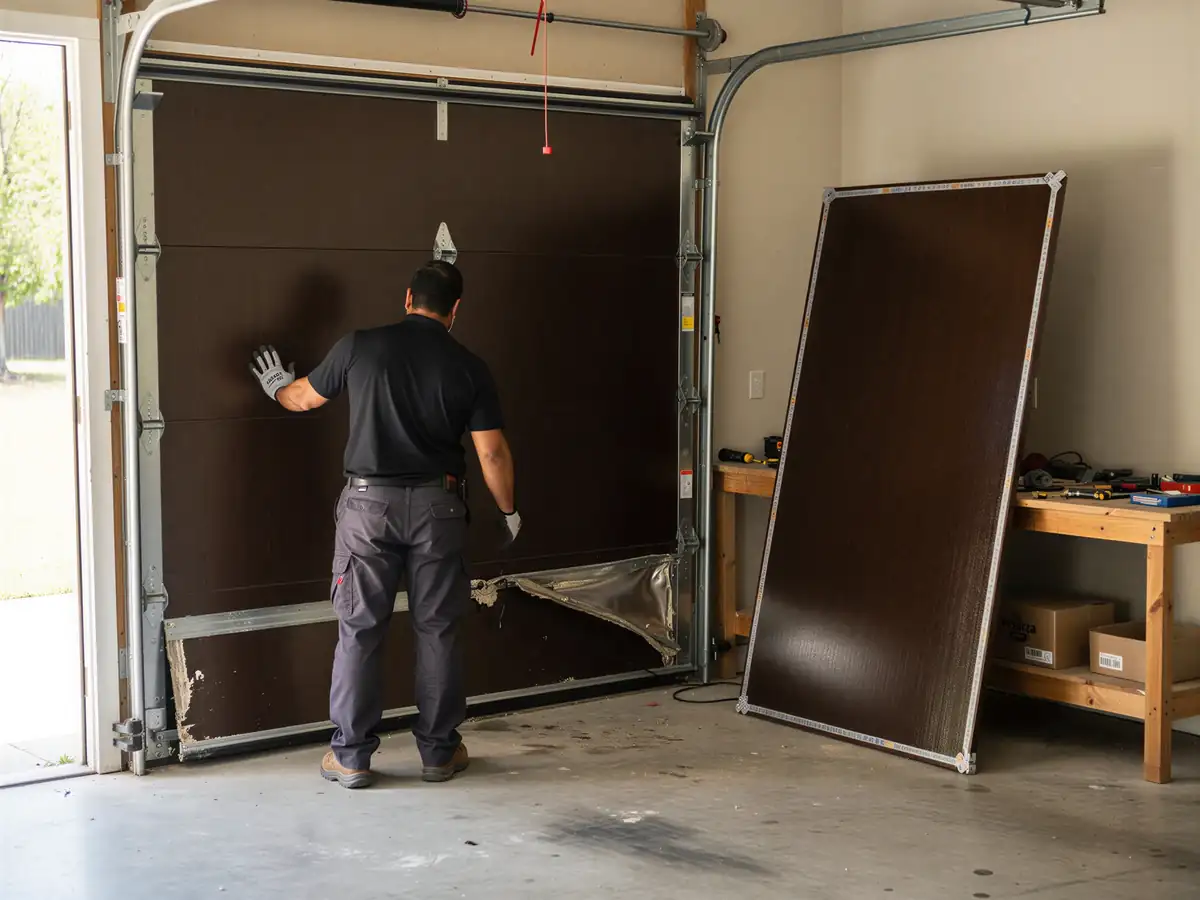
Here's the honest limit on our side: if the noise traces back to a bent track or a damaged panel on a door that old, we may not have a matching replacement panel on the truck. Some of these doors use discontinued profiles. In that case we'll tell you straight that it's a sourcing job, not a same-visit fix, rather than promise something we can't deliver that day.
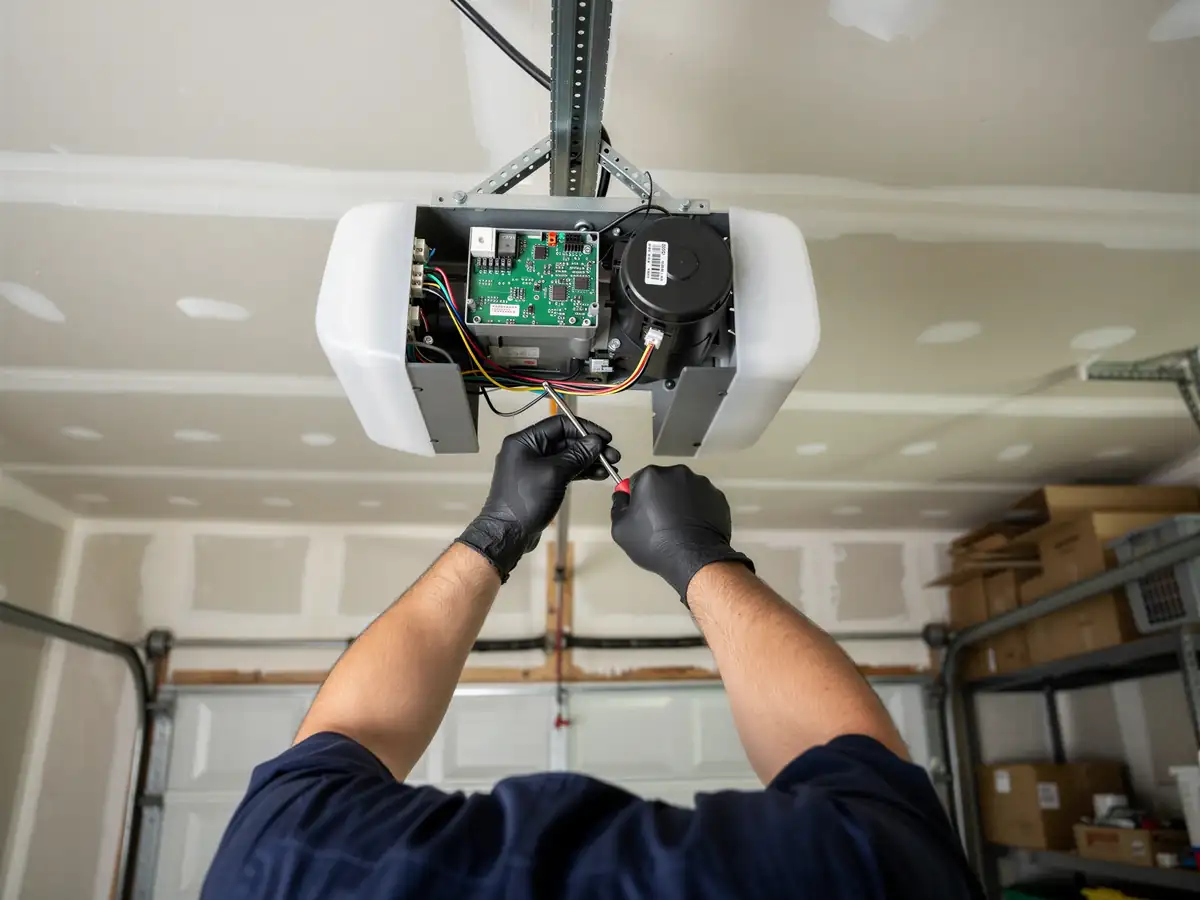
If the opener itself is the source - motor whine, gear noise - that's often simpler and cheaper to address than people expect, especially compared to replacing a whole door. Worth ruling out before assuming the worst.
The Problem
The real issue in Mill Creek isn't that doors break
It's that so much of the housing stock crossed the same threshold at roughly the same time. Doors installed when a house was built in the late 1980s or early 1990s are now well past the point where springs, cables, and rollers are expected to perform reliably, and the area's cold moderate winters accelerate the wear on seals and lubricant every single year.
That combination - concentrated housing age plus a climate that stresses metal and rubber on a seasonal cycle
Means noise complaints tend to cluster by neighborhood and by decade, not by random bad luck. A squeal or a thump isn't cosmetic. It's usually the first measurable sign that a part built for a 1980s house has quietly reached the end of what it can do.