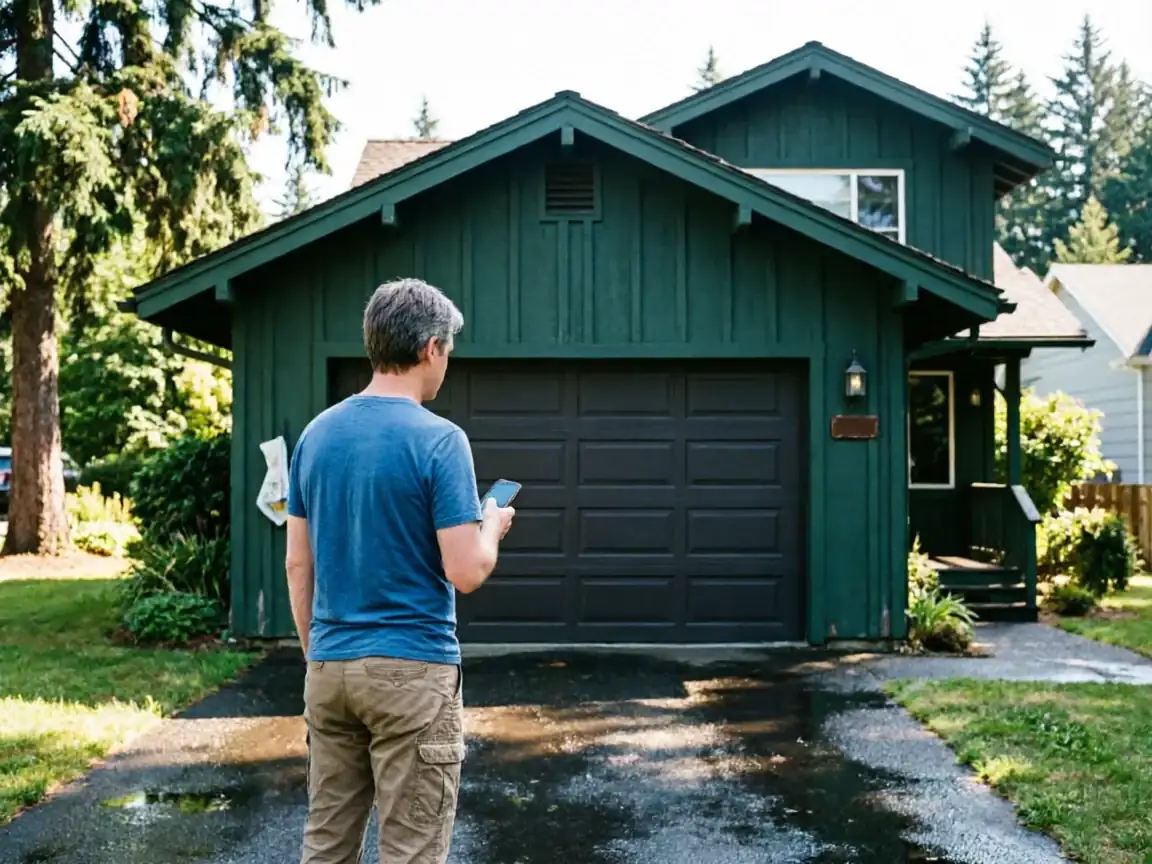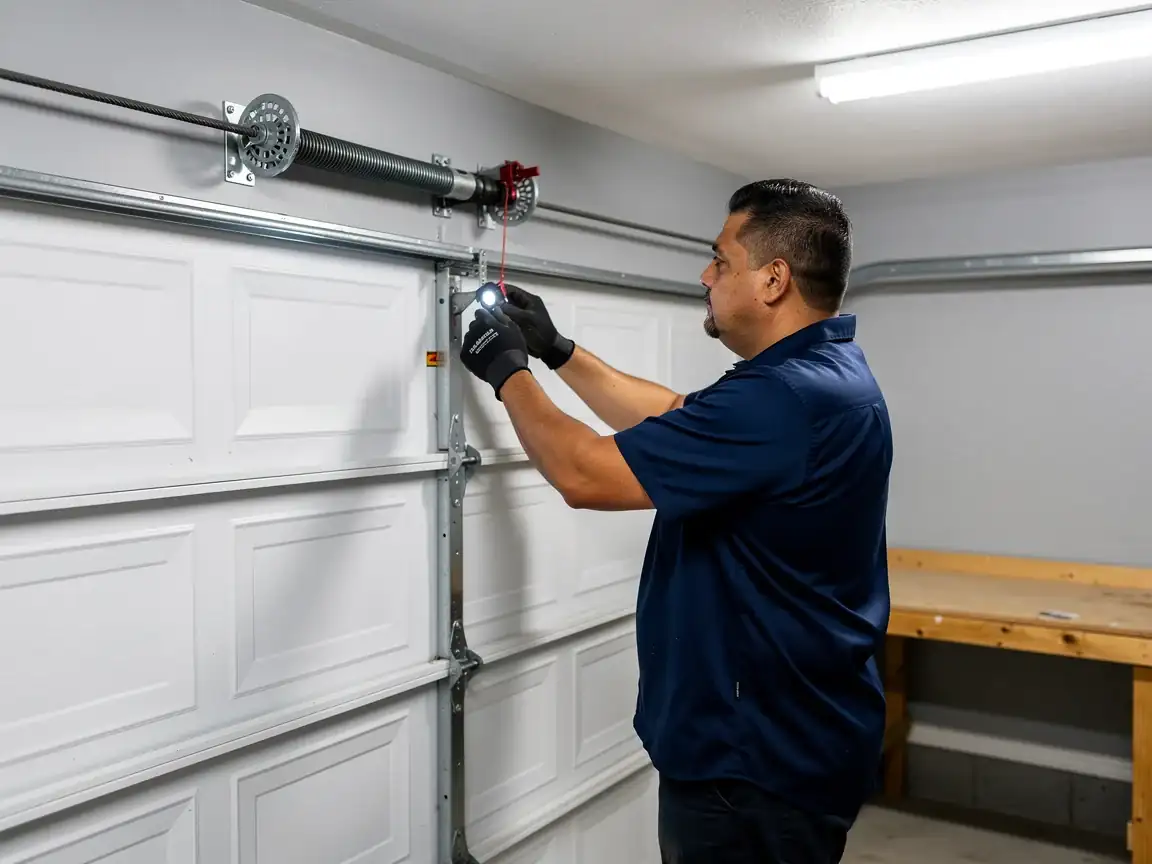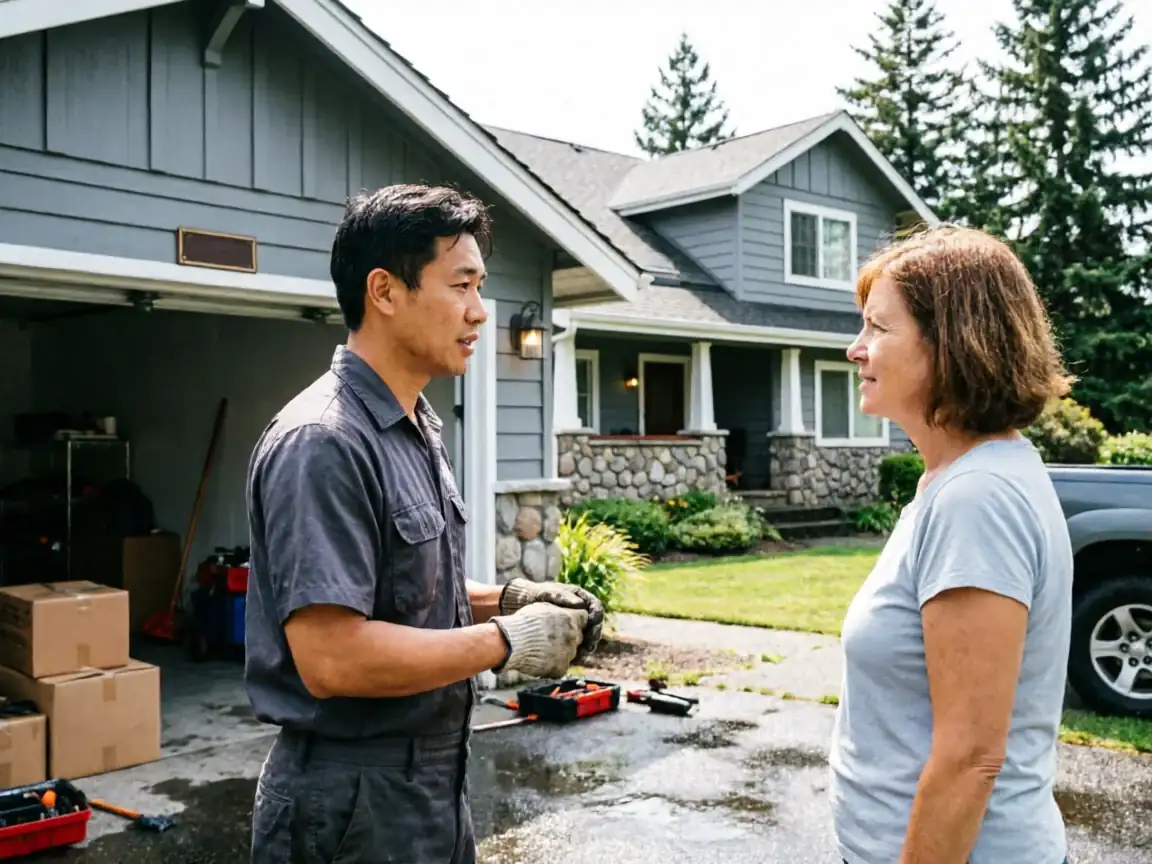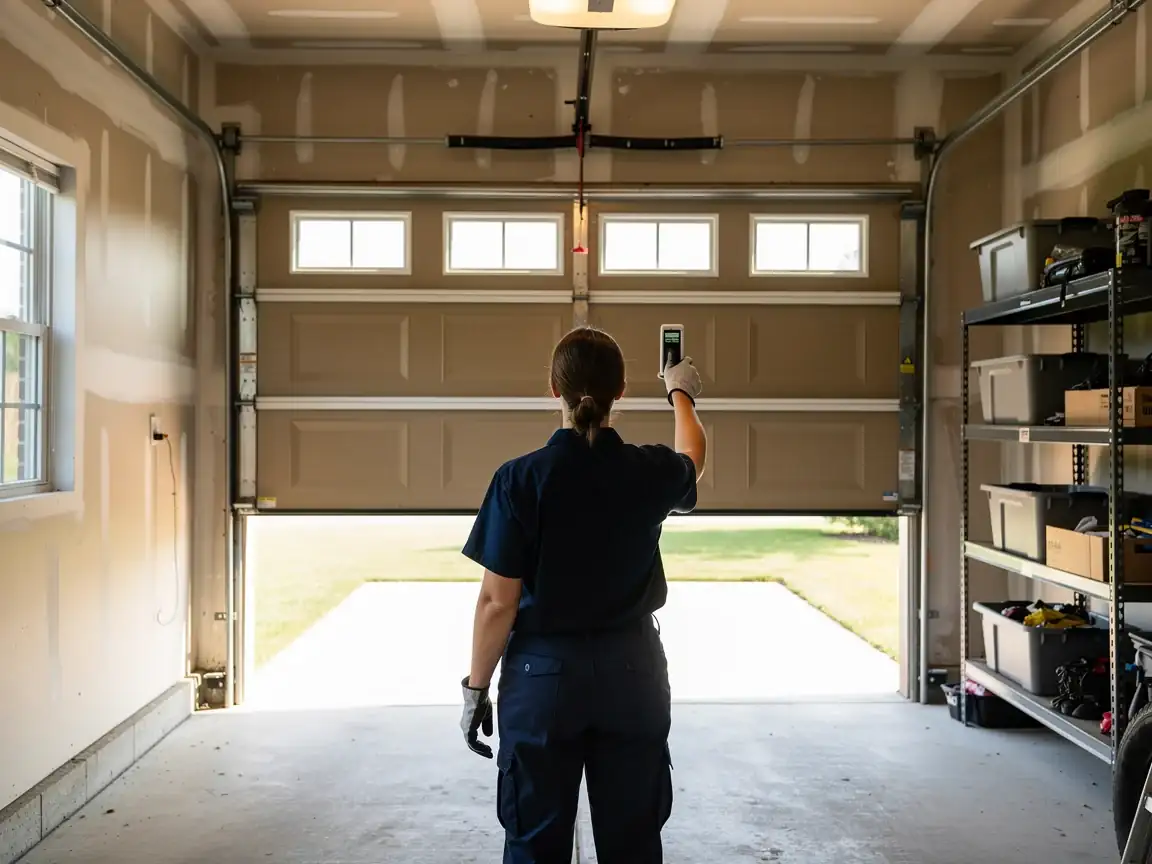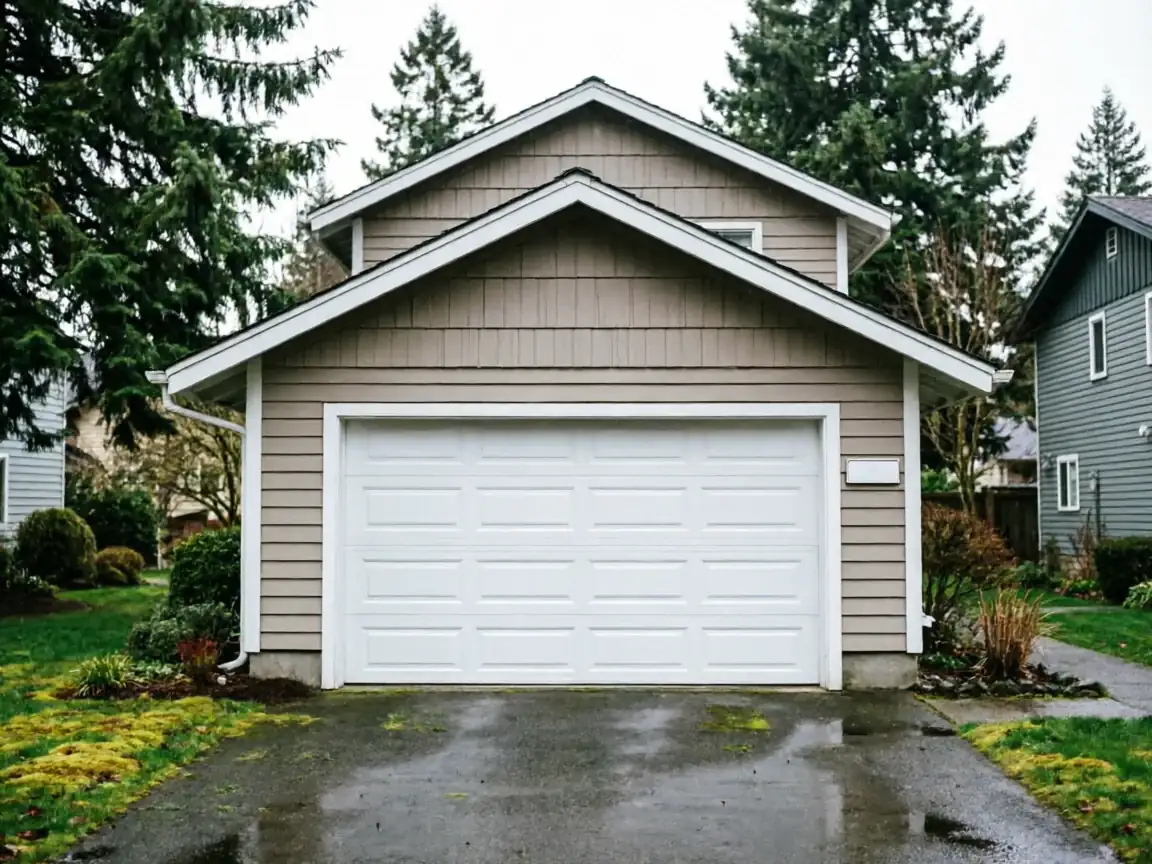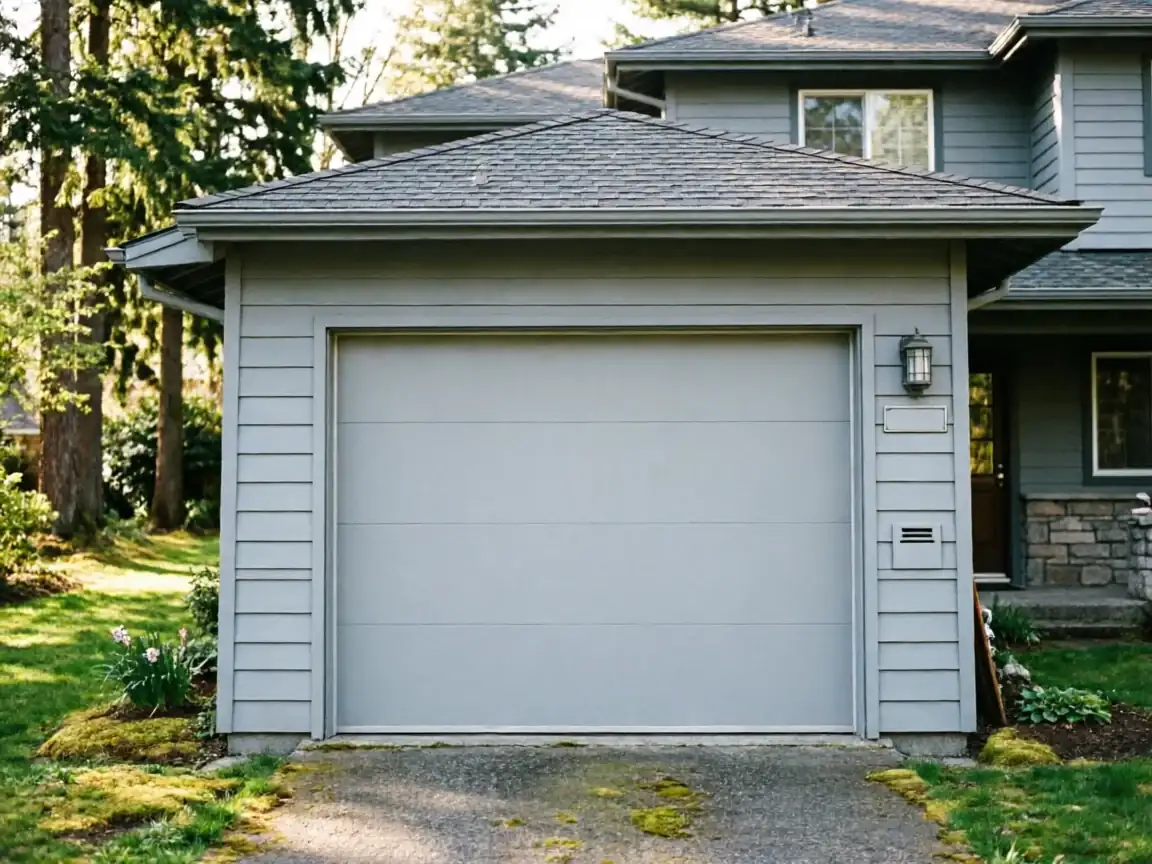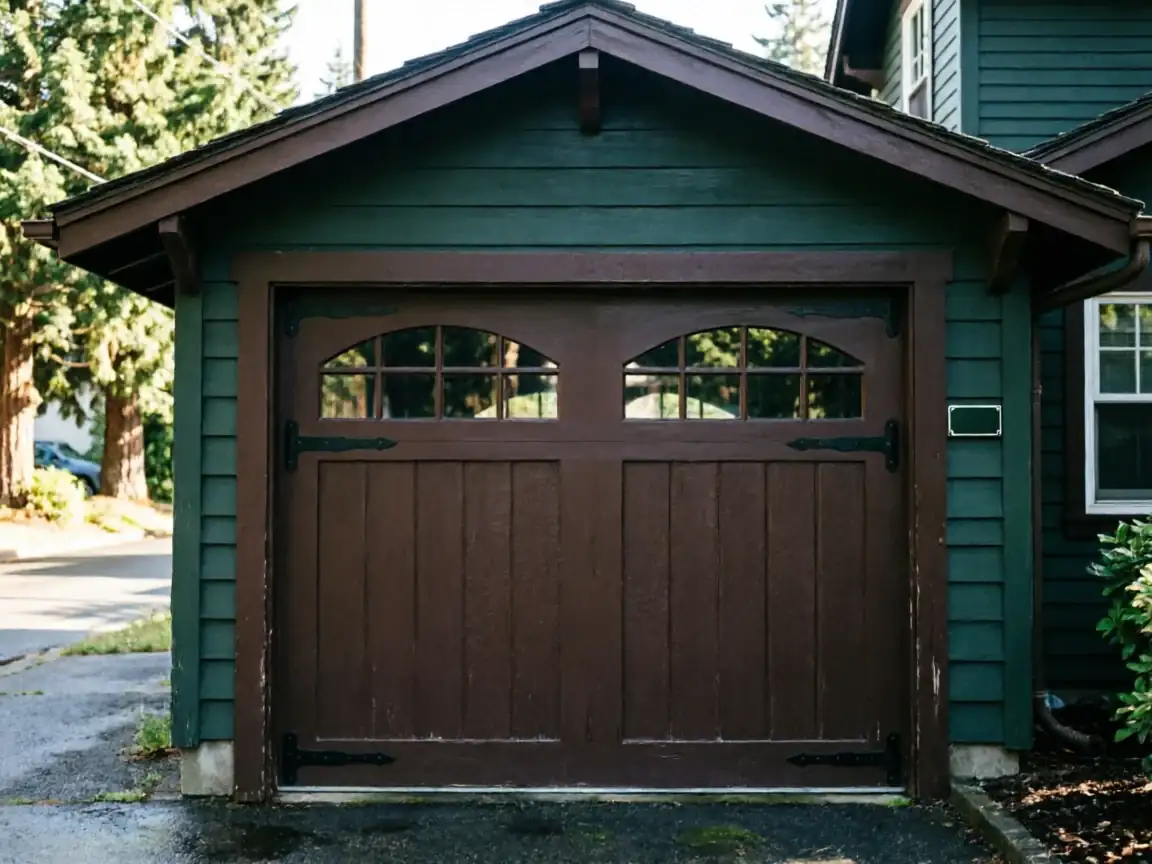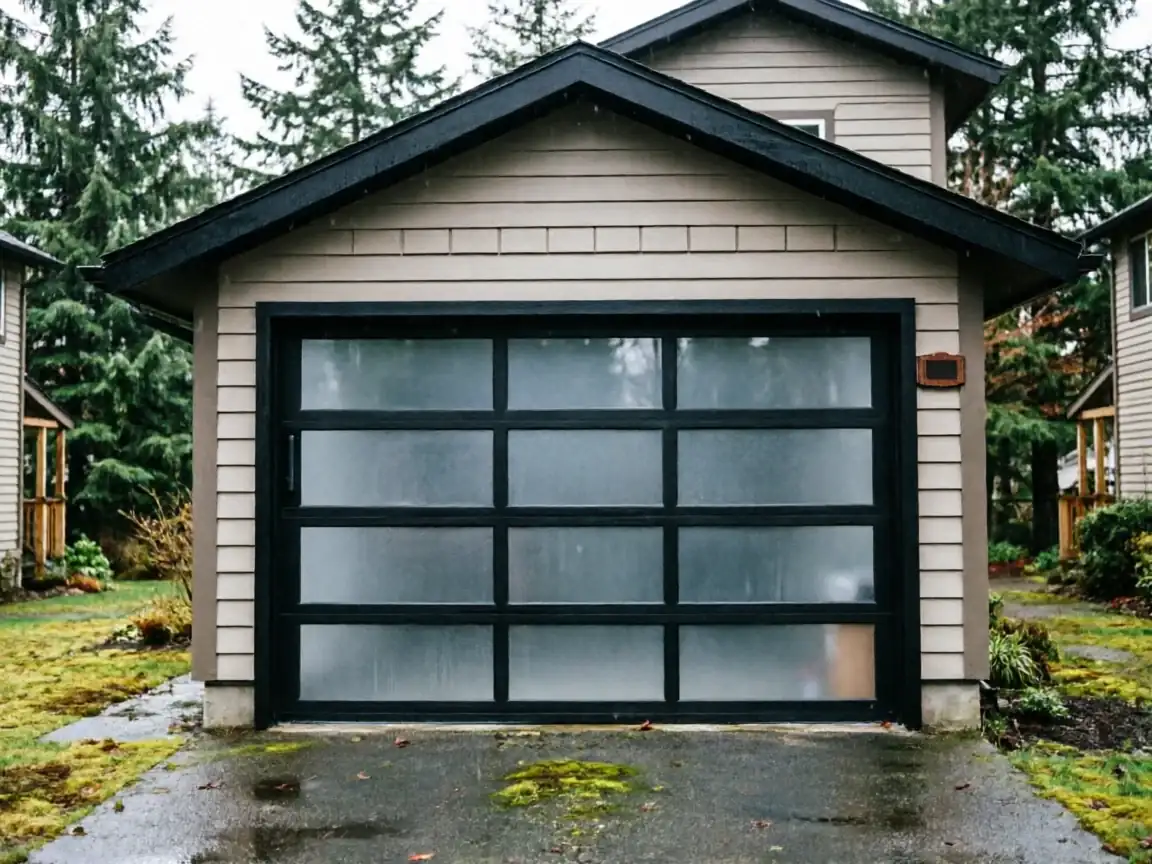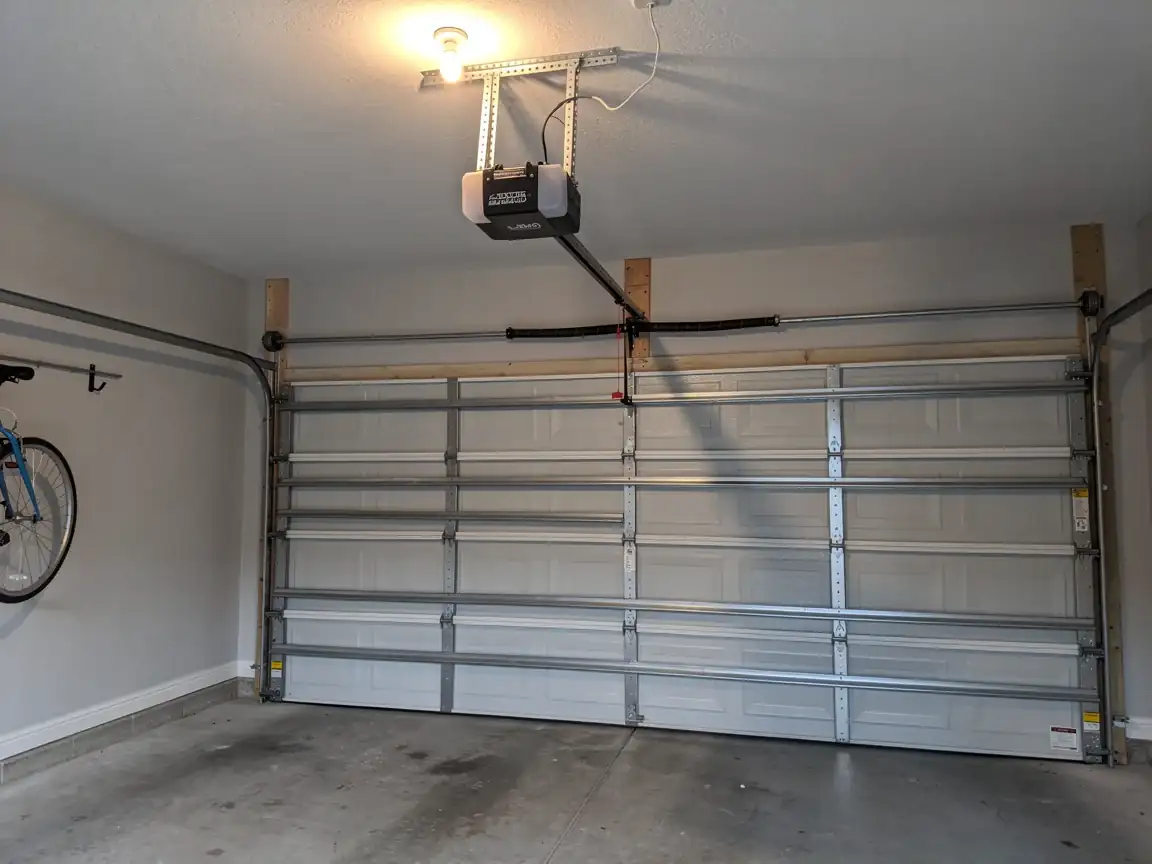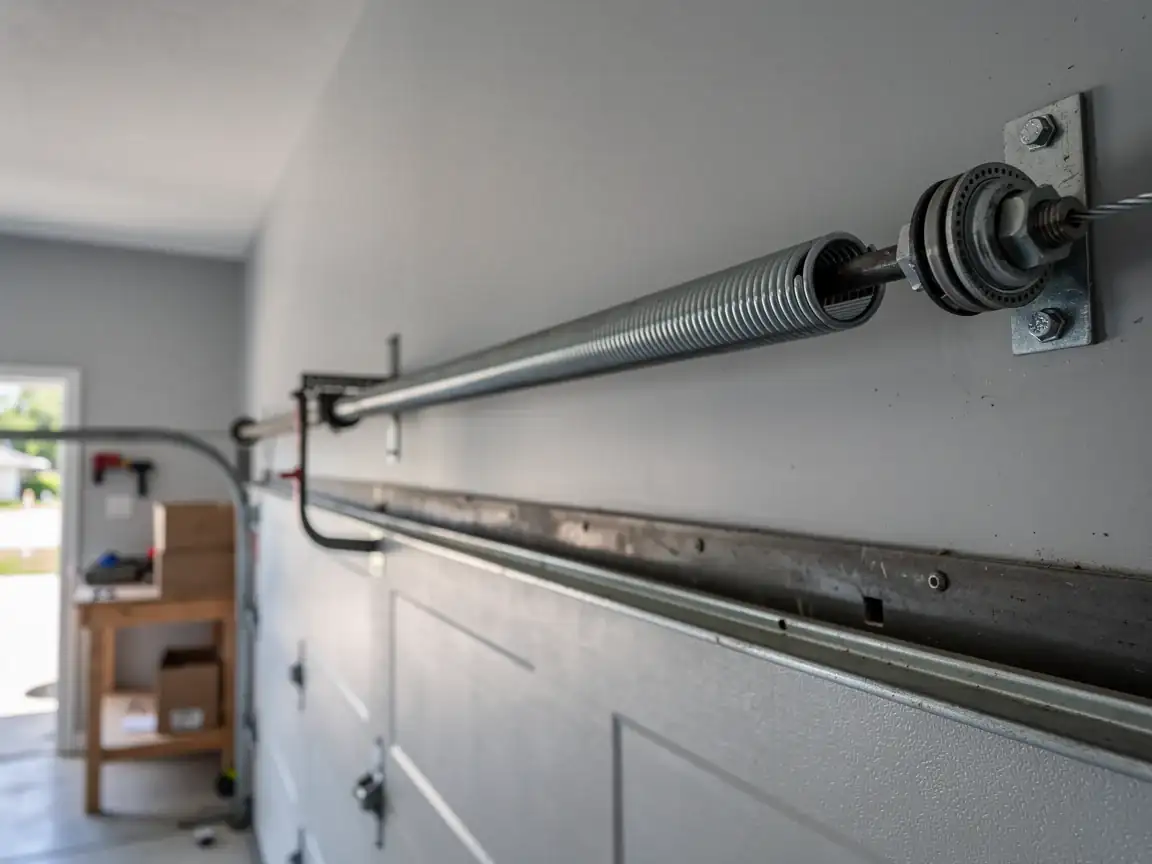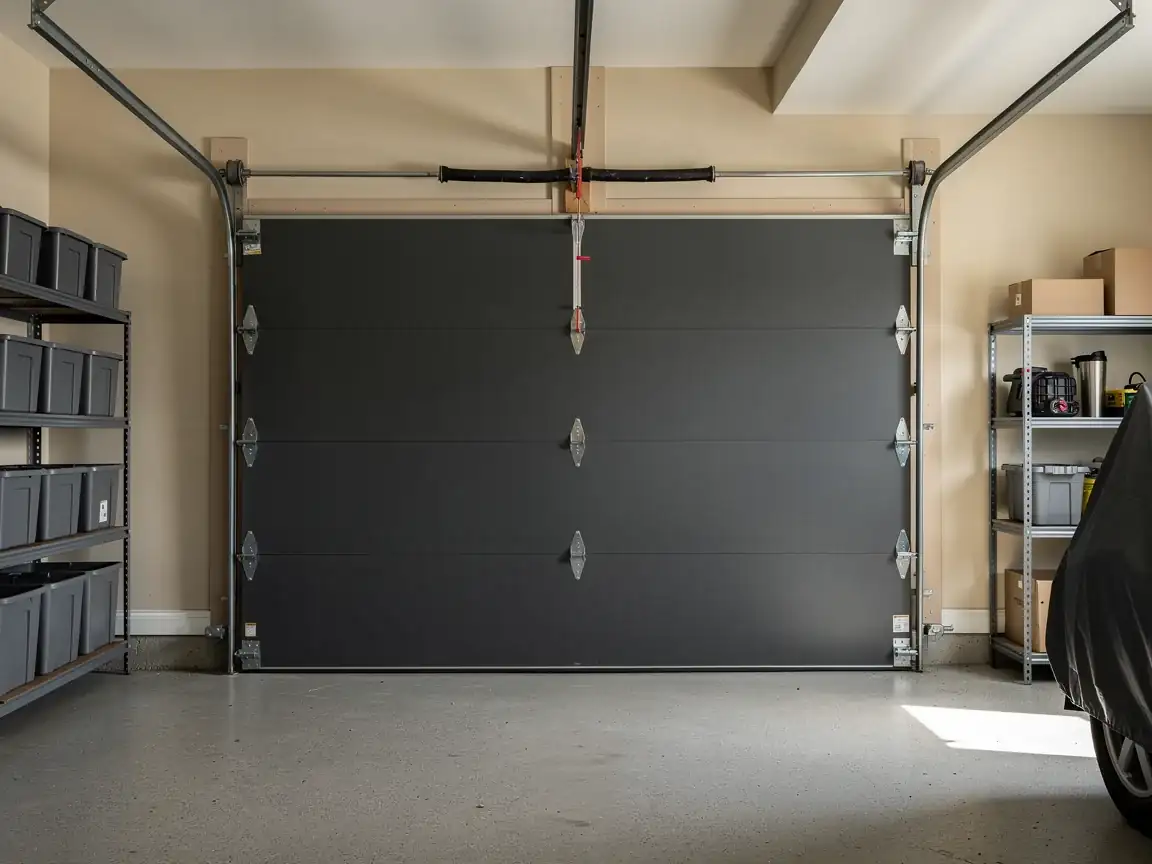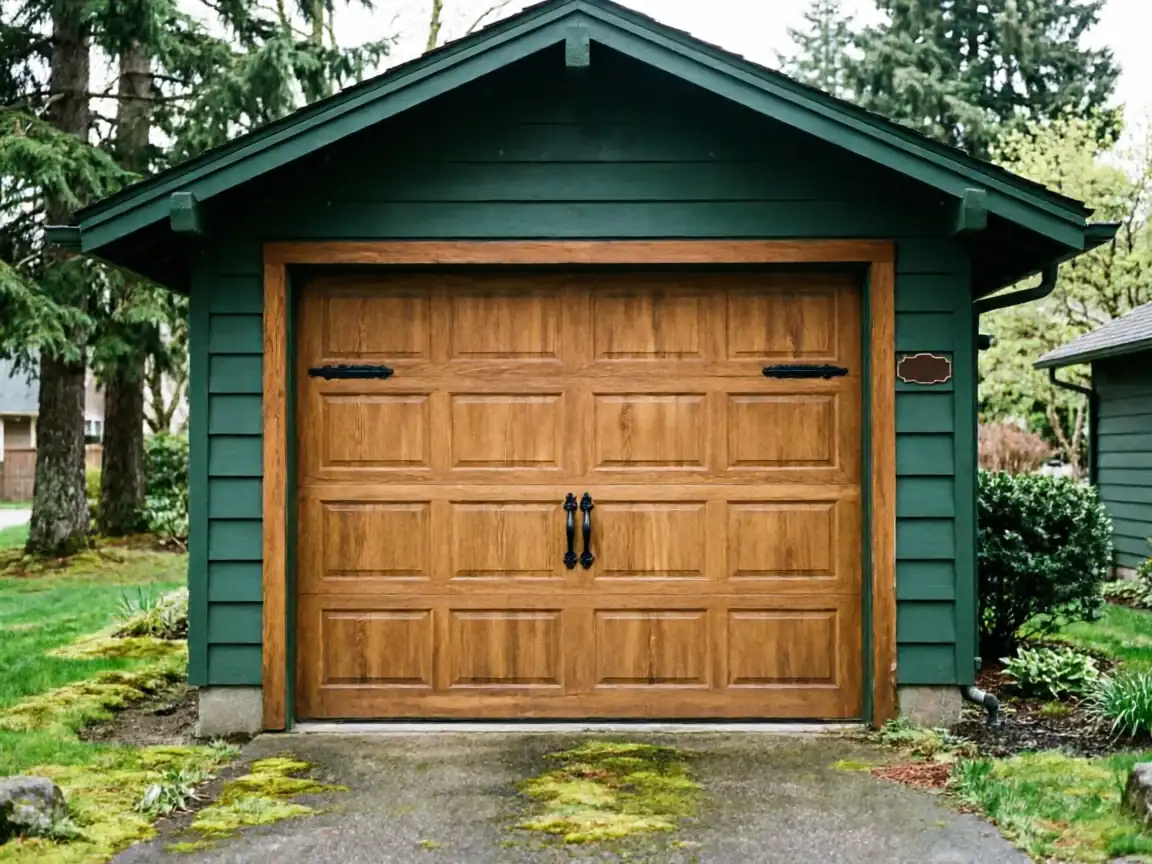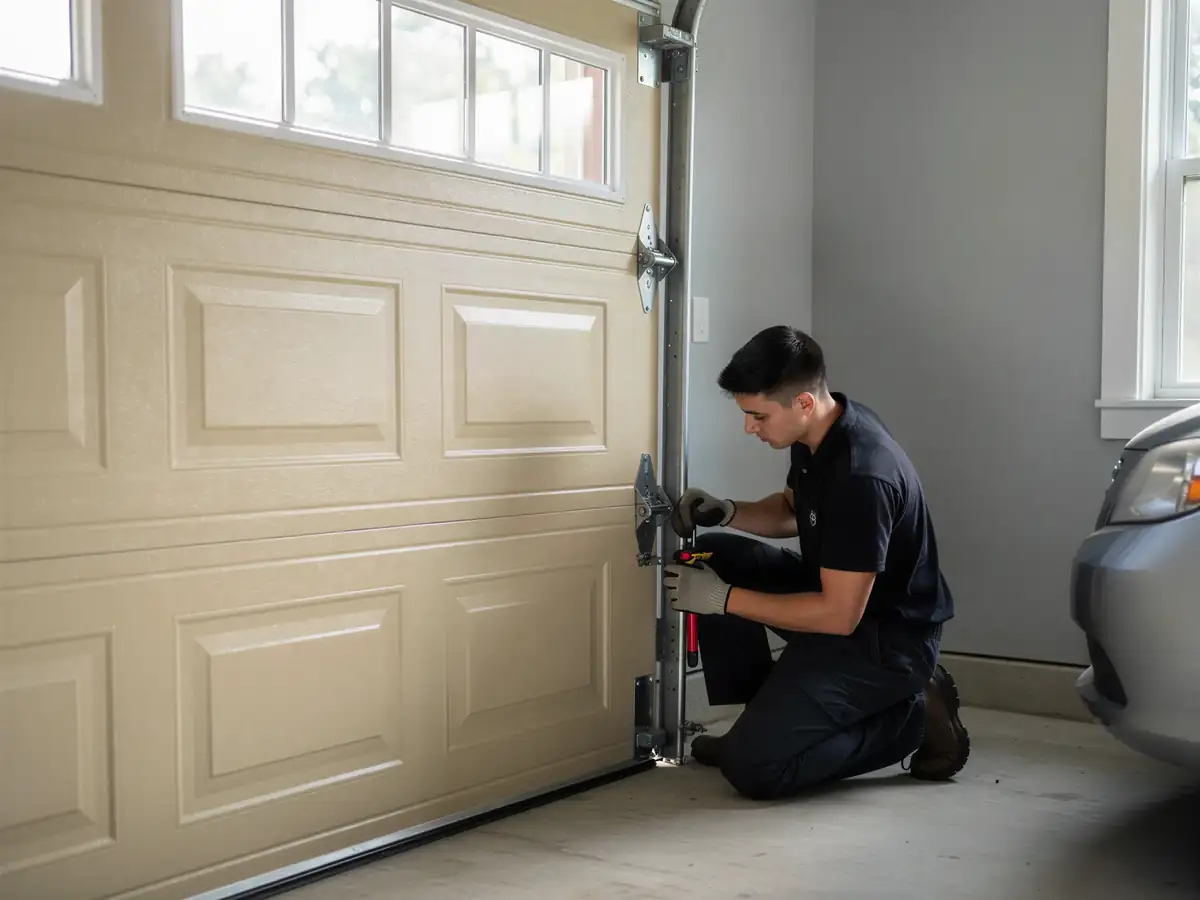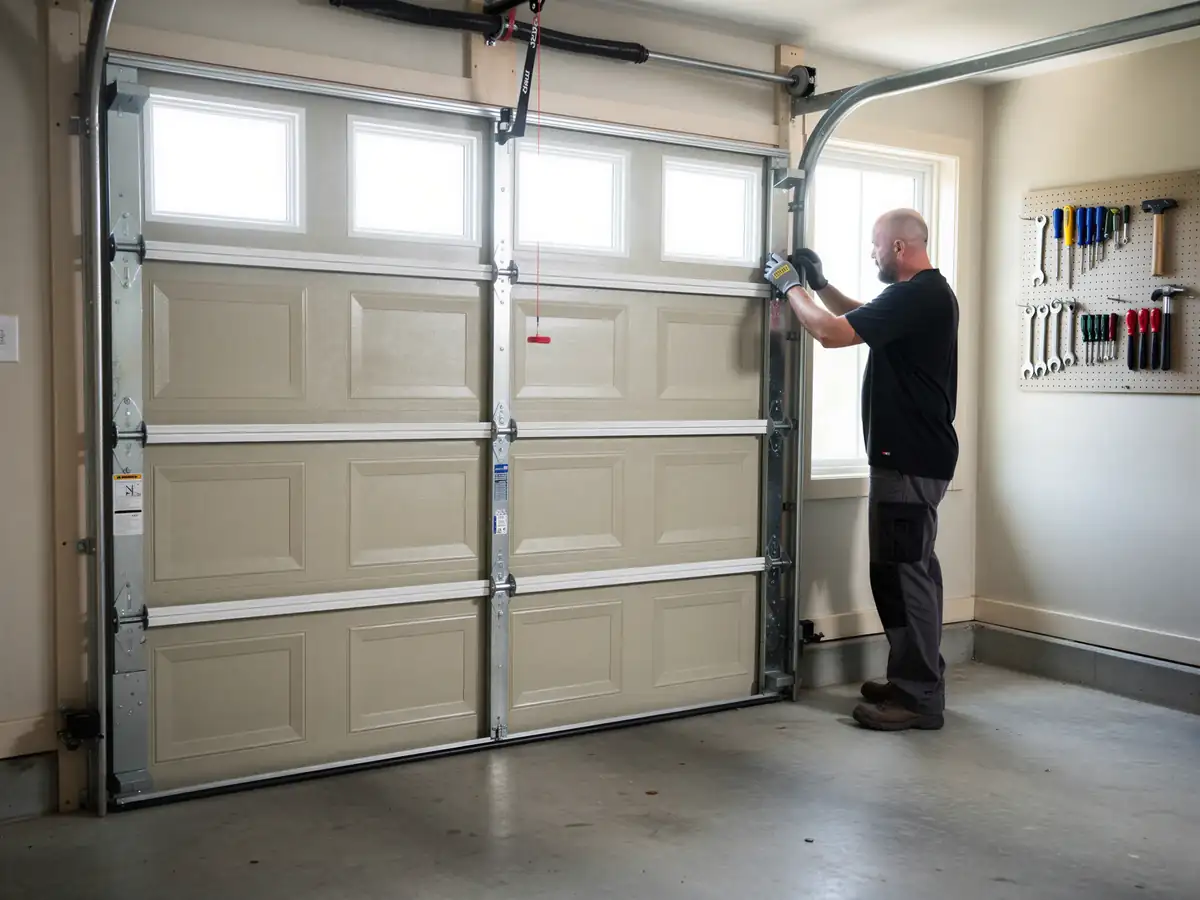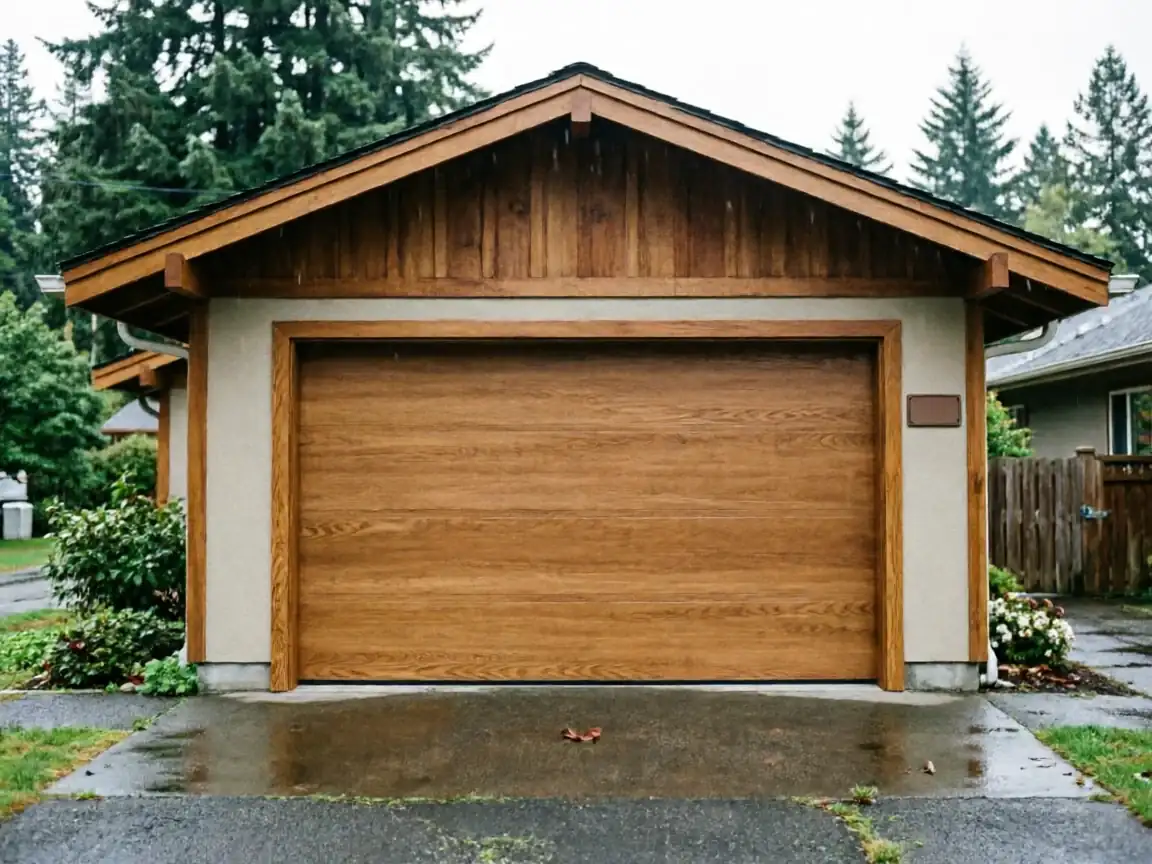
What You Are Seeing
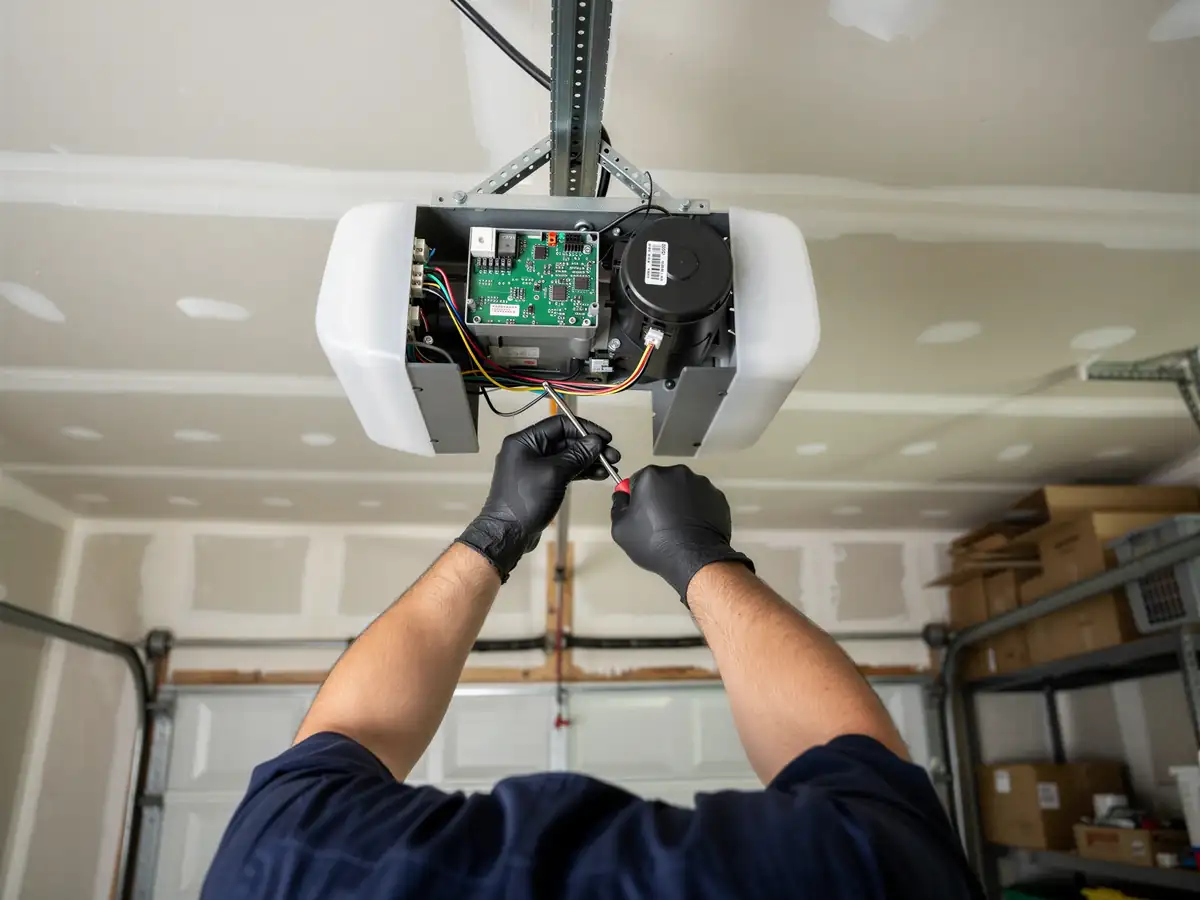
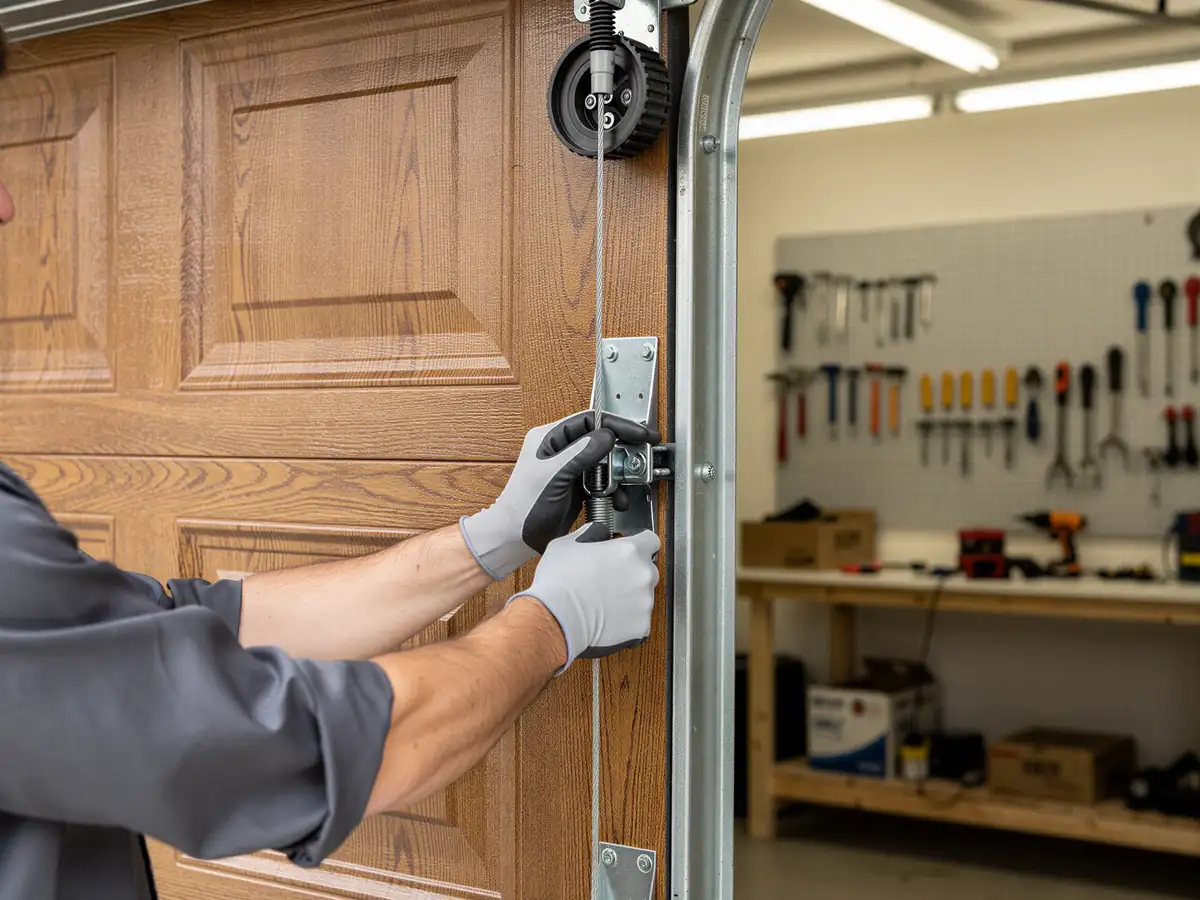
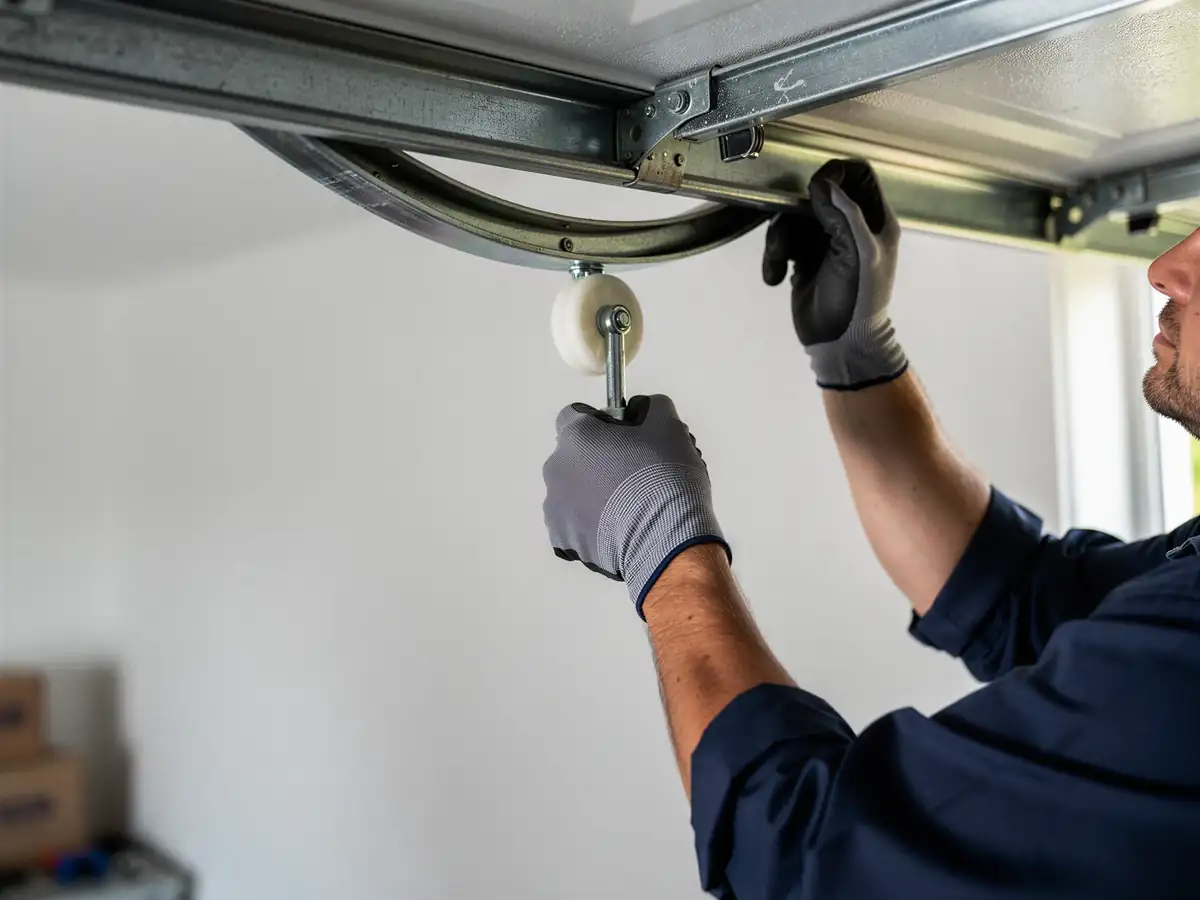
Lake Stickney's housing stock runs newer than a lot of what we service out of Mill Creek - the typical home here was built around 2000, compared to a median closer to 1989 across the wider area we cover. That means most doors we find on these jobs are on factory-installed torsion systems with steel tracks and sealed bearings, not the older extension-spring setups we still run into elsewhere. The failures look different too: instead of brittle 1980s hardware finally giving out, we're usually dealing with grease that's dried out after two decades of sitting, nylon rollers that have gone flat-sided, and openers original to the house hitting the end of their service life around now. It's wear-and-tear maintenance, not hardware-era triage.
How Long It Takes
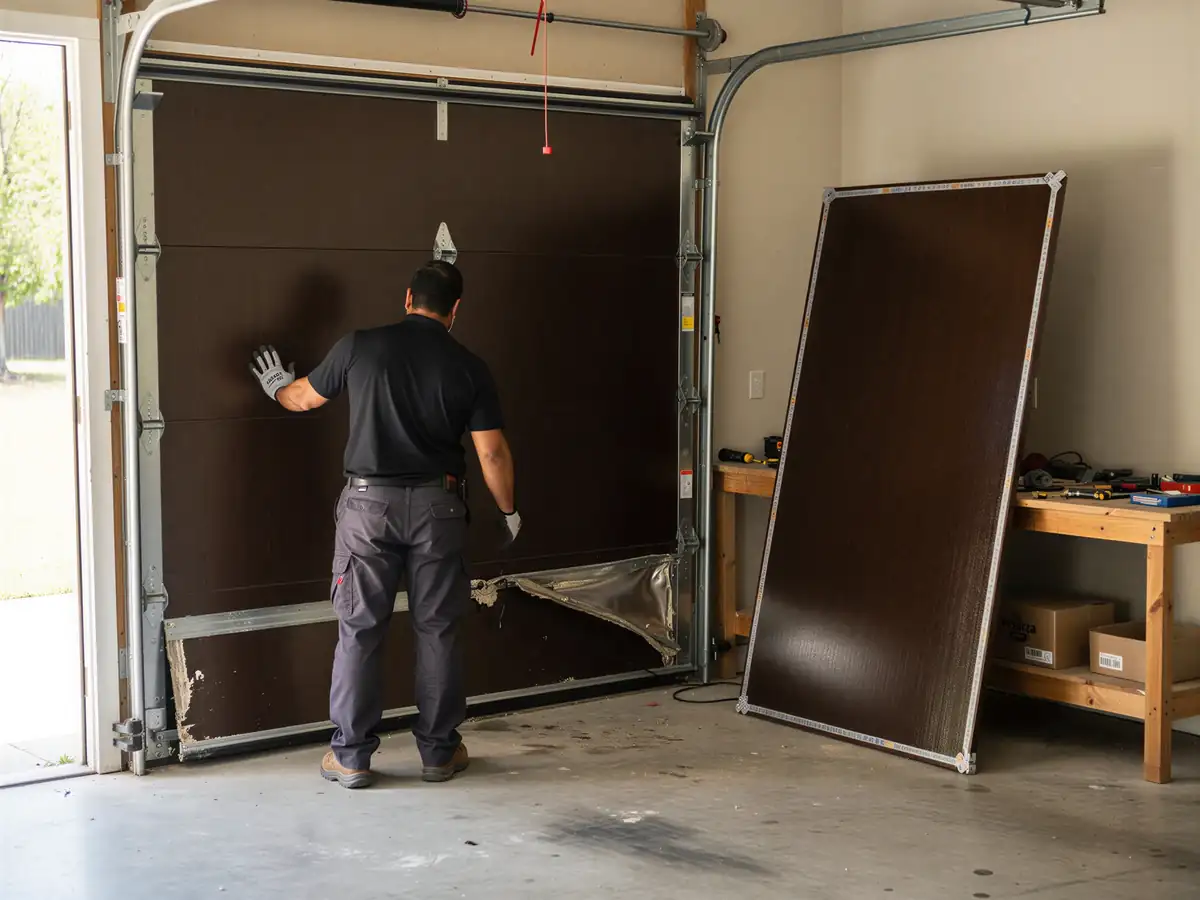
A standard maintenance visit - lube, track alignment check, spring tension check, hardware tightening, opener safety test - runs about the same whether the door is five years old or thirty, but newer torsion setups like what's common in Lake Stickney usually go faster because the hardware hasn't corroded or warped. We're not quoting a number here we don't have, but the short run from Mill Creek means scheduling flexibility isn't the bottleneck it can be for towns farther out on our list. If we find something during the visit that needs parts we don't carry on the truck, that's a second trip, and we'll tell you that up front rather than pad the first one.
Getting It Booked In
Because Lake Stickney is close to our Mill Creek base, getting a maintenance visit on the calendar doesn't require batching it with other stops in the area the way some farther-out jobs do. Tell us the age of your opener and whether the door has started making noise, and we can usually tell over the phone whether this is a standard tune-up or something that needs a longer look. You can check our coverage for Lake Stickney directly, or read about the full maintenance service we run out of Mill Creek if you want the general rundown before booking.
Where This Job Goes Sideways
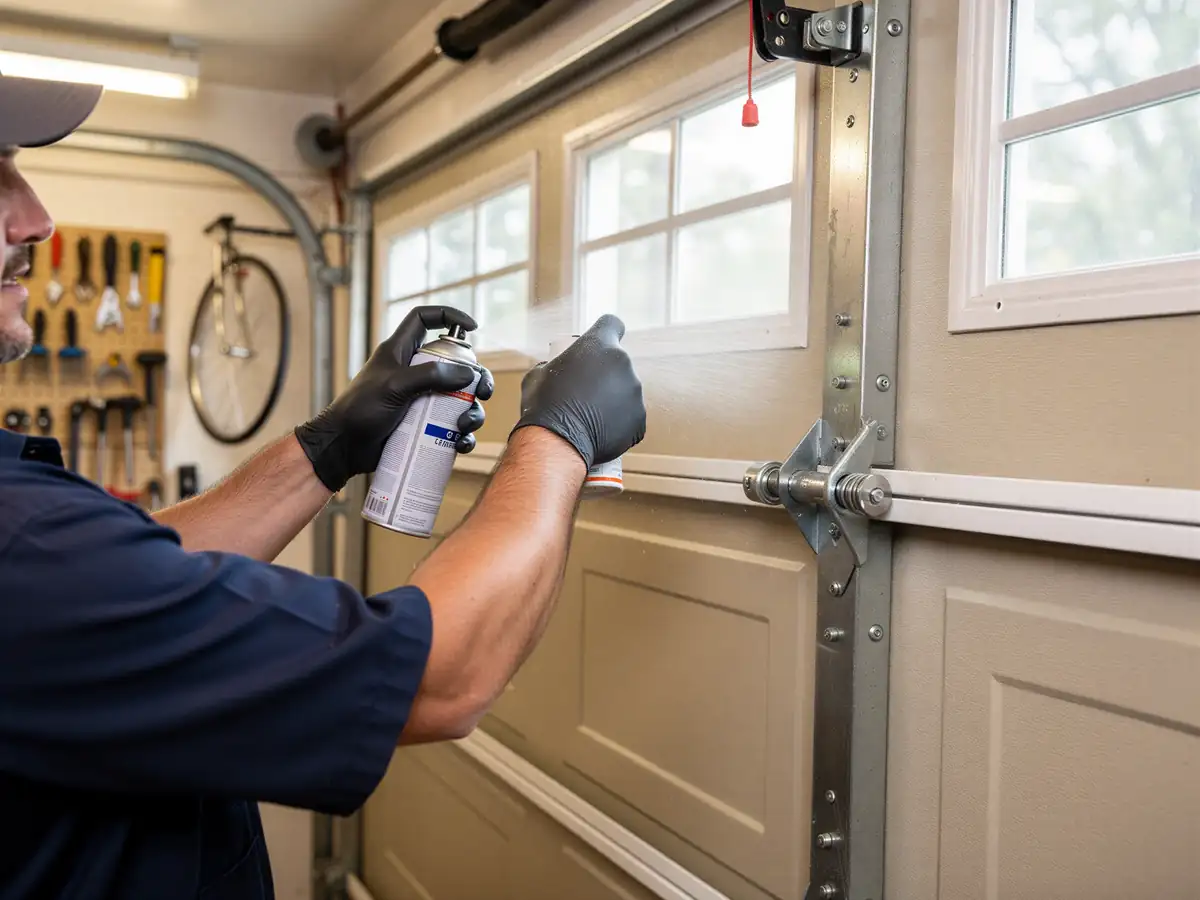
The most common mistake we see on these newer-build doors is an owner who sprays standard WD-40 on the springs thinking it's maintenance - it's a solvent, not a lubricant, and it strips what grease is left rather than adding to it. The other one is ignoring a grinding opener motor because the door still goes up and down; by the time it fails outright, you're often looking at a replacement opener instead of a $20 part. And honestly, if your door and opener are both original to a house built right around 2000, a tune-up extends things, but it doesn't make 20-year-old hardware new - at some point replacement is the more honest answer than another repair visit.