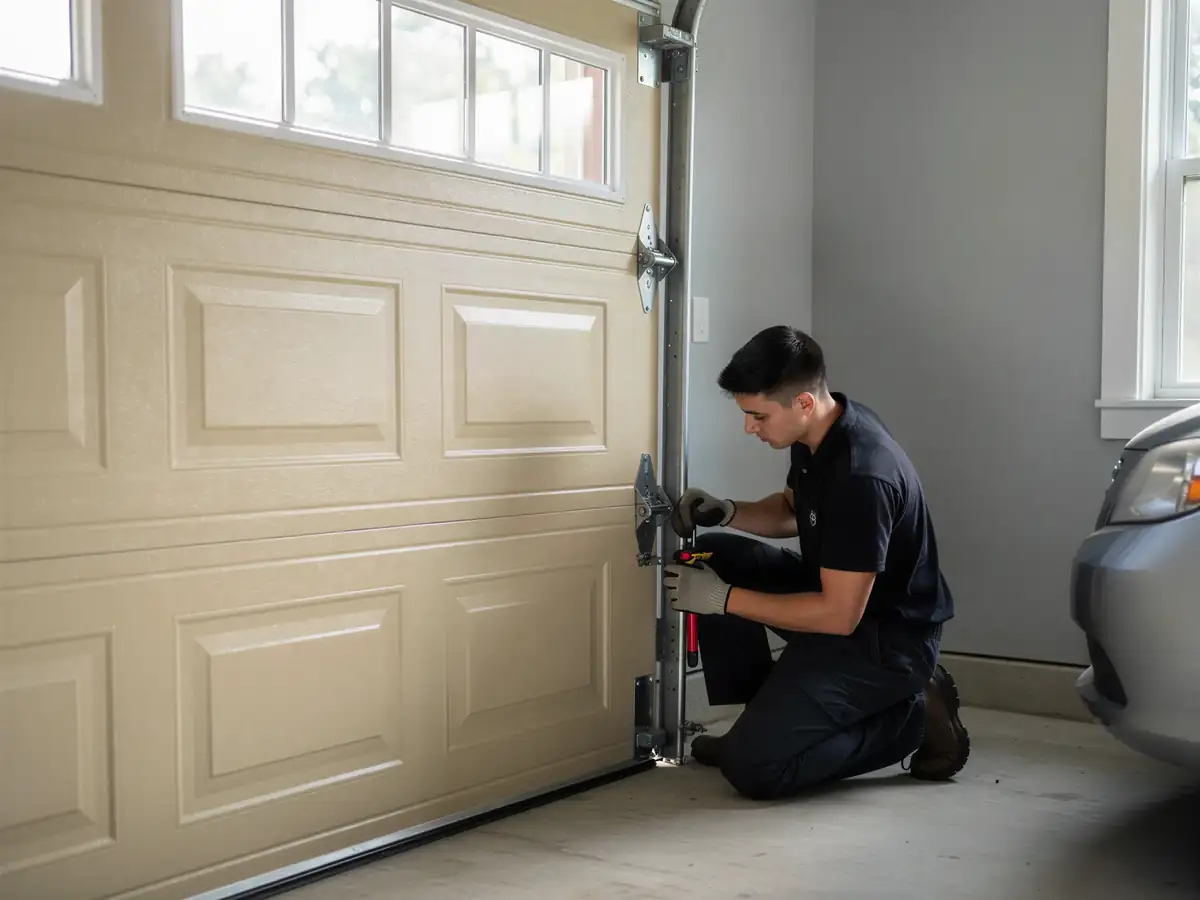
The DIY Question
The fault we see most in Lake Stickney isn't a snapped cable or a bent track
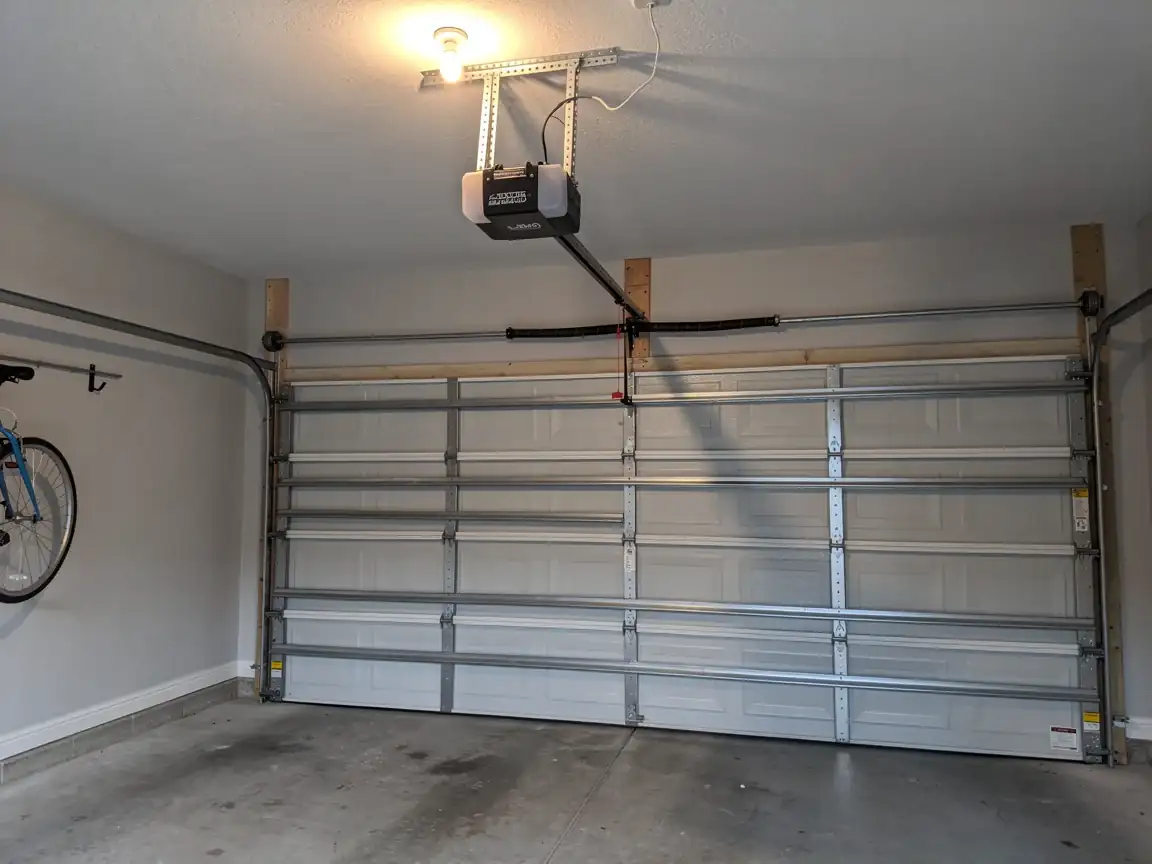
It's a torsion spring that's gone quiet and soft instead of snapping loud, paired with an opener logic board that's started throwing random reversals. That combination is hard to diagnose from a YouTube video because neither half looks dramatic. The door just gets heavier, or it reverses halfway up for no visible reason.
This tracks with when the neighborhood went up
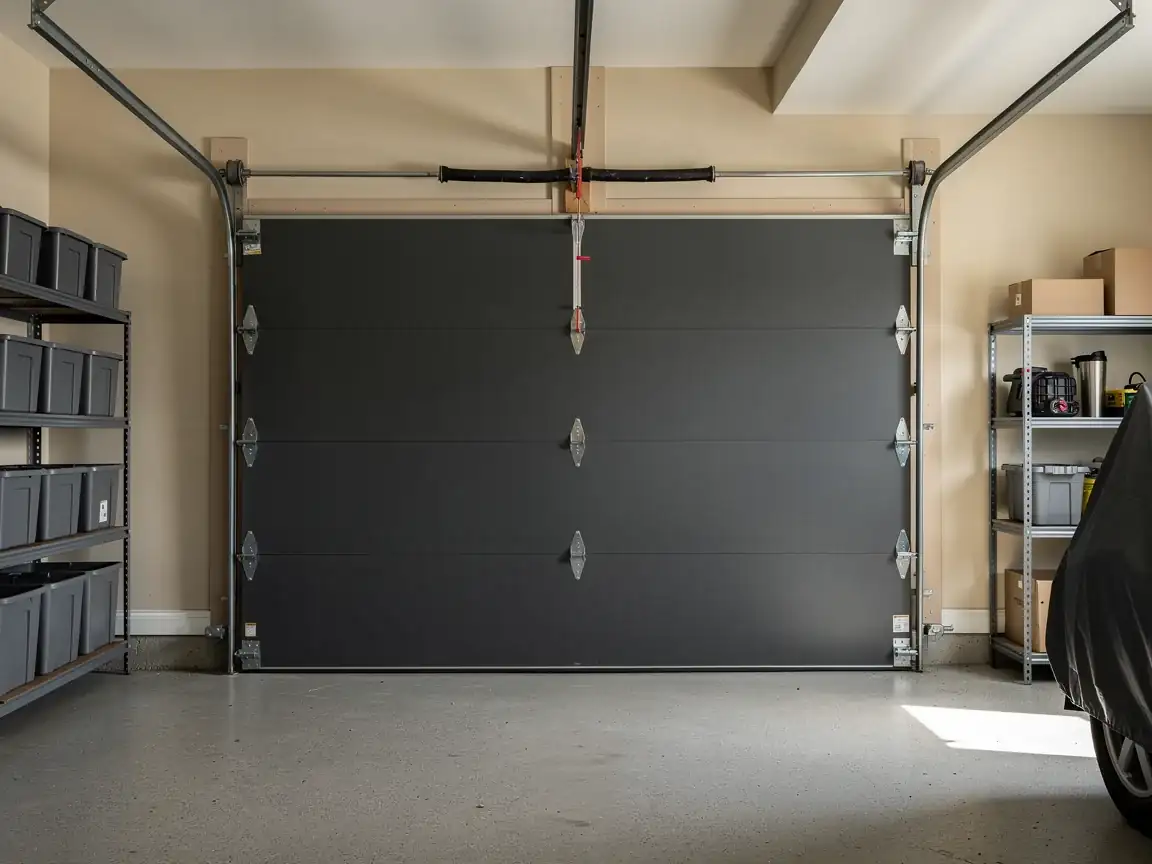
Lake Stickney's housing clusters around 2000, newer than a lot of what we cover out of Mill Creek, where stock runs back to 1968. A door built in 2000 usually has a factory steel torsion spring system and an opener with a circuit board instead of a mechanical limit switch. Those boards are now pushing twenty-five years old. That's the part that fails quietly, not the part that fails loud.
Can you DIY a spring adjustment on a system like that?
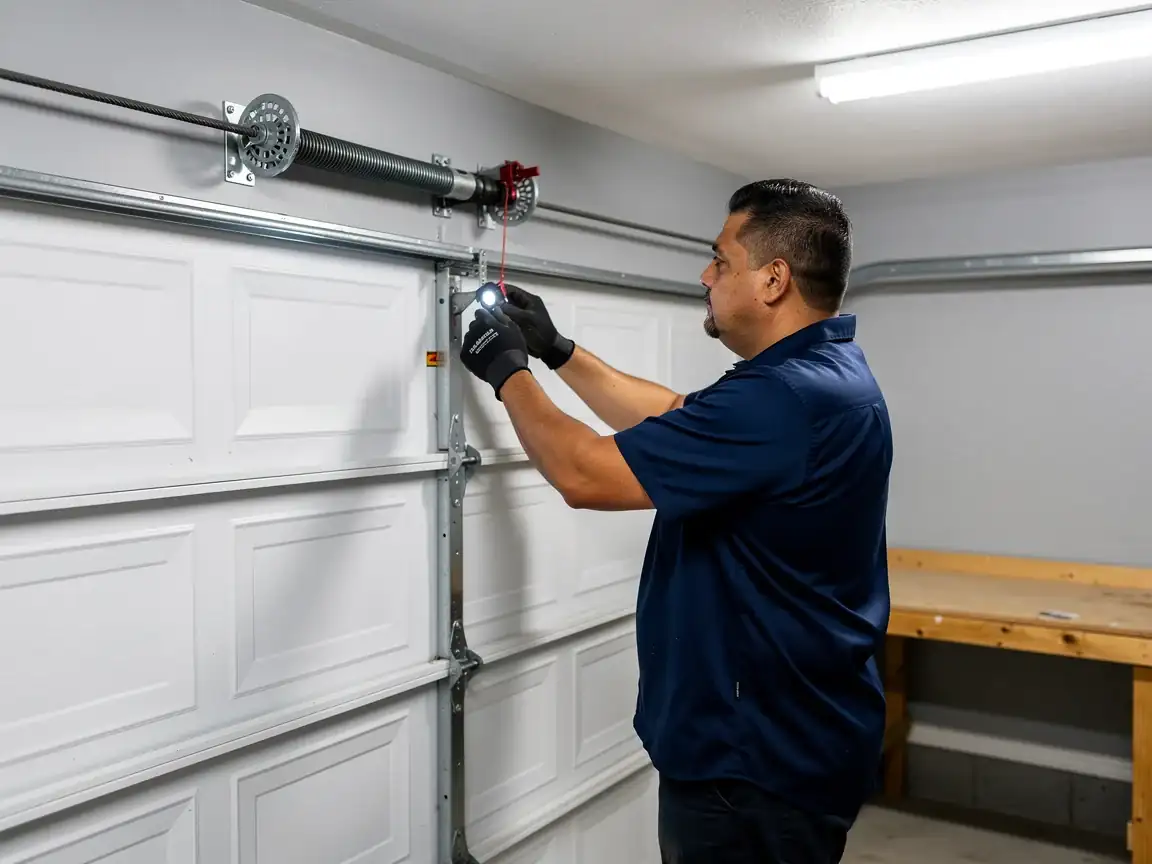
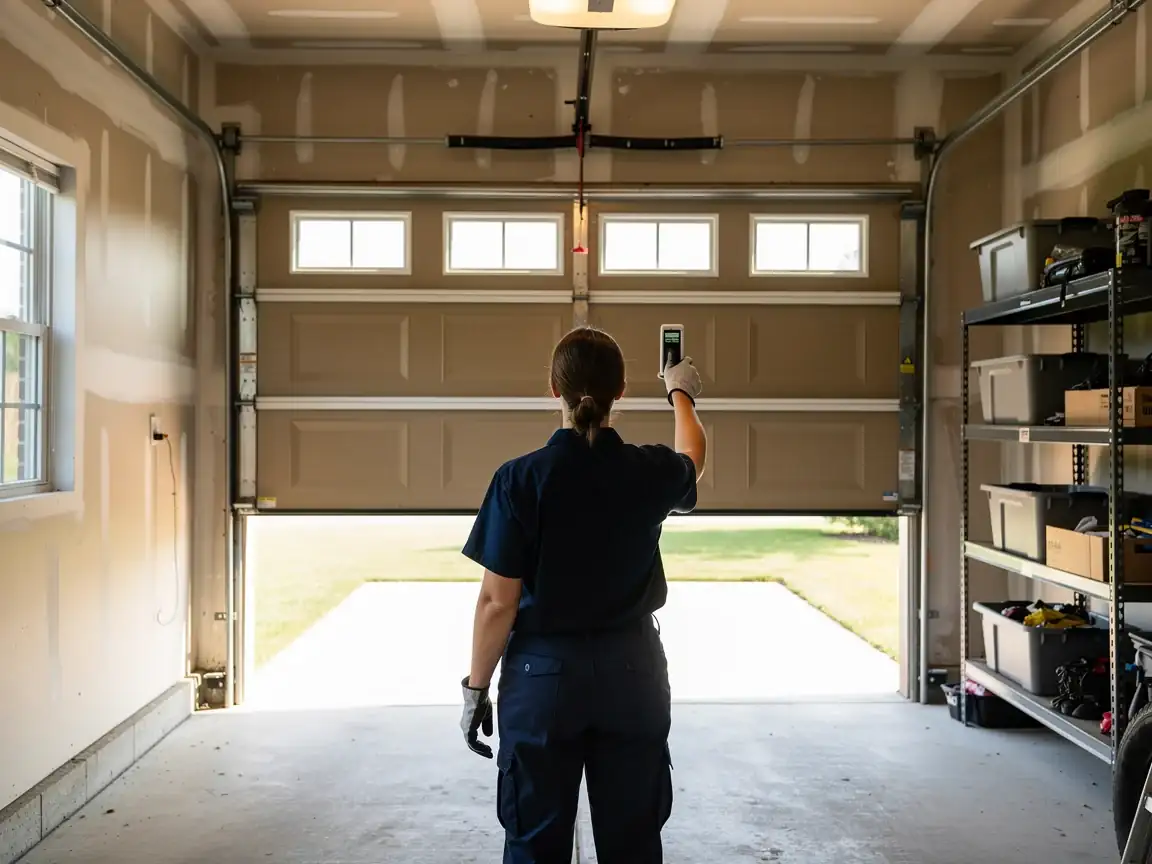
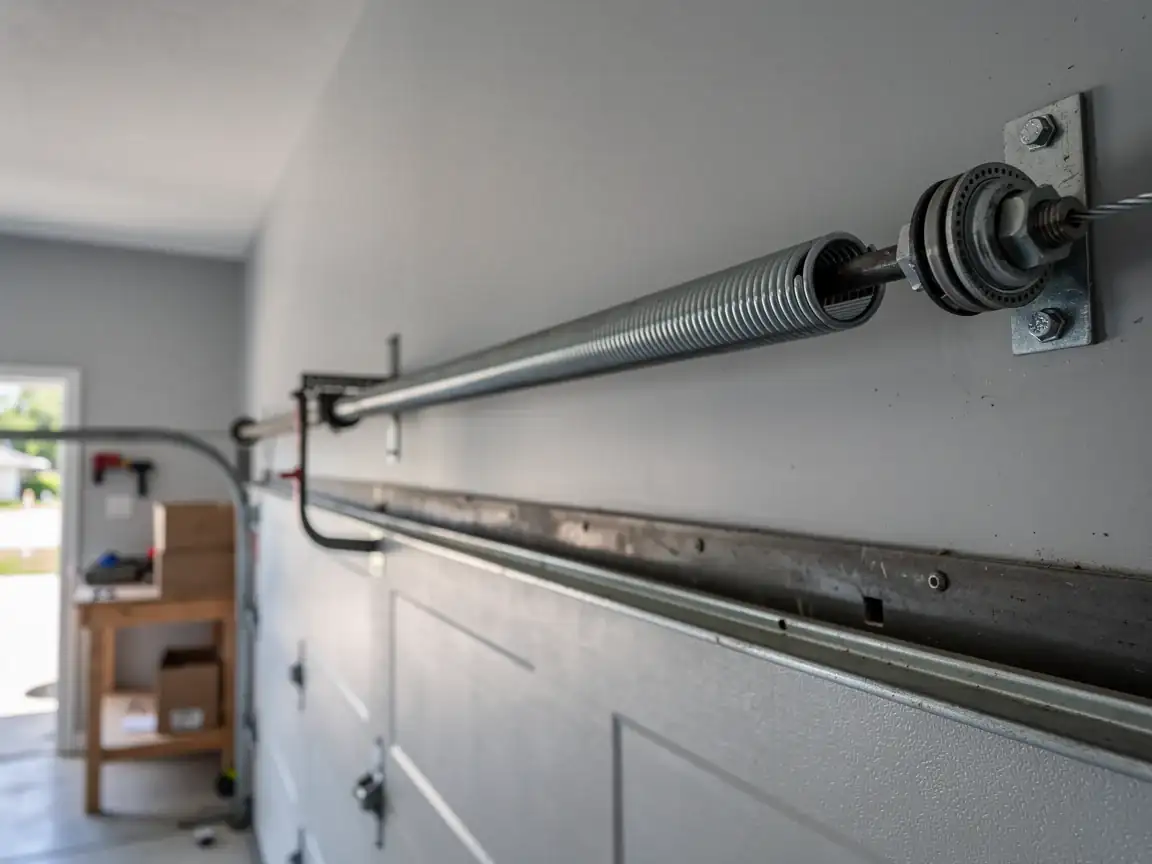
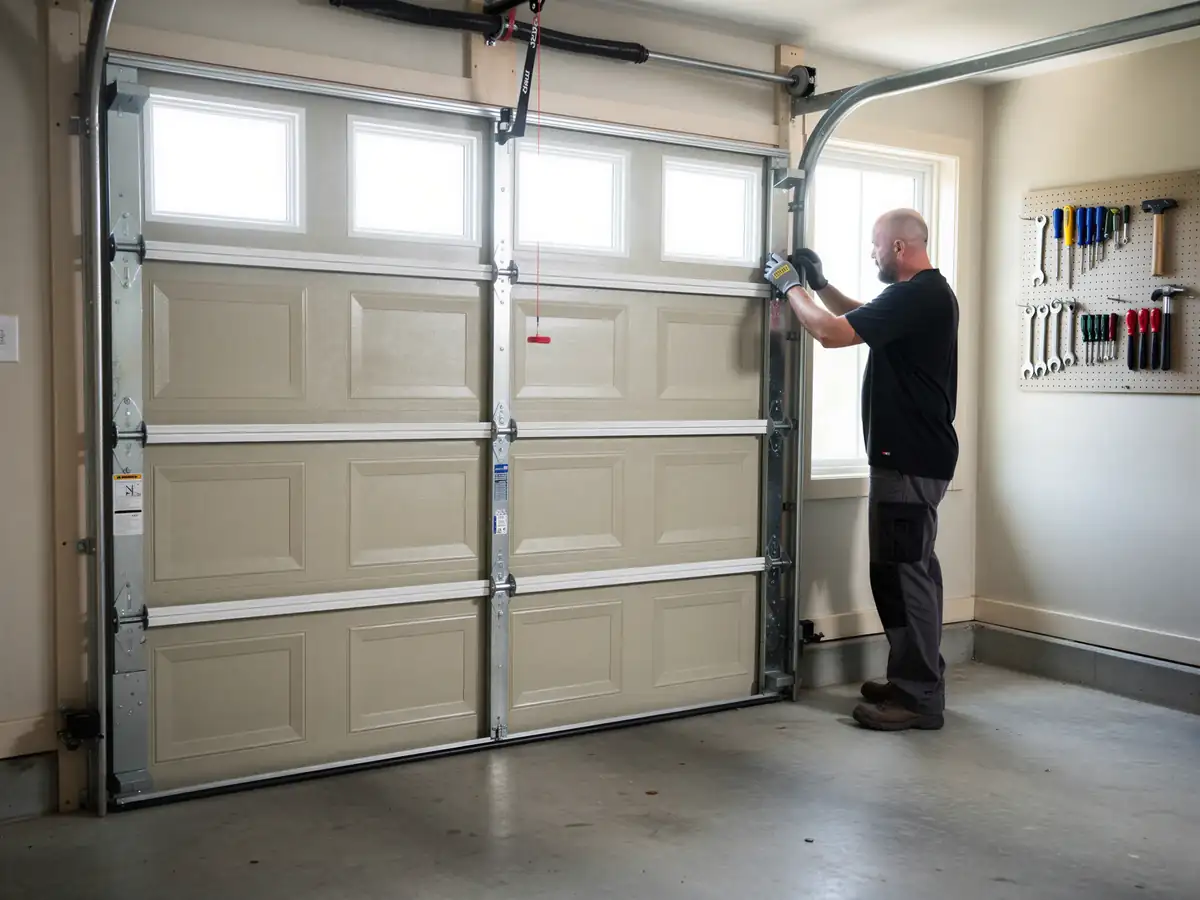
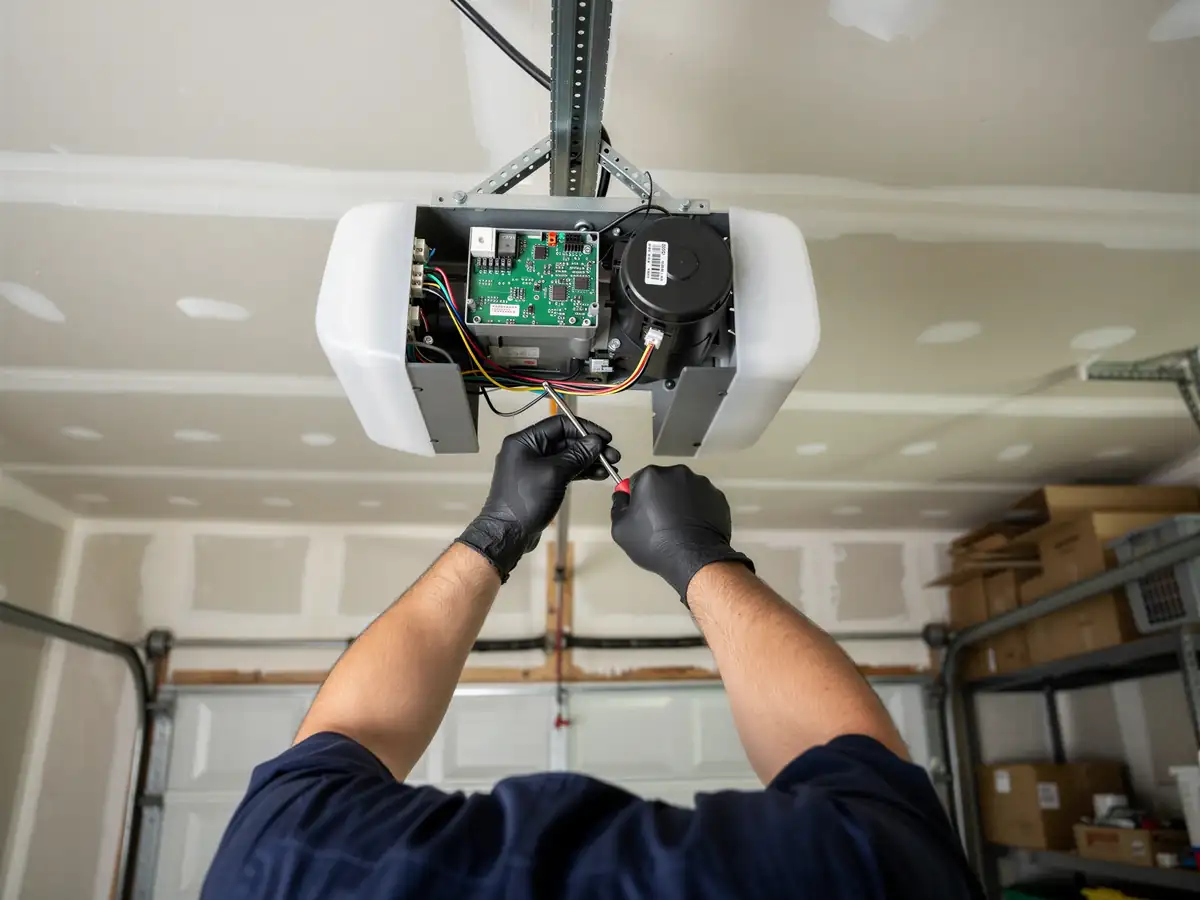
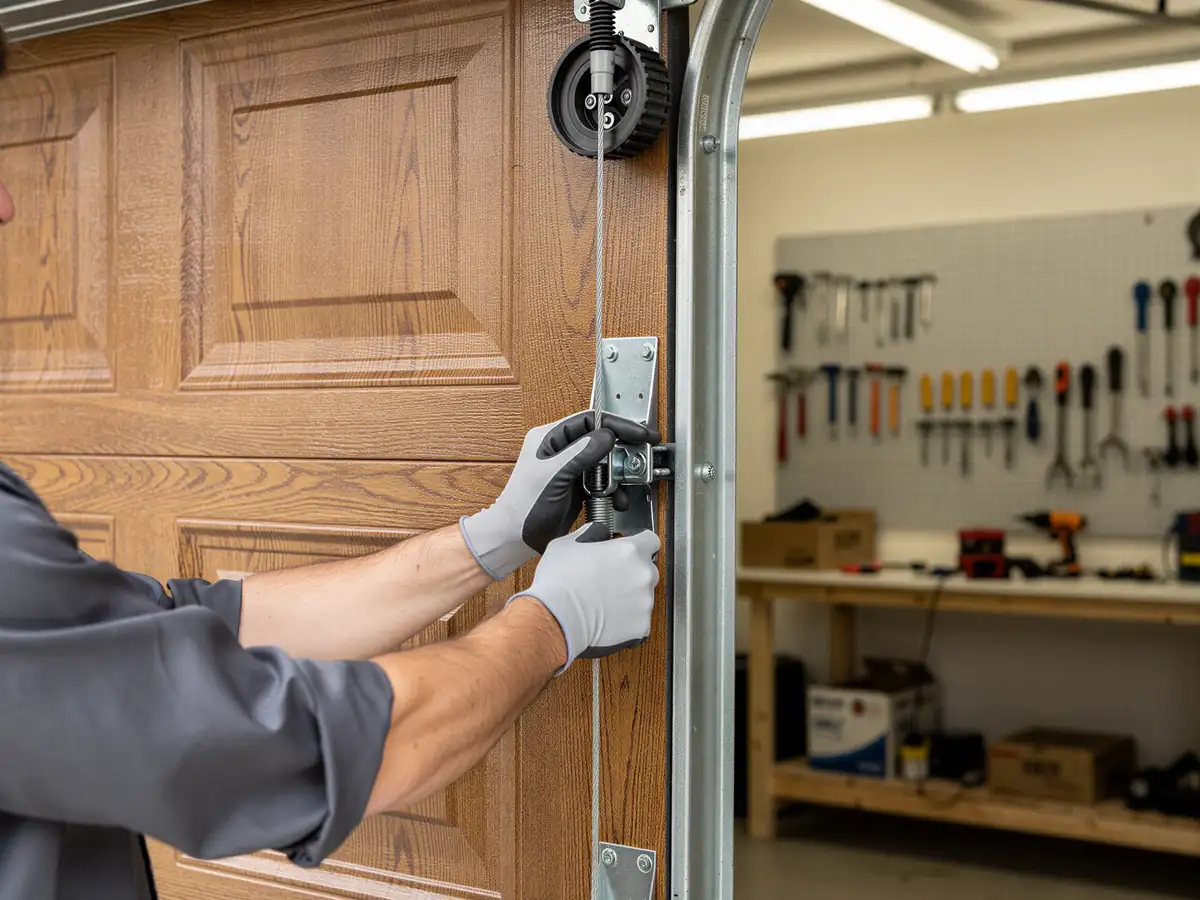
No. Torsion springs store enough force to break a wrist or a jaw if the winding bar slips, and on a newer standard-lift system the tension is often higher than people expect from a door that looks ordinary. The opener board diagnosis - is it the board, the sensor, or the travel limits - takes a meter and knowing what a 2000-era board's fault codes mean. That part isn't dangerous, just not worth the hours if you're not doing this daily.
What You Are Seeing
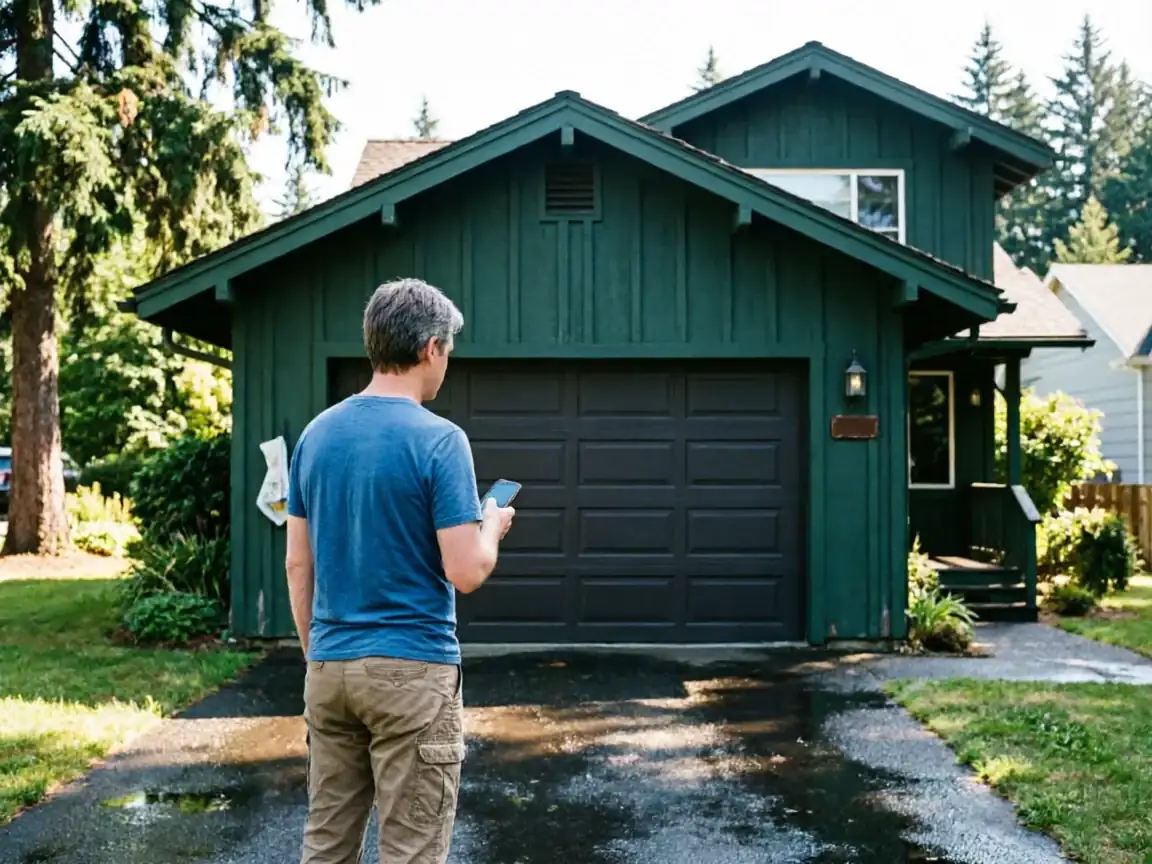
Most calls out of this pocket describe one of two things: a door that hesitates or reverses on the way up with no obstruction in the path, or a door that's gotten noticeably heavier to lift by hand over a few months. Both point at the same era of hardware - factory torsion springs and circuit-board openers installed when these houses were framed, now two and a half decades old.
You'll also hear a specific kind of noise complaint here: a rhythmic click or tick from the spring area that wasn't there a year ago. On a 2000-built door that's usually the spring cone starting to wear against the shaft, not a cable issue. It's worth noting early because it's cheap to fix early and expensive to ignore.
What you won't usually see in Lake Stickney is the kind of extension-spring, no-sensor setup that shows up in much older Mill Creek stock. The build era here skipped that generation of hardware, so the failure patterns skew toward electronics and torsion wear rather than the raw mechanical fatigue of a 1970s door.
How Long It Takes
A torsion spring replacement on a door this era is usually a same-visit job once we're on site - the hardware is standard enough that we're not waiting on an odd-size part. Opener board diagnosis can go one of two ways: if it's a sensor alignment or a limit switch, that's fixed in the same visit. If the main board itself has failed, we may need to source a replacement board or recommend a full opener swap, since boards for units this age aren't always sitting on a shelf.
We drive out from Mill Creek, about 2 miles, so travel isn't the bottleneck here - parts availability is. If your door's hardware matches what went into this neighborhood around 2000, we usually know on sight what we're dealing with and can quote the job before pulling tools.
Why It Happens Here
The pattern comes down to one thing
Lake Stickney's homes are consistently newer than a lot of what we service out of Mill Creek. Where older neighborhoods are fighting original hardware from the late 1960s through the 1980s, this pocket sits right around 2000 - meaning the doors, springs, and openers are all from the same narrow build window.
That makes the failure mode predictable
Torsion springs rated for a standard lift have a service life, and twenty-plus winters of cycling start to show as cone wear and reduced lift force rather than sudden breakage. Opener boards from that era are reaching the end of their expected electronics life too, which is why reversal glitches and sensor faults show up here more than snapped cables.
The climate plays a smaller supporting role
This area sits in a cold, moderate band, and cold mornings make a half-worn spring feel noticeably heavier than it does in July, which is often what pushes someone to finally call.
Getting It Booked In
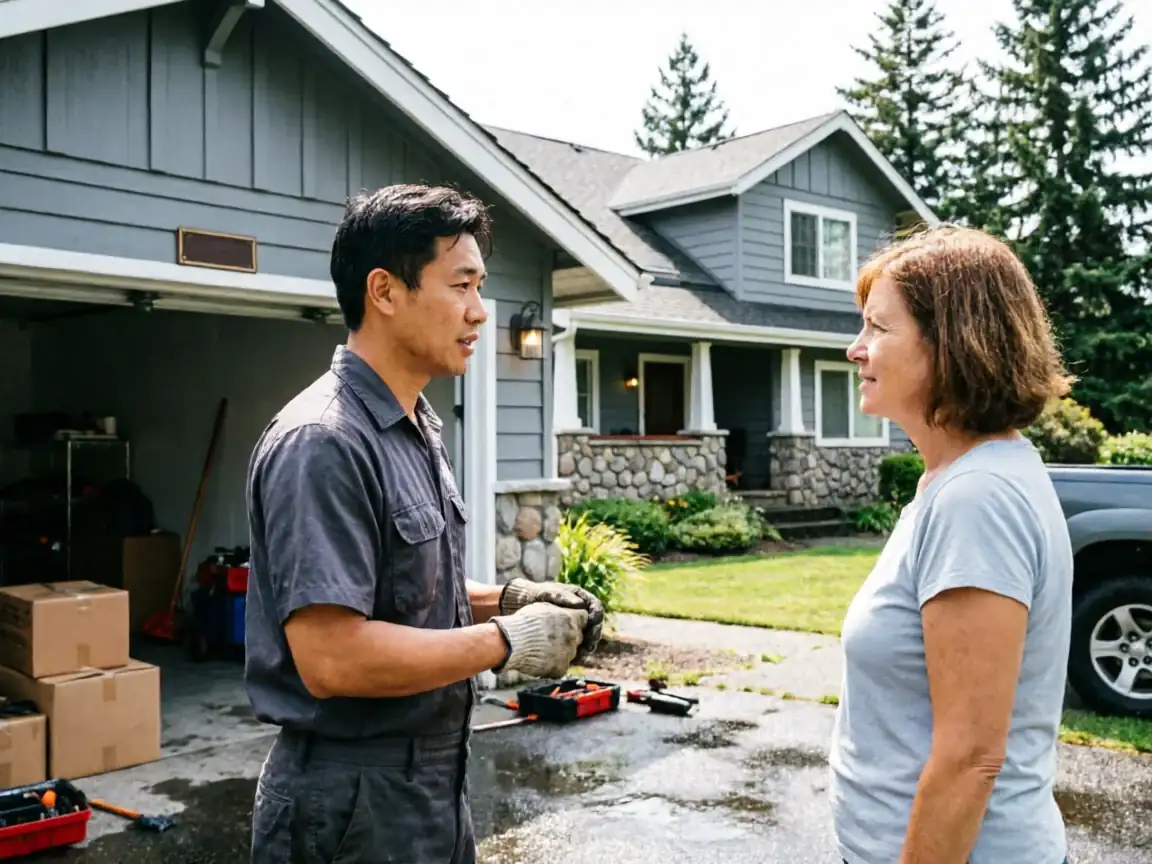
When you call, tell us the door's rough age if you know it and what it's doing - hesitating, reversing, heavier than usual, or making that cone-click sound. Because Lake Stickney's hardware era is consistent, that alone usually tells us what's in the truck before we arrive. We're coming from Mill Creek, a short trip, so scheduling is about finding a time that works for you rather than working around distance.
If you're not sure whether it's the spring or the opener, that's fine - that's the diagnosis we do on arrival, not something you need to figure out over the phone.
Where This Job Goes Sideways
The honest limitation: if your opener's main board has failed and it's an older or discontinued model, we sometimes can't get an exact replacement board same-day. In that case the practical fix is a full opener swap rather than a repair, and we'll tell you that straight rather than stringing out a part search.
The other place this goes sideways is when someone assumes a heavy door means the opener motor is weak, when it's actually the spring losing tension and the opener just straining to compensate. Replacing the opener in that case fixes nothing - the new unit will strain just as hard against the same bad spring. We check spring balance before we talk opener replacement, every time, because guessing wrong there wastes your money twice.